Jacksonville ran the ball on third and 14, up 31-0, and scored from 25 yards
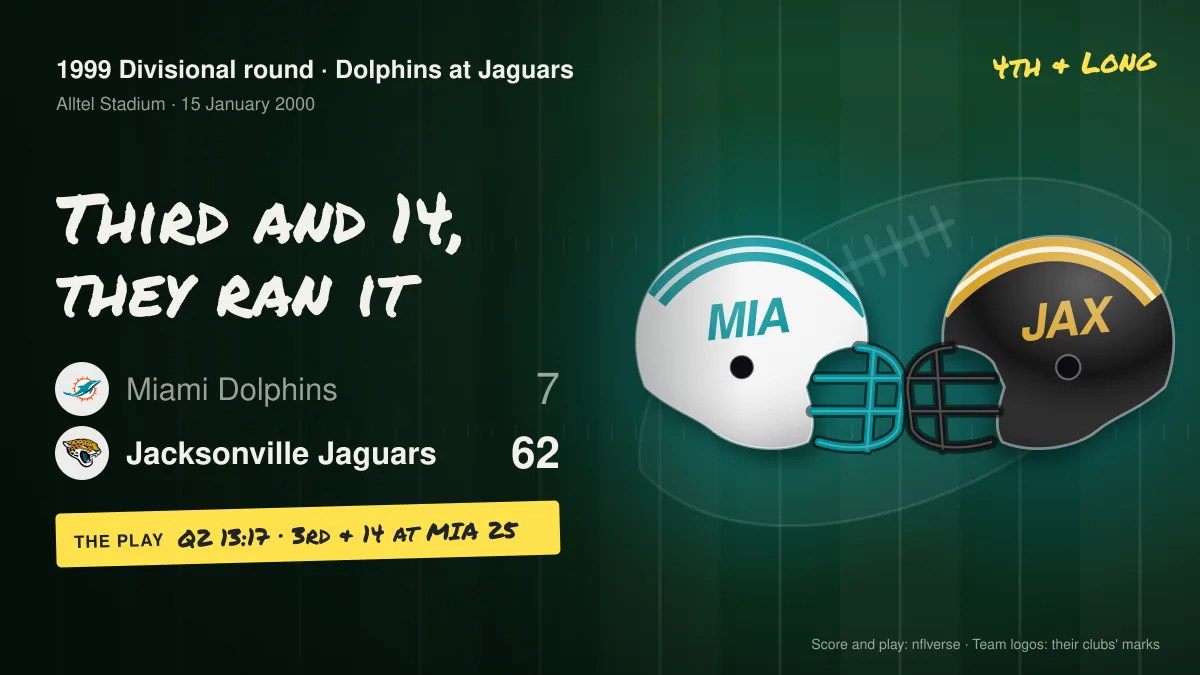
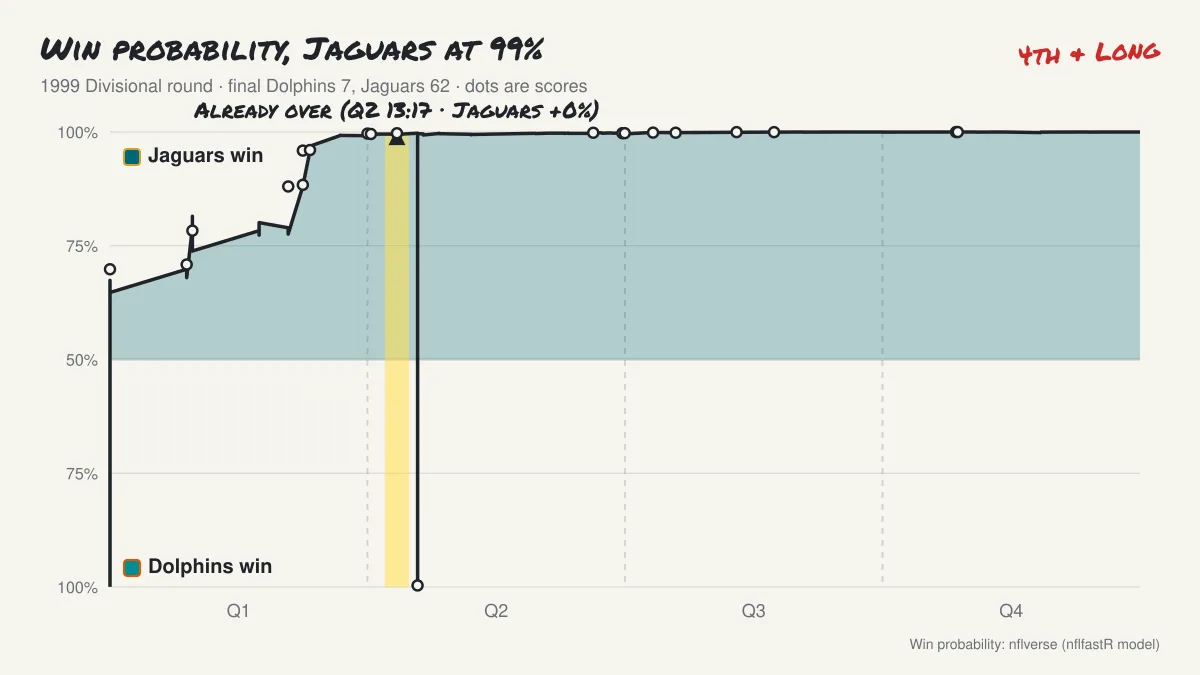
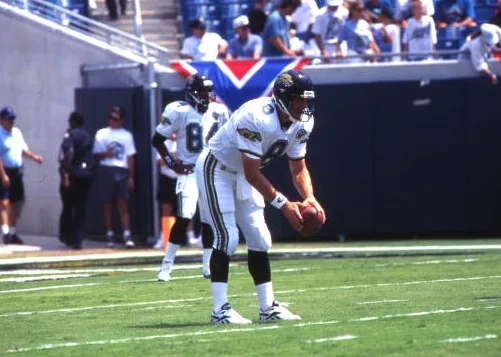
On third and 14, leading 31-0 in the second quarter of a playoff game, Jacksonville ran the ball for a touchdown. Third and 14 means the offence still needs 14 yards for a first down, so everyone in the stadium is braced for a throw. The Jaguars ran instead, and James Stewart went 25 yards for the score. The game finished 62-7.
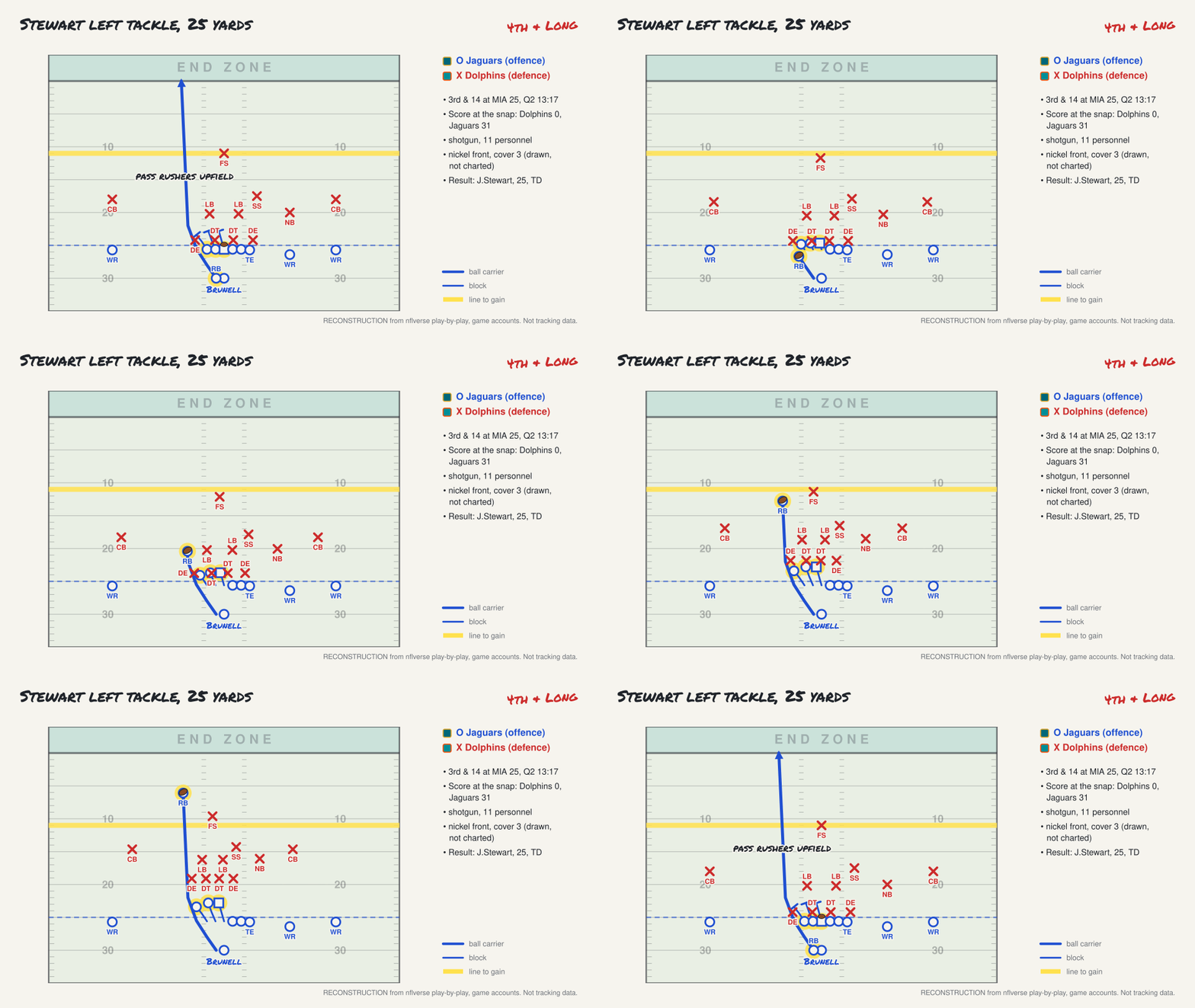
A run on a long down is not a white flag. It is arithmetic. Shotgun means the quarterback stands a few yards behind the centre rather than directly under him, which spreads the offence and reads as a passing formation. Draw means a run built to look like a pass: the quarterback sits back, the line pass-blocks for a beat, and the defence's pass rushers charge upfield while the linebackers turn and run backwards into coverage. The box (the defenders lined up close to the ball, the ones who can stop a run) empties out. The charting lists this play as run left tackle from the shotgun, and the official description reads: "(13:17) (Shotgun) J.Stewart left tackle for 25 yards, TOUCHDOWN."
Here is the look at the snap. Miami's pass rushers fire upfield, because on third and long their only job is to reach the quarterback. The linebackers drop into the space behind them, because their only job is to take away the intermediate throw. Jacksonville's blockers work the left side, and the back runs behind them into the space the pass rush has left. The individual block angles are my reconstruction; the charting gives the direction (left tackle) and the formation (shotgun), not the coordinates.
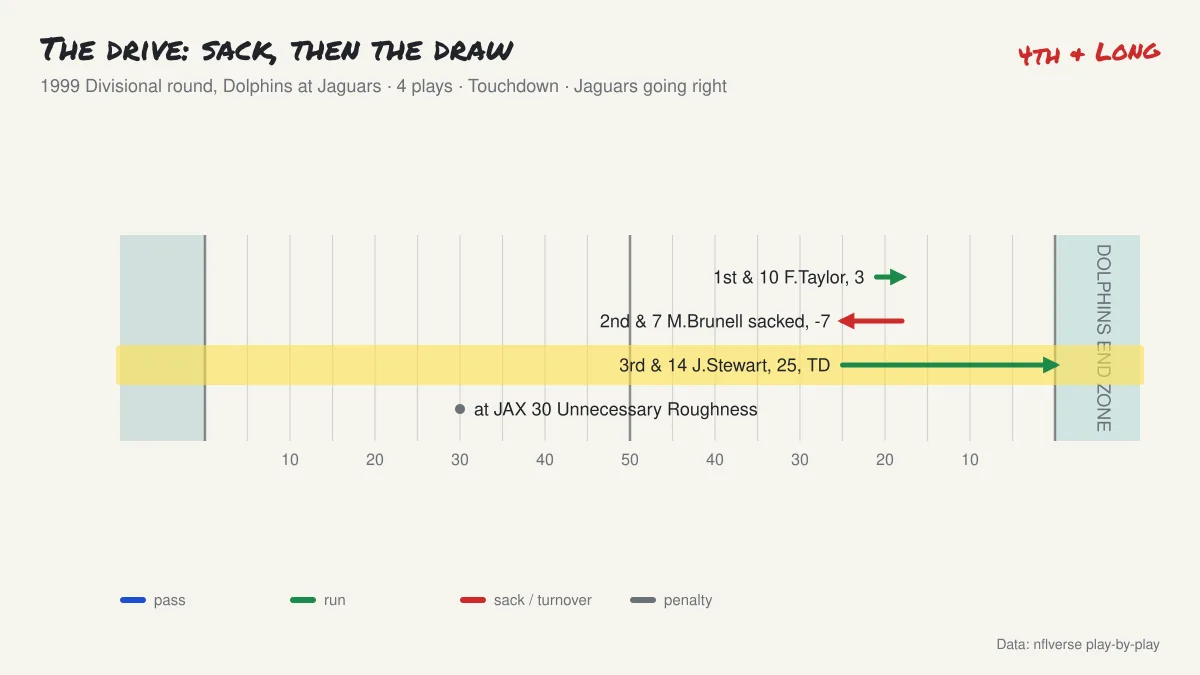
The drive is worth seeing whole, because it shows the play was not the plan. First and 10 from the Miami 21, Fred Taylor ran up the middle for three yards. Second and 7, Mark Brunell was sacked for a loss of seven by Kenny Mixon, which is how a routine series became third and 14. Then the draw. The nflfastR win probability model had Jacksonville at 99% before the snap and 100% after, which tells you the model had already stopped learning anything from this game. Its largest listed swing of the night is an extra point, a 99-point move that is the model straining at the extremes rather than a real hinge.
The score is what made the call work, not something the call overcame. A defence down 31-0 with 14 yards to defend is not set up to stop a run. For the record, Jacksonville outgained Miami 503 yards to 131, and Miami turned the ball over seven times and converted two of 13 third downs. The box score is here: pro-football-reference.com/boxscores/200001150jax.htm
I draw these from the play-by-play and the charting data; where each player stood is my reconstruction. If an X or an O is in the wrong place, say so in the replies.