The 1999 Rams' first touchdown took 9:27 and never gained more than 12 yards
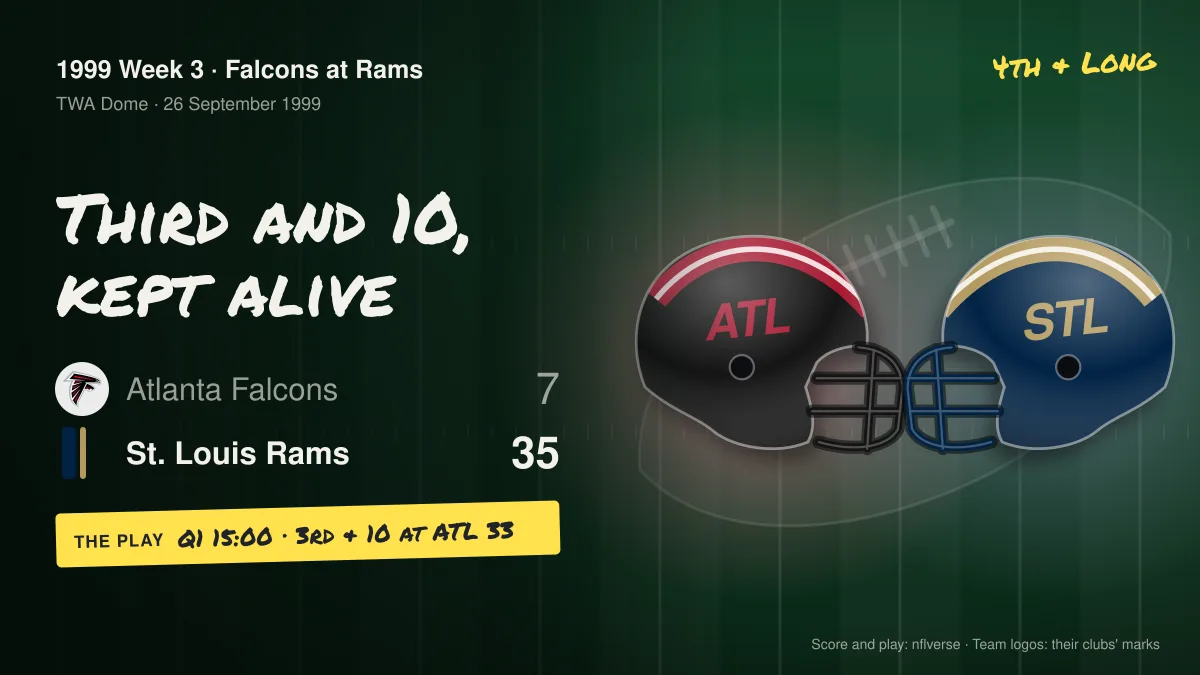
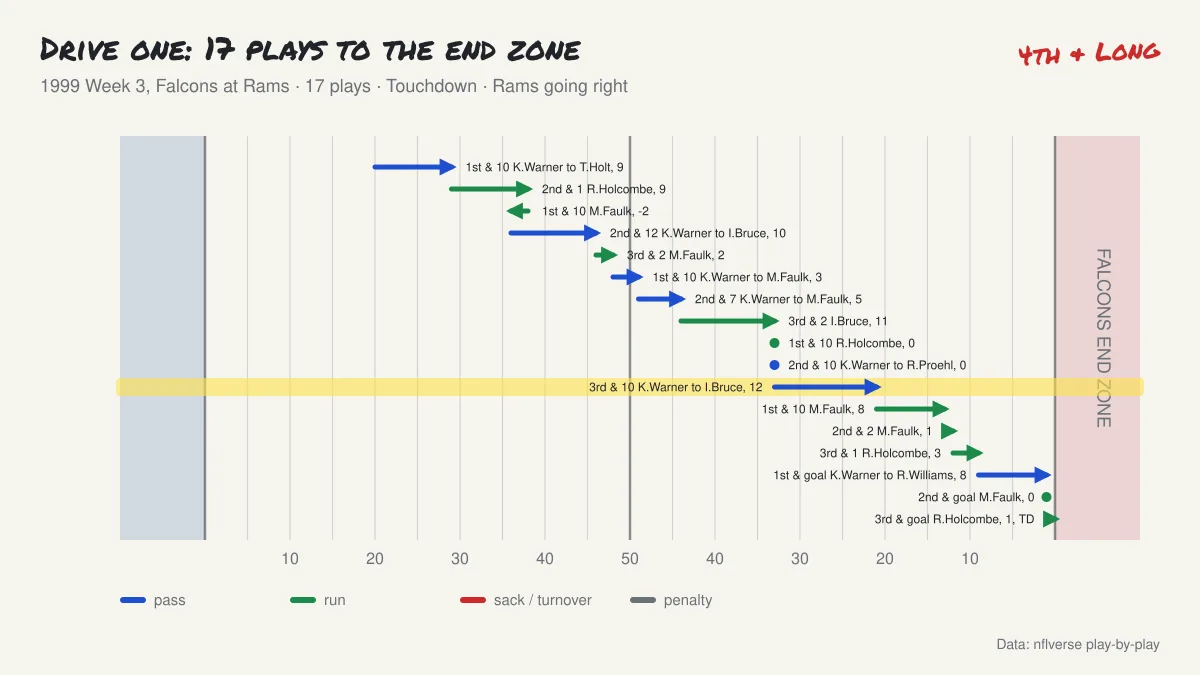
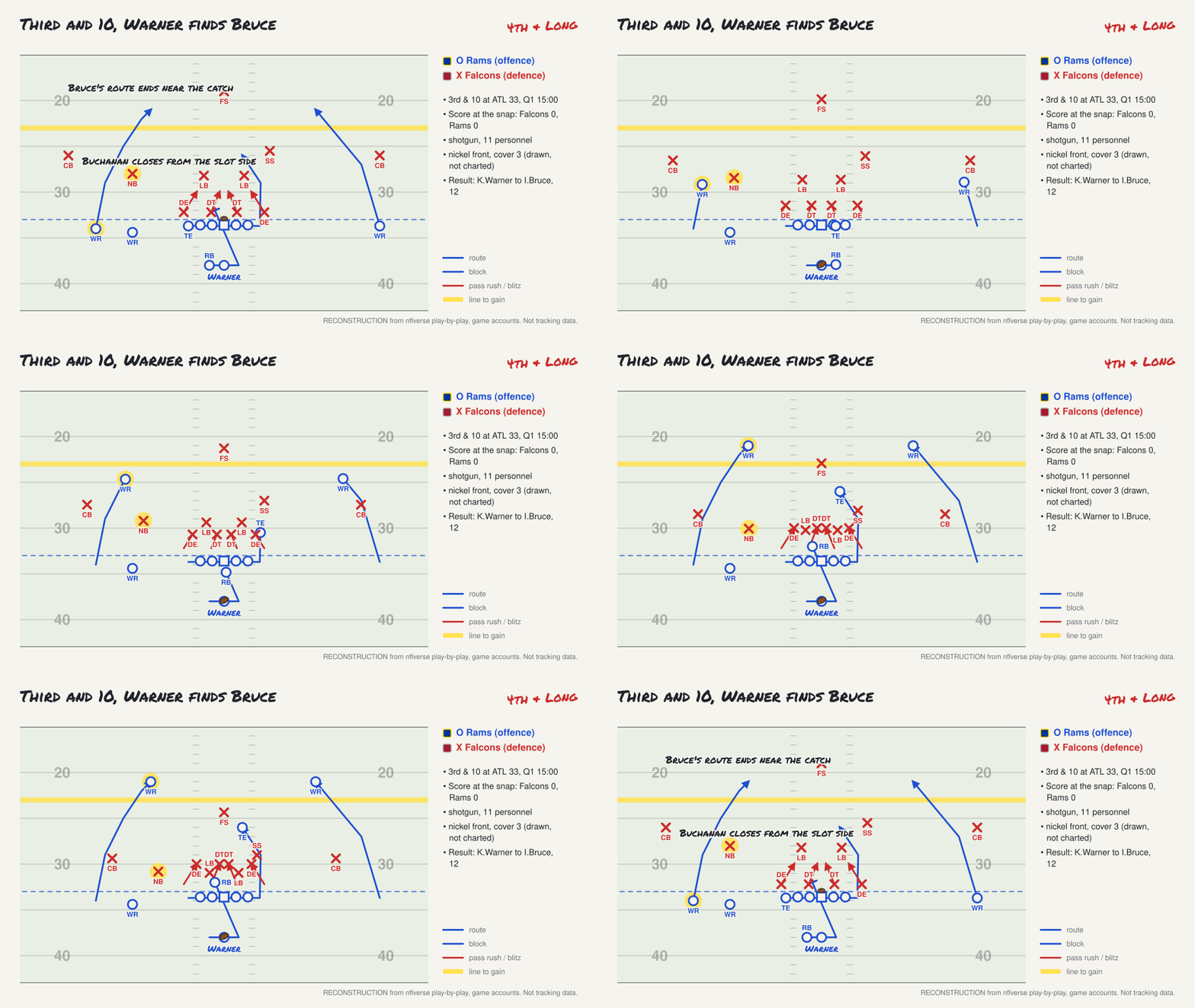
The St. Louis Rams won 35-7 at home to Atlanta on 26 September 1999, and the game is remembered for speed: Kurt Warner throwing deep to receivers who ran away from everyone. The first touchdown of the night was the opposite. St. Louis went 80 yards in 18 plays.
A drive is one team's series of plays from a kickoff or takeaway until it scores, punts or loses the ball. A first down gives you four tries to gain 10 yards; third and 10 means it is the third try and 10 yards are still needed, so failing usually means a punt. St. Louis converted its third downs on that drive. One of them came at Atlanta's 33, on third and 10, where a stop would have forced a fourth-down decision and a conversion kept the drive alive.
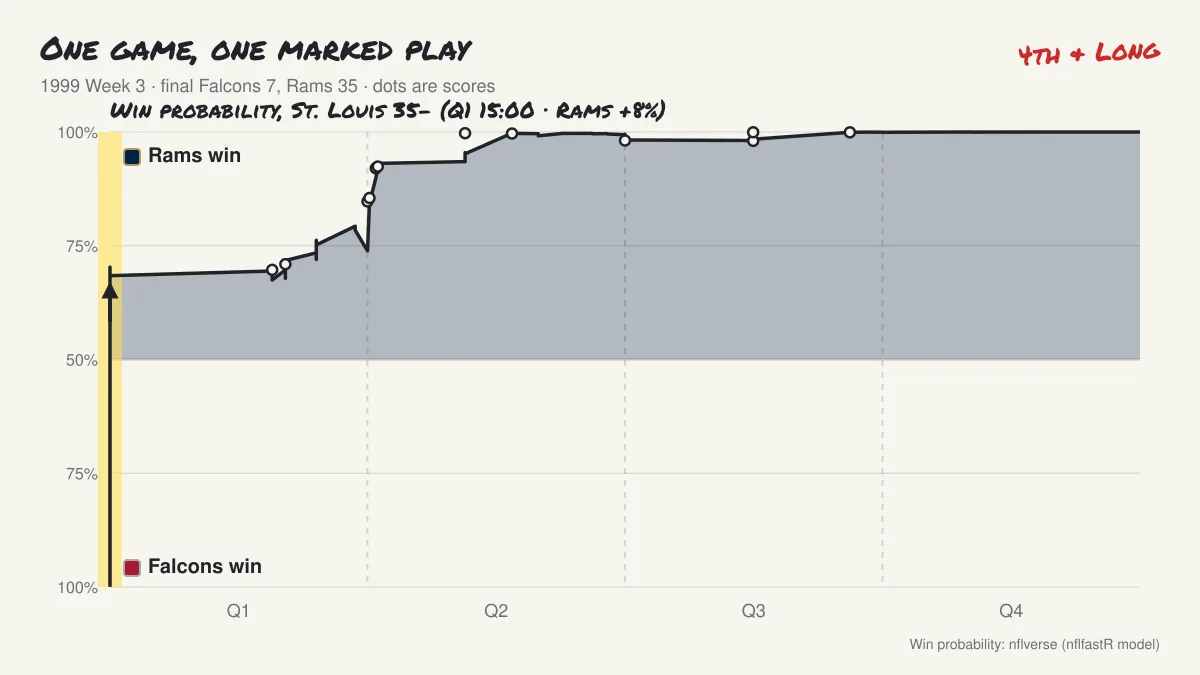
Third and 10 at the Atlanta 33, Warner took the snap and threw to Isaac Bruce. The official description is "(15:00) K.Warner pass to I.Bruce to ATL 21 for 12 yards (R.Buchanan)." The catch came at Atlanta's 21, 12 yards from where the play started, and Robert Buchanan brought Bruce down there. The model nflfastR gives St. Louis a 58% chance of winning before the snap and 66% after, a modest move because a first down at the 33-yard line is not yet points. Where the routes went and how the defenders lined up is a reconstruction; no formation or coverage charting exists for 1999.
The drive still had work to do. From inside the 21 it took six more plays, including a third and 1 run by Robert Holcombe and a second and goal from the 1 where Marshall Faulk gained nothing. Holcombe scored on the next snap. Then the fast version showed up: Warner to Torry Holt for 38 yards, Warner to Bruce for 46, Warner to Faulk for 17, all in the second quarter. Atlanta's only points came on Tony Graziani's 1-yard throw to Brian Kozlowski, and St. Louis scored again on a 5-yard Kurt Warner touchdown run. The full box score is at pro-football-reference.com.
Whether that opening drive set the terms of the game or merely kept the ball away from Atlanta is not something a single game can settle. What the data file does show is that Atlanta gained 227 yards on 54 plays and scored 7 points. The third-down conversions on one drive are the number I keep coming back to: an offence known for the quick strike won its first score by never letting a down go to waste.
Source: pro-football-reference.com/boxscores/199909260ram.htm
I draw these from the play-by-play and the charting data; where each player stood is my reconstruction. If an X or an O is in the wrong place, say so in the replies.