In 1991 a Hawaii school counselor taught her fifth graders a milk-cap game, and Pogs followed

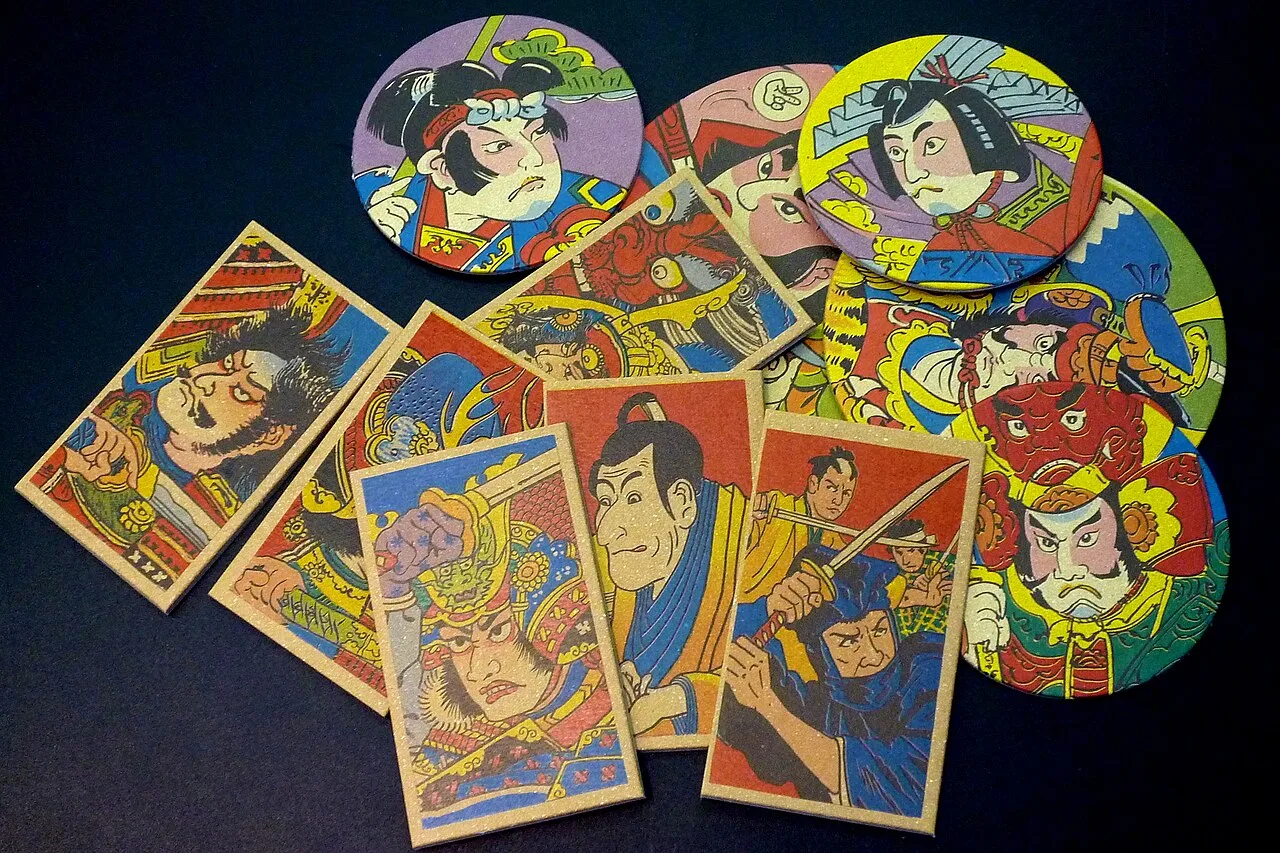
The game is played with small cardboard discs, the kind that used to seal milk bottles. You stack them, drop a heavier disc called a slammer on the stack, and keep whichever caps land face up. Hawaiian kids were playing it on Maui as early as 1927. By 1993 it was being played all over the world.
What happened in between is the part I like. In 1991 a guidance counselor named Blossom Galbiso, at Waialua Elementary on the North Shore of Oahu, taught the game she had played as a girl to her fifth grade class. She used it to teach math, and as a non-violent alternative to other popular schoolyard games such as dodgeball. The caps came from Haleakala Dairy's POG drink, a passionfruit, orange and guava blend introduced in 1971. POG is where the name came from, and the caps were the pieces. The game spread from Oahu's North Shore.
By early 1992 a Canadian packaging company called Stanpac was printing millions of milk caps a week for shipment across Hawaii. Stanpac had been manufacturing the milk caps distributed by Haleakala Dairy on Maui, the same caps Galbiso collected for her class. The game spread to the mainland, first surfacing in California, Texas, Oregon and Washington before spreading to the rest of the country. Seven other companies entered the milk cap field after a comic book and card convention in January 1993, and SkyBox International and Marvel added the product to their lines under the names SkyCaps and Hero Caps respectively. Pogs were being handed out for opening bank accounts and in McDonald's Happy Meals, and the fad peaked in the mid-1990s. Canada Games, which reintroduced the game under the Pog brand name with the World Pog Federation, went out of business in 1997.
One detail worth keeping: the World Pog Federation claimed the name Pog as a trademark, while other companies claimed it was a generic term as it was selected by the children that played the game. A lawsuit was settled in October 1994, according to the New York Times (nytimes.com/1994/11/09/us/agreement-put…). Whether the game began on Maui or came from the Japanese game menko, which has been around since the 17th century, is not settled in the source. The Wikipedia entry (en.wikipedia.org/wiki/Milk_caps_(game)) says possibly Maui, and possibly menko.
What stays with me is the order of events. No toy company invented Pogs. A guidance counselor ran a math lesson with old milk caps, and the factories caught up within a year.