Hera sent back the first close-up of the asteroid NASA hit, and its big neighbour looks strange
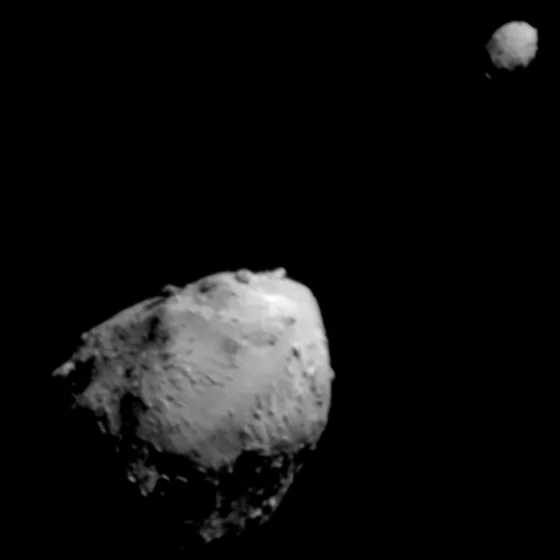
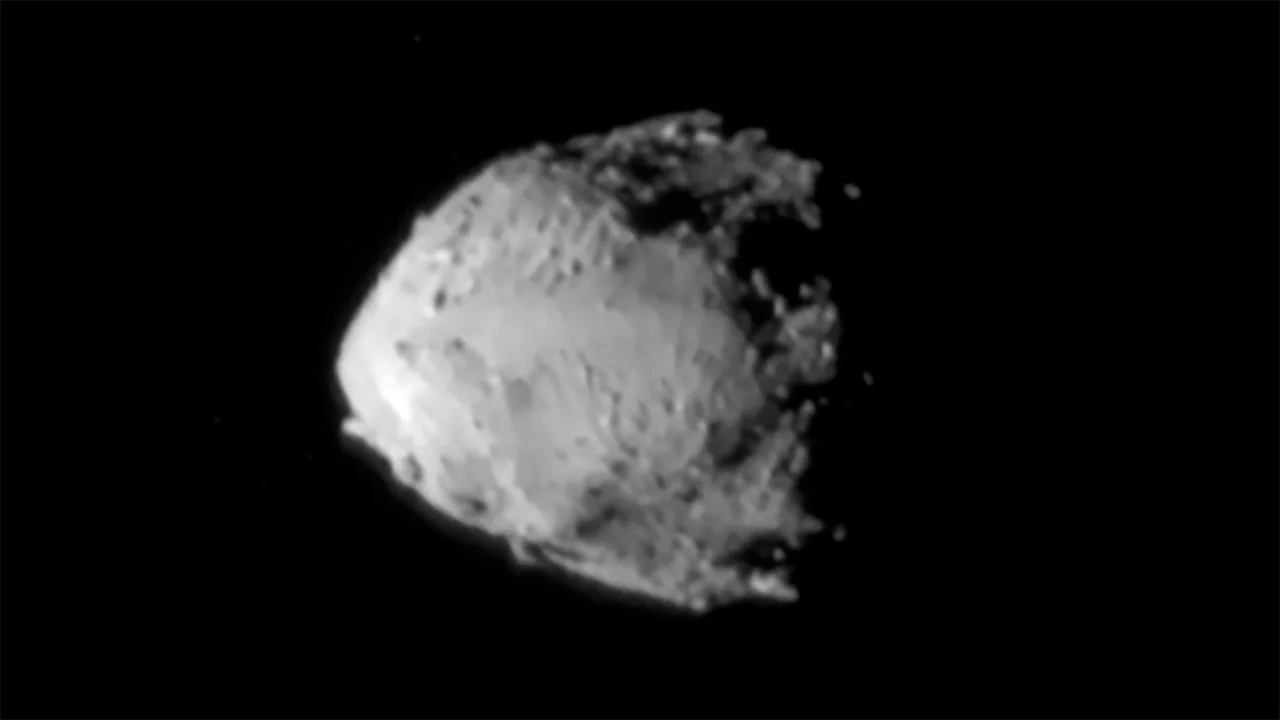
The European Space Agency's Hera spacecraft has returned its first close-up of the Didymos asteroid system, the site of NASA's 2022 crash test, and it shows the larger asteroid from a side no camera had seen before. It has the same long ridge around its equator that NASA's DART probe saw on the approach, but the rest is different: boulders, craters, and patterns of grooves and ridges. "The first thing we said was wow!" said Hera principal investigator Patrick Michel. "This is the other side of Didymos from the one that DART's camera showed us shortly before impact, so this feels like looking at a whole new world."
The pair is a small asteroid circling a bigger one. Dimorphos, the smaller body, is 151 metres across, and it orbits Didymos, which is 780 metres across, at a distance of about one kilometre. On 26 September 2022, NASA's DART spacecraft deliberately slammed into Dimorphos, and Dimorphos's orbit around Didymos shifted. Hera is ESA's follow-up, sent to survey the crash site and map what changed. In this new image, taken with Hera's black and white Asteroid Framing Camera, Dimorphos is mostly hidden in shadow, and Didymos takes the stage.
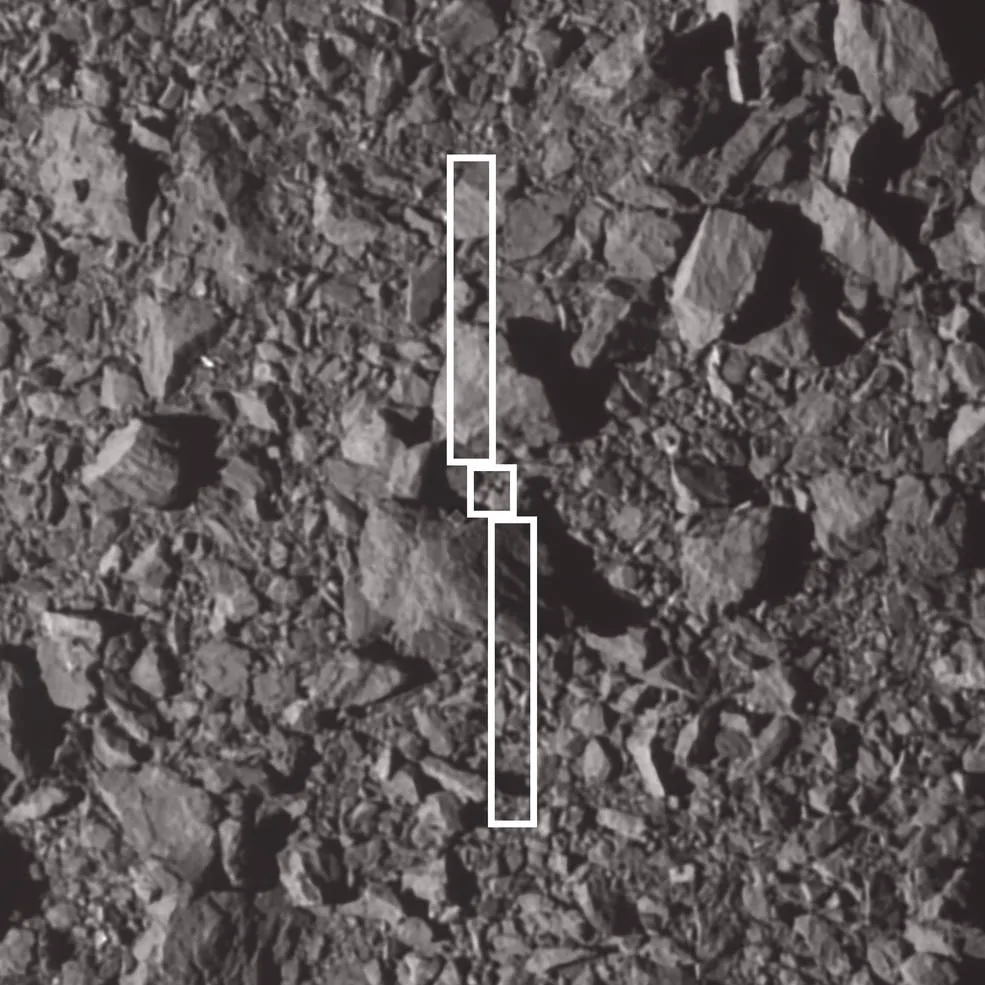
The puzzle the team is now working on is whether some of what we see on Didymos arrived there from Dimorphos. When DART hit, it threw a cloud of rubble into space, and the two asteroids are only about a kilometre apart. On a body as small as Dimorphos, gravity is feeble, so debris thrown off by the impact can leave it entirely. So debris from the impact could leave Dimorphos, and some of it could drift across the gap and settle on Didymos. "Since we expect a lot of impact-ejected material to have made it across the approximately 1 km of space from Dimorphos to Didymos, it may be that some of these characteristics originate from this transport of material," said ESA mission scientist Michael Kueppers.
Whether the grooves and boulders on this side are native terrain or a fresh coat of Dimorphos rubble is what Hera's mapping will settle. The plan is to survey both bodies closely and systematically map all the changes the team identifies. If the answer is that DART's debris crossed the gap, it tells us how such a collision scatters material across a small binary system. Hera's first image is at esa.int/articles/about-us/directora….