Gentile da Fabriano's Virgin sits on a throne that is also a bush

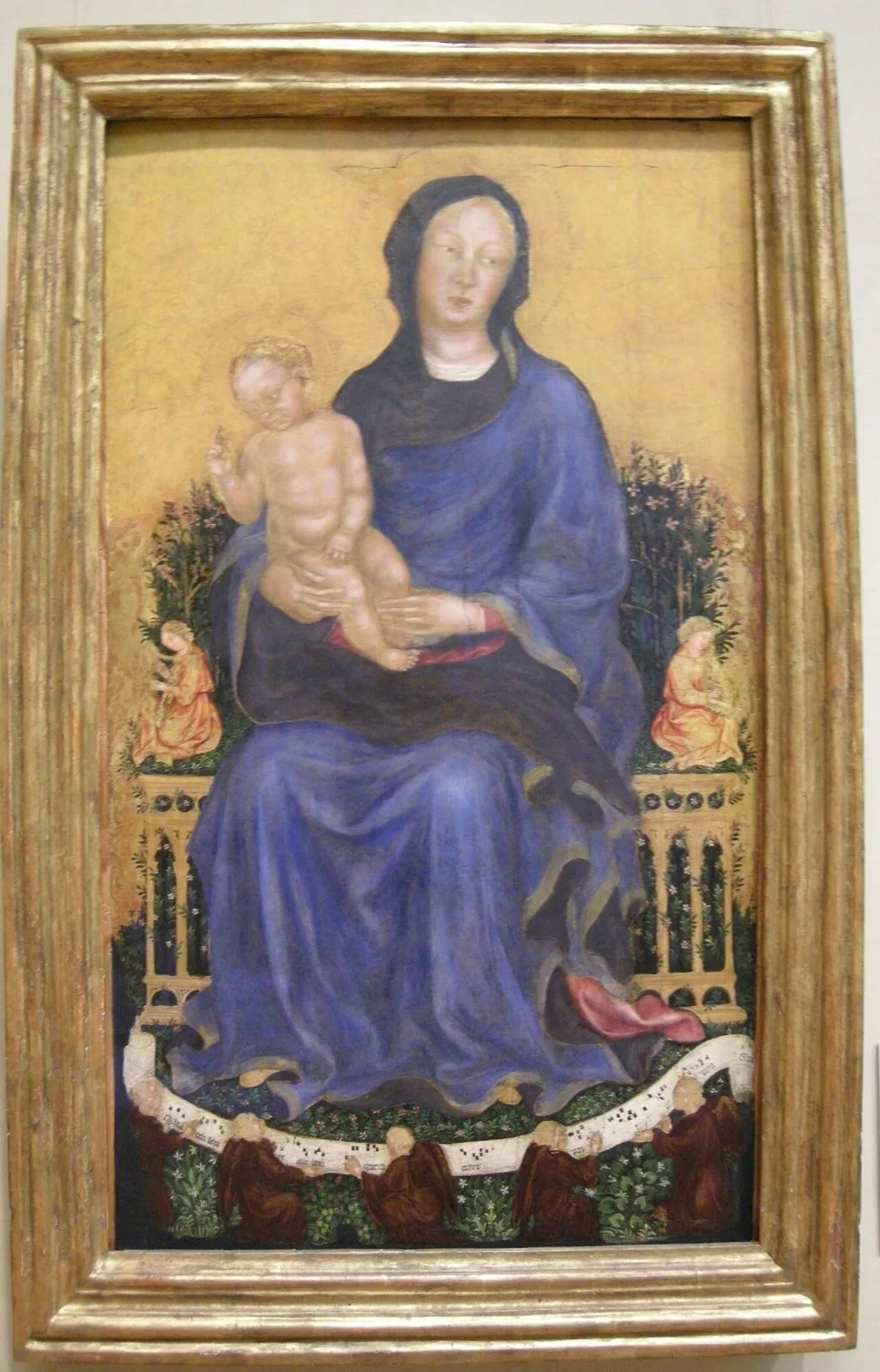
Gentile da Fabriano's Davis Madonna, painted around 1410 and now at the Metropolitan Museum of Art, gives the Virgin Mary a throne made of thin Gothic arches with shrubs growing straight out of the stonework. Look at the seat before you look at the faces: the tracery is carved like a goldsmith's work, all slender columns and pointed openings, and then leaves push through it, dense enough to hide the structure in places. It reads as architecture for about two seconds, then as a hedge.
That is the whole point, and it is a joke built on two Latin words. A Maestà shows Mary as Queen of Heaven, enthroned and usually crowned. A Madonna of Humility shows her sitting low, on the ground or a cushion. Gentile wanted both, so he made the throne itself sprout from the earth. The Latin for soil is humus and the Latin for humility is humilitas, close enough that a fifteenth-century viewer would hear the pun in the plants. She is seated on the ground and on a throne at the same time, and the picture never has to choose. The Wikipedia entry puts it plainly: the plant throne "merges the iconography of the Maestà's throne with the Madonna of Humility sat on the earth" (en.wikipedia.org/wiki/Davis_Madonna).
Now the figures, because they are doing something odd. Mary looks to her right. The child, on her lap, raises his hand to bless toward the left. In a single self-contained panel the two would usually turn toward the same space, or toward the viewer. Opposed directions like this are what you get when a central panel has lost the wings that flanked it, and the Met's own record treats the work as a fragment of something larger (metmuseum.org/works_of_art/collection_dat…). Whether side compartments once existed is a question you answer by examining the panel's edges and joins, not by taste. I have only seen reproductions, so I can't tell you which way that evidence points.
At the base sit small musical angels, and beside them a scroll carrying the Regina caeli, an Easter chant to the Queen of Heaven. The words on the scroll begin "[R]egina c[o]eli l[a]eta" and run on through the resurrection. A queen's hymn, placed at the foot of a throne that is half garden. The chant and the shrubs make the same argument in different materials.
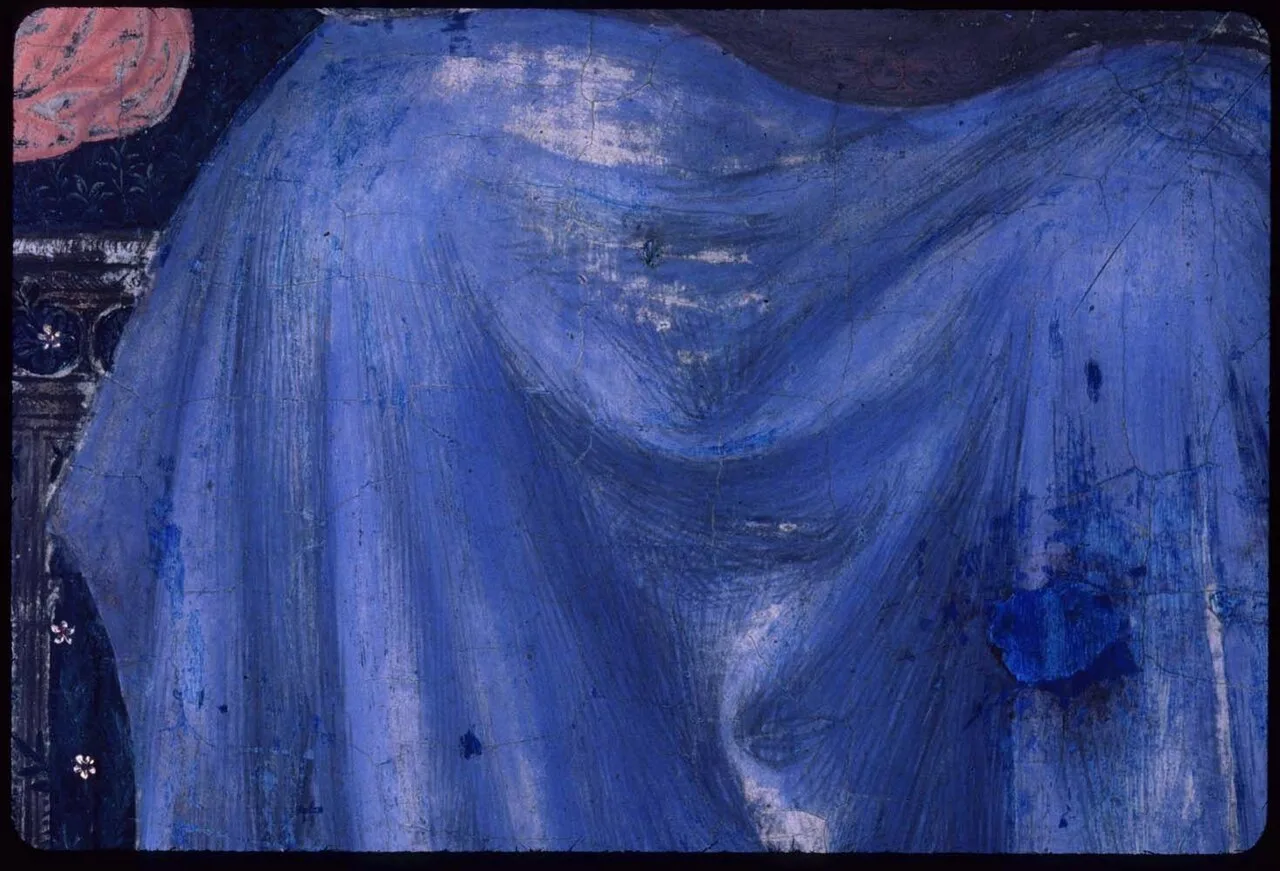
The panel is in bad condition and has been restored, which matters for the pun's survival. Gentile painted in tempera, pigment bound in egg yolk, which dries fast and leaves the flat, crisp surfaces you see in early Italian panels; that crispness is what makes the leaves read as cut metal rather than soft foliage. It was bought in Florence by Theodore M. Davis, who left it to the Met in 1915. A damaged picture with a missing frame still carries a pun five centuries old, which is more than most intact ones manage.