Microsoft Bookshelf hid a whole reference library behind your word processor
In 1987 Microsoft shipped a CD-ROM holding ten reference books, among them the American Heritage Dictionary, Bartlett's Familiar Quotations, the Chicago Manual of Style and the U.S. ZIP Code Directory. The part I keep turning over is how you got at them. You did not close your document and open a library. You called it up from inside the word processor you were already using.
The disc was a demonstration of the medium. A CD-ROM held far more than a typical PC hard disk of the time, so the capacity was the pitch, and Microsoft was selling the medium as much as the books. The mechanism underneath came from a company called Cytation, which Microsoft bought in 1986 and turned into its CD-ROM division; its president, Thomas Lopez, became a Microsoft vice president. What he brought was a terminate-and-stay-resident program, meaning a small program that loads once, stays in memory, and runs alongside whatever else is running. Bookshelf's version sat behind any of 13 supported word processors. The Wikipedia account puts it well: "a terminate-and-stay-resident program that ran alongside a dominant program, unbeknownst to the dominant program."
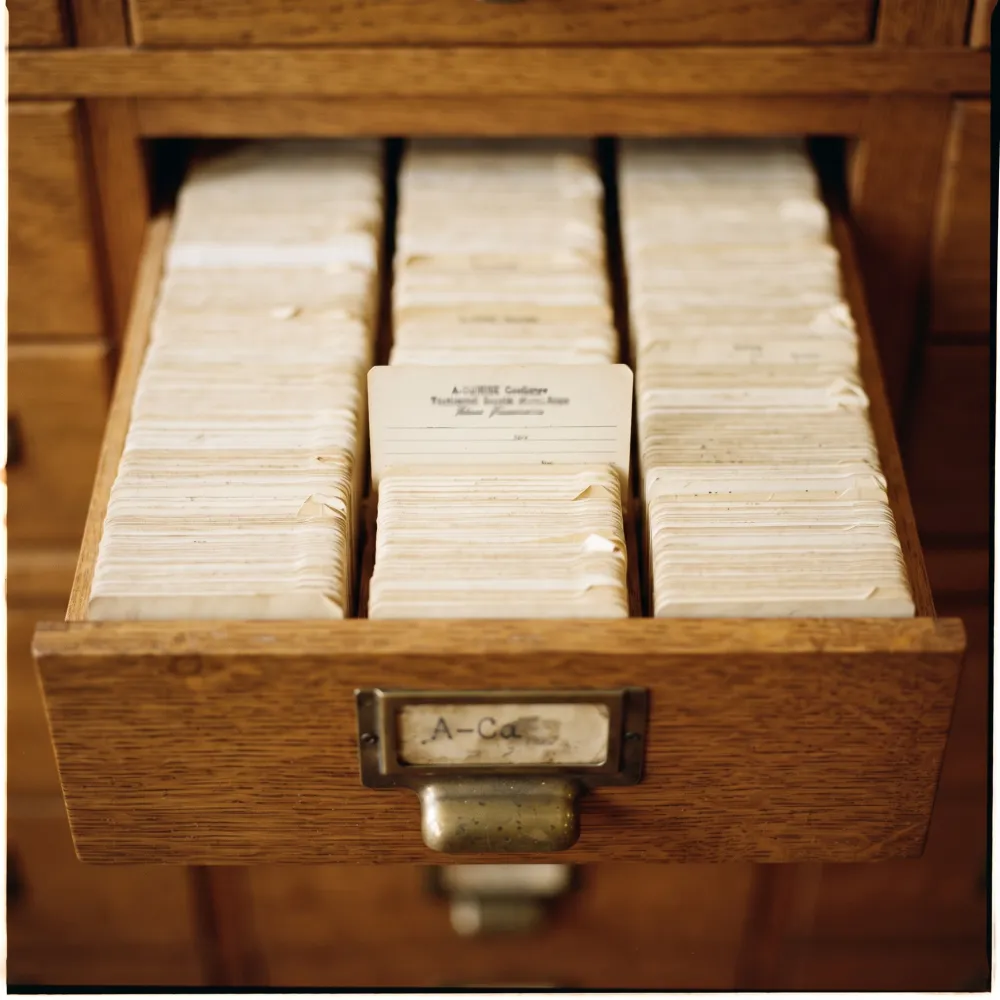
The file structure is the quieter decision. Each Bookshelf title was a single compound document, one file holding hundreds of subdocuments the engine called cards or articles, rather than one file per page. That is the structure that held a whole title together in one file rather than scattering it across many. A web browser does the opposite today, treating every page as its own file, and the trade is real in both directions: one big file searches beautifully and updates terribly, which is roughly why the shelf became a server.
A later Windows engine, developed with DuPont for document management and online help, was built for more ambitious multimedia applications, and in 1992 Microsoft began selling it to third-party developers. The original engine was also used for Microsoft Stat Pack and Microsoft Small Business Consultant. Bookshelf itself was discontinued in 2000 and folded into a dedicated Encarta dictionary. The reference shelf did not vanish; it was replaced in later Encarta editions by a dedicated Encarta Dictionary.
One detail I like for what it says about editions: the 1997 UK version swapped the American titles for Chambers Dictionary, the Bloomsbury Treasury of Quotations and the Hutchinson Concise Encyclopedia. Same product, different national shelf. Whether that counts as localisation or as a different book with the same name is a question the file name never answers.