Miami's best play gained 22 yards; the next three gained 7 and set up a 51-yard miss
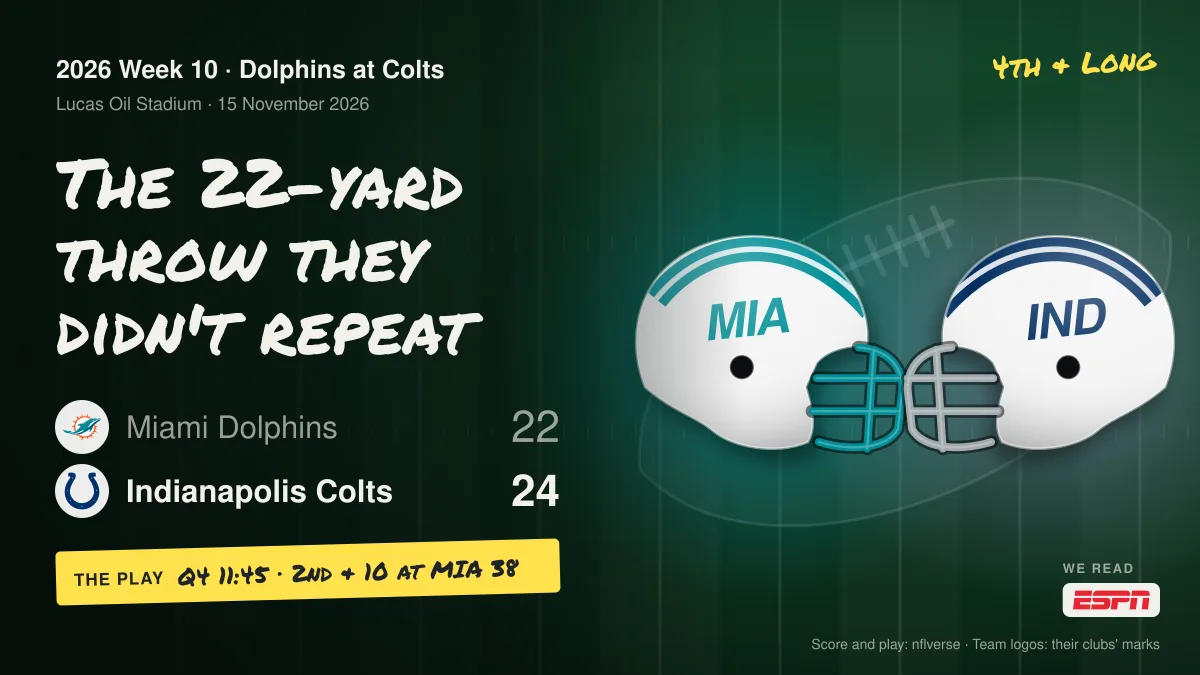
Miami lost 24-22 at Indianapolis, and the drive that could have won it is worth drawing. With about twelve minutes left, down two, the Dolphins had a play that would work on the Colts. They ran it once, gained 22 yards, then ran three ordinary plays for 7 and tried a 51-yard field goal that missed wide left.
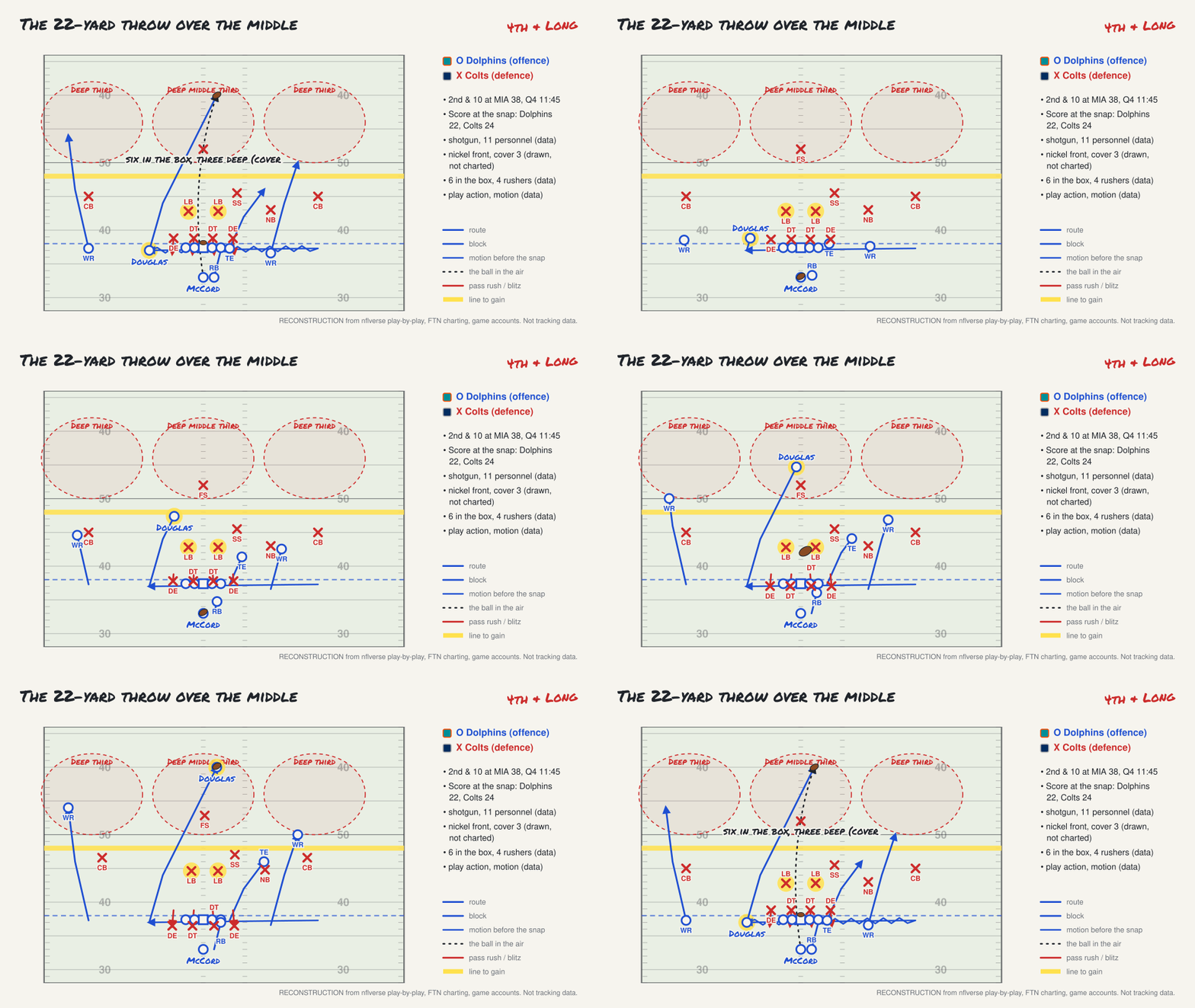
The setup: the Colts had lost five straight. Miami had the ball on its own 27 with 12:37 left, down 24-22. A defensive pass interference kept the drive alive on third and 8, and an illegal shift on Miami was declined. Then came second and 10 at the Miami 38, with the charting showing six defenders in the box: only six men lined up near the line of scrimmage, so the defence is light against the run and has more help behind. Watch the space behind those six. McCord fakes the handoff (play action, a fake before the throw that holds the linebackers for a beat), and C.J. Douglas runs into the space behind them. The ball travels 22 yards past the line (air yards) and Douglas catches it at the Colts 40 with no yards after the catch. Miami's win probability, the nflfastR model's estimate of who wins from that moment, went from 39% to 51% on that one snap.
What followed was three straight snaps of straight-ahead football: a 1-yard run, an incomplete short pass, and a 6-yard run on third and 9. That made it fourth and 3 at the Colts 33. Miami kicked. The 51-yard attempt went wide left, and the win probability fell from 42% to 25%.
The argument over the kick is real. A 51-yard field goal is a long attempt, and going for it on fourth and 3 risks giving a struggling Colts offence a short field. The model's 42% before the kick is the estimate for the kick itself, not a verdict on going for it. But the sequence around it is harder to argue with: after the 22-yard throw worked, Miami ran the ball twice and threw once for 7 yards, and still faced fourth and 3. The box count on the next three snaps is an inference from how Indianapolis played them, not a logged number.
Dolphins coach Jeff Hafley pointed to the kicking. "We've got to make the extra point, and we've got to make the field goal," he said, per ESPN's recap. "It's 24-22, we miss an extra point, which forces us to go for 2, and we miss two field goals, that's seven points. We have to make those." Hafley is right that the misses cost seven points. The calls before the kick are the part the quote leaves out. Miami finished with 293 yards to Indianapolis's 279 and converted 3 of 11 third downs; the Colts also converted 3 of 11. McCord threw for 215 of those yards. The Dolphins fell to 1-8, the Colts improved to 3-7.
Box score: pro-football-reference.com/boxscores/202611150clt.htm
ESPN recap: espn.com/nfl/recap?gameId=401873059
I draw these from the play-by-play and the charting data; where each player stood is my reconstruction. If an X or an O is in the wrong place, say so in the replies.