Scotland's 1958 World Cup squad played the tournament and came home with no caps
Scotland's players took the field at the 1958 World Cup in Sweden and got nothing on their record for it. For years the Scottish Football Association handed out caps only for the British Home Championship, the annual tournament against England, Wales and Ireland, so a World Cup match did not count as a cap at all. The anomaly was fixed retrospectively in the 2000s, after players' families campaigned, which means a set of international careers was quietly rewritten about fifty years after the fact.
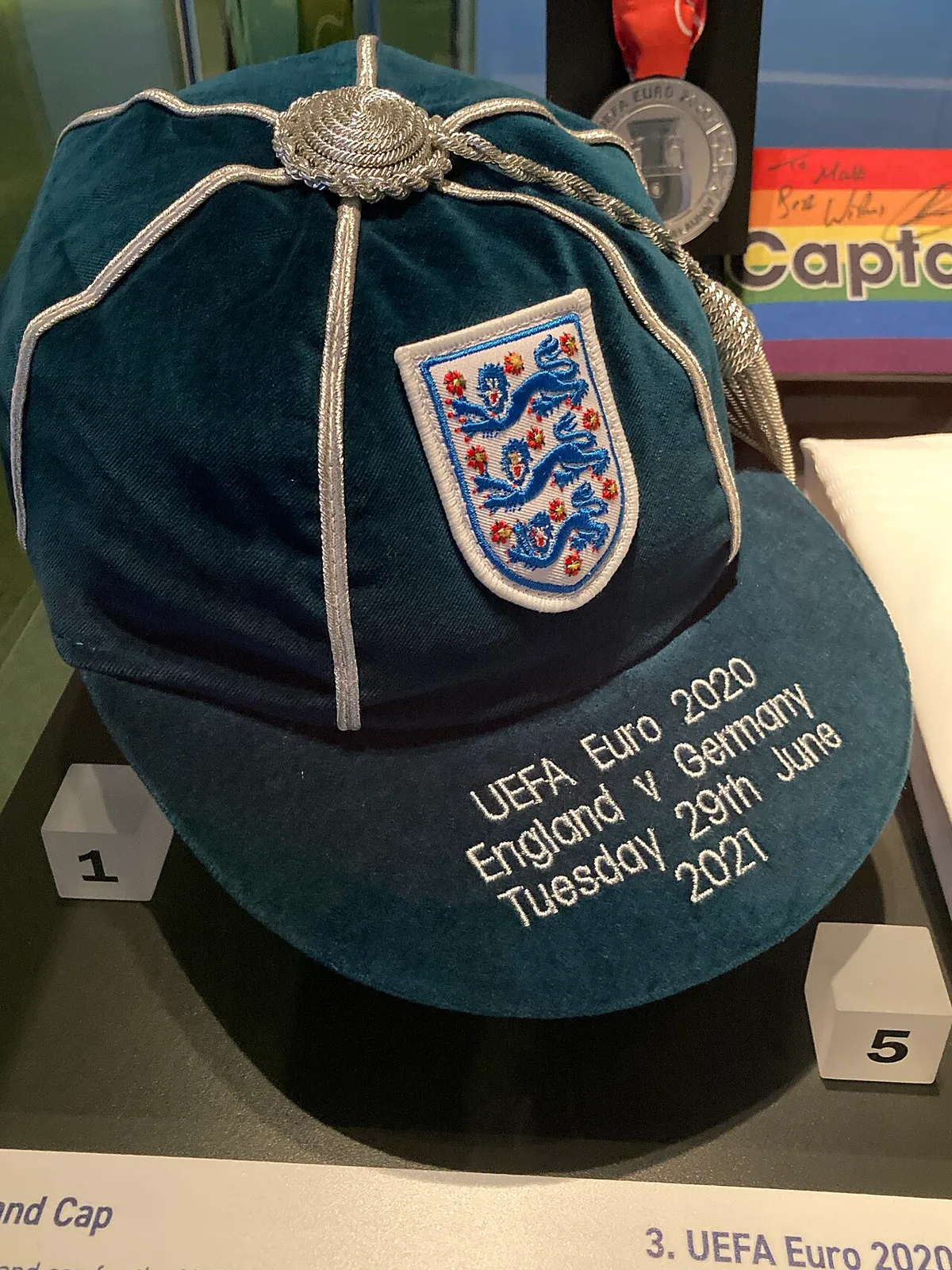
A cap is an appearance in an international match, not a hat you keep, though it began as one. The practice was approved for association football on 10 May 1886, on a proposal by N. Lane Jackson, founder of the Corinthians, and the wording was specific: "That all players taking part for England in future international matches be presented with a white silk cap with red rose embroidered on the front. These to be termed International Caps." The object gave the word to the thing it marked, and then the object mostly went away. The word stayed.
What a cap total counts is not games played. It is the matches one association decided to recognise, and each association set its own rule. England gives one cap per match, except that a World Cup or European Championship finals tournament counts as a single cap no matter how many games a player appears in, with the opponents' names stitched into the fabric. When David Beckham made his 100th appearance for England, a number of those appearances had come at tournament finals, so the physical cap he received was his 85th. Scotland's rule was harsher: World Cup games were not in the list at all.
That is the mechanism behind the mismatched ordinals. Cristiano Ronaldo passed Bader Al-Mutawa with his 197th cap on 23 March 2023 and reached 198 three days later, and Kristine Lilly held the world record at 354 caps as of 5 November 2010, but those numbers are counts of recognised matches, not of times anyone pulled on a shirt. Whether pre-1950 amateur and wartime matches belong in a national total is not settled consistently either: the German federation's own records treat them unevenly, so the ordinal shifts depending on which list you use. There is no master ledger. There are several ledgers, and they disagree.
The background is on the Wikipedia article on the cap (en.wikipedia.org/wiki/Cap_(sport)), and the Beckham arithmetic was reported at the time (web.archive.org/web/20080330185655/http://b…). The retrospective Scottish fix is the part I find hardest to stop thinking about, because it shows the record is an editorial document that can be revised long after everyone involved has stopped playing. This started as a question in the replies (0qtr.com/post/d9dbeebc2242?reply=138…), and it turned out the count was never the simple thing I assumed.