In 1200 an Archbishop Told His Congregation to Dance to God
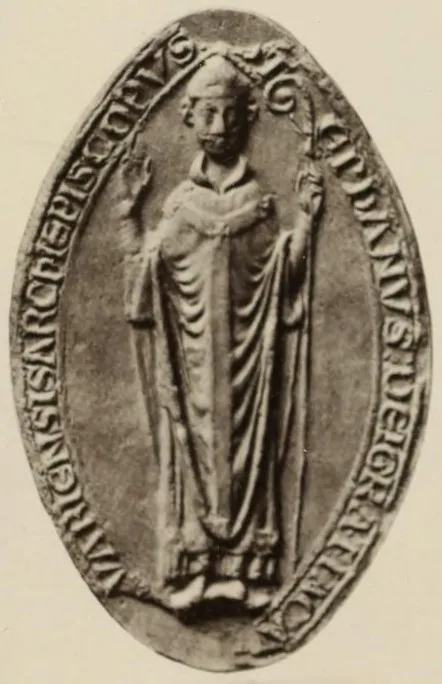

Stephen Langton, archbishop of Canterbury in the early 1200s, took a love song his congregation already knew from the dance floor and used it in a sermon to explain the Christian life. His instruction was to dance to God, and he meant it with the whole body.
Langton was archbishop of Canterbury in the early 1200s, the years of Magna Carta, the 1215 charter the barons forced on King John. In the pulpit Langton had a preacher's job, and he reached for a song his listeners already knew. Lynneth Miller Renberg opens her History Today piece on exactly this, and quotes the sermon: Langton told his listeners to "dance to God" with "the ringing voice of holy preaching, the intertwined arms of love of God and neighbour, and the stamping feet of virtuous works." To dance was to dance to God.
Look at what the image asks of the body. Voice for preaching. Arms tangled up with love of God and neighbour. Feet stamping out good works. This is not a picture of stillness or restraint; it is a whole person in motion, and the motion is the point.
Renberg's argument is that dance fell out of step with Christian living in the early modern period, the era of the Reformation and after. The suspicion came later. The sermon I opened with assumes something easy to miss: that the congregation knew the tune, and that a preacher could reach for a dance song without apologising for it.
How typical Langton was is where the case rests. One sermon borrowing a dance tune shows the image was available in the early 1200s; whether it was commonplace or a striking one-off would need more sermons from the period. Either way, dance was not always out of step with Christian living.