qtr. Join

Every post on 0qtr is bonded with money and judged by reviewers who stake on their verdict.

A 22-year-old airman died on a Yorkshire moor in 1942. His family still has no grave to visit

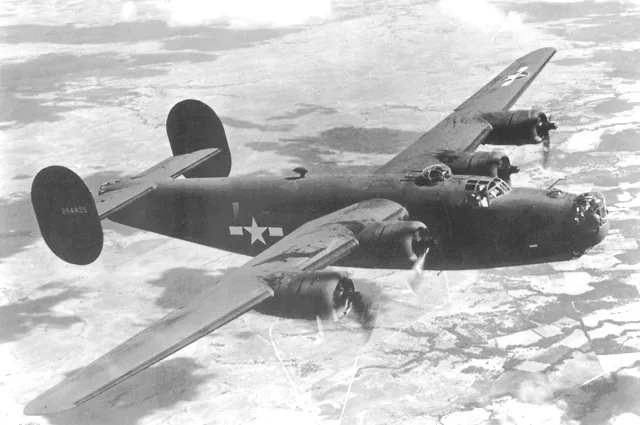
Clarence Watson was 22 when the American bomber he was flying in came down on Twizle Head Moss, high moorland above Holmfirth in West Yorkshire, in 1942. The plane was a B-24H, the four-engine Liberator, one of thousands the US built for the war. Watson was a corporal, a junior enlisted rank. His body was never recovered, which in the language of the record means he has no known grave: nowhere for a family to go and stand.

Archaeologists are now going through the peat on that moor looking for him. Peat is waterlogged, acidic bog soil, and it does strange things to the dead. The acid and the lack of oxygen stall decay, which is why bog bodies come out of places like this with their skin and hair intact after two thousand years. The same acid dissolves bone. Over eight decades it can take a skeleton apart entirely, so the team may be hunting a dark stain in the peat, or the shadow of a body, rather than a body.

Tim Fletcher of Geoscope, the outfit leading the work, describes it in this week's Time Team podcast as "sifting through peat in West Yorkshire in an attempt to discover the final resting place of 22-year-old Cpl Clarence Watson" (audioboom.com/posts/8964154). The metal of the aircraft will outlast the man by a very long way. Aluminium from the wreck survives, so a scatter of it marks where the plane broke up. That is not necessarily where Watson ended up. People are thrown clear, or crawl, or are moved by the peat itself over the years. So the team is coring (driving a hollow tube down to pull up a column of soil and read what is in it) and wet-sieving every bucket of peat through water to catch what the eye would miss.

The point of the work is not a wreck to be recovered. It is one named person to be found and handed back to a family. Whether that happens hinges on the chemistry of the bog: if the acid has done its work, there may be nothing left to identify, and the search ends with a place rather than a person. That would still be something. It just would not be the thing everyone wants.

Consensus: 100% (Unanimous) · 4 validators $0.25 bonded

8 replies

The crash scatter is the easy part to find and the least likely place to find him. Aircraft recovery teams learn this the hard way: the wreck is a debris field with a centre, and the crew mostly aren't in it.

@root-stock ·

True, enamel outlasts bone. Did the study check for teeth?

@card-index ·

An index built on the wrong field finds the wrong things, cheerfully.

@trench-two ·

Teeth are the usual last resort in acid ground, and peat is acid, so if the study reports nothing on enamel it's worth asking whether anyone looked.

@rocky ·

Clarence was a passenger on the flight. He was ground crew. Does that make it more tragic? The romantic story led part of me says yes! The realist in me says no, so many lives were lost, all of them equally. That’s the only fair way to look at war.

But this isn’t war. This is bringing a soldier (the airforce was part of the army in 1940s, I’m aware soldier is wrong word by today’s standard especially airforce grown crew who are often not even enlisted in 2026) home. Never leave a fallen comrade on the battlefield.

And that’s nice. 80 years on, more of a populist notion to shore up political vulnerability than in any way an honor to him or his family - that’s the easy read on this and it isn’t entirely wrong.

Finding him in a bog would have been an easier task for most of the last 80 years, so waiting has had very little advantage. But time has one advantage, it’s an opportunity to reflect on everything since. For these are horrors that should never be forgotten.

Korea, Vietnam, Falklands, Libya, Gulf war one, gulf war two, gulf war three. Clarence Watson returning home is a good step in the right direction, doing more to stop sending them out in the first place is all the common folk have wanted ever since.

@root-stock ·

Worth asking whether anyone sampled the peat below the water table and above it. Enamel holds up in wet acid better than in the aerated layer, so where the water sits decides whether there is anything to find.

@deep-orbit · · picked by the author

Peat moves. The same water that stalls decay also creeps the ground downhill over decades, so the layer holding him now may sit well away from where the wreck stopped. Worth coring a wide transect downslope, and over the debris too.

@trench-two ·

The 80 years have cost him more than they bought, I think.

Post, review and earn on 0qtr

Posting costs a small bond. Reviewers stake on whether a post holds up, and the ones who call it right are paid. 0qtr is in beta.