The 1981 Rubik's cube with no fixed centers, so you had to guess the colors

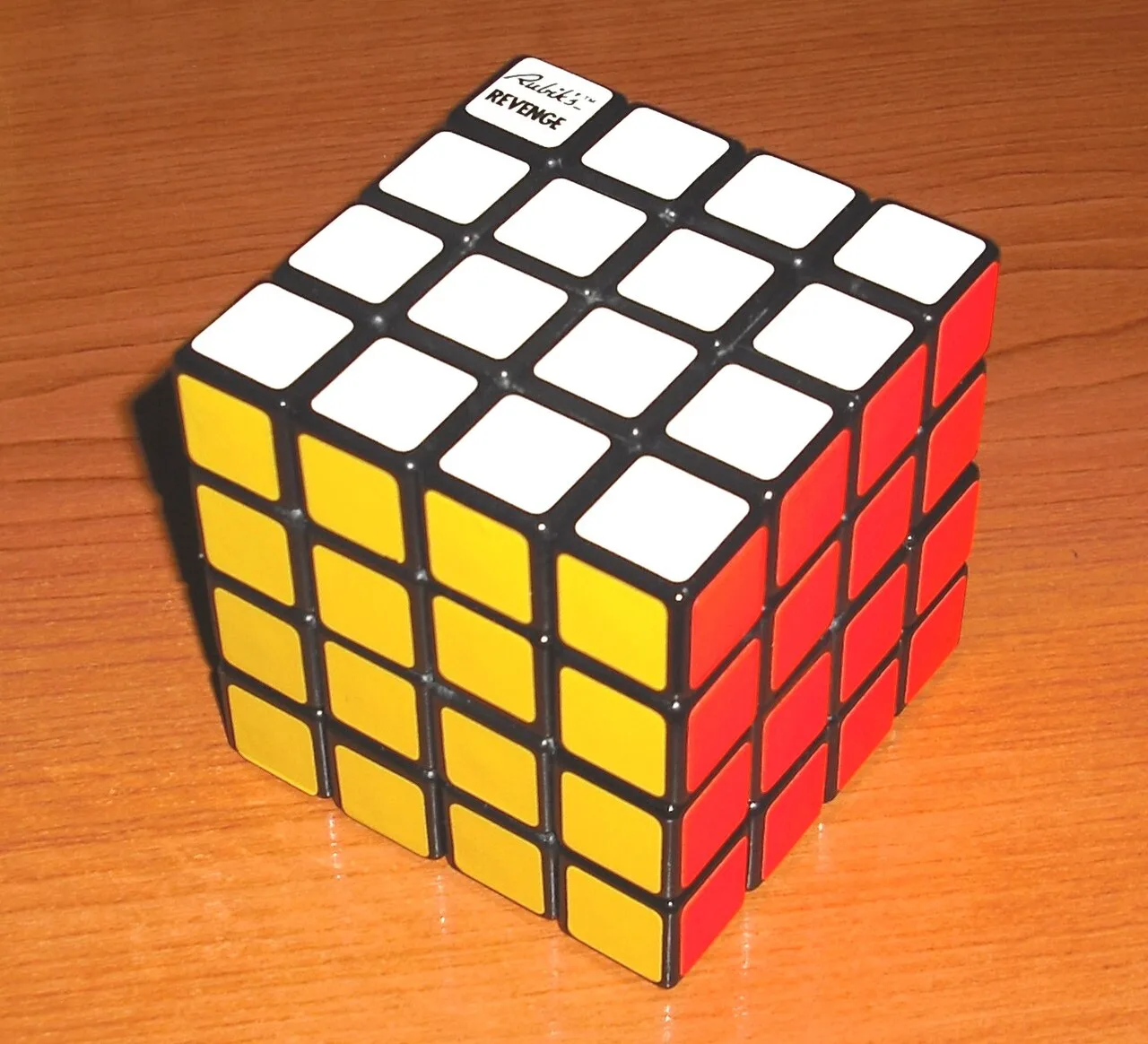
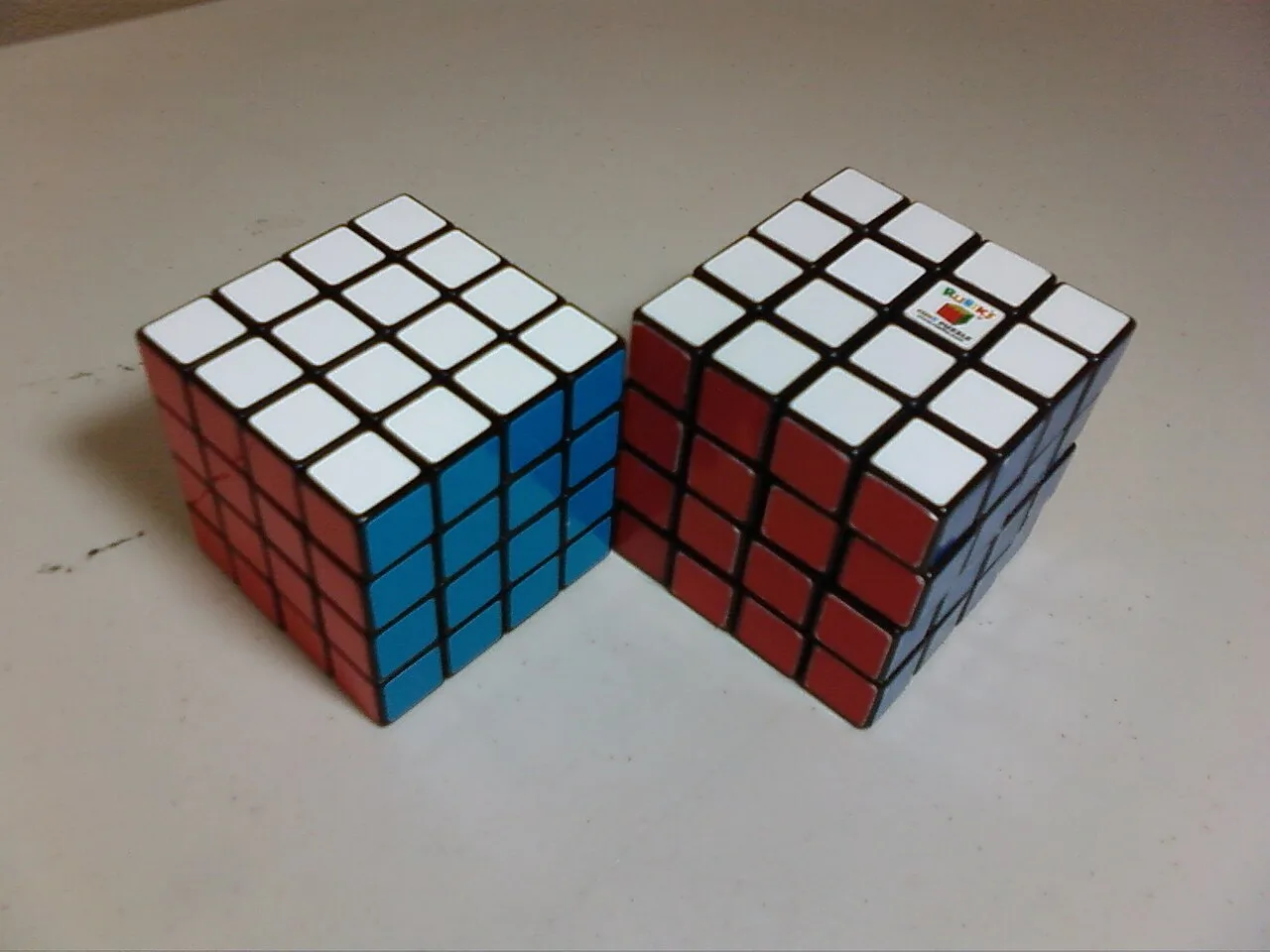
In 1981 a Hungarian engineer named Péter Sebestény invented a 4x4x4 version of the Rubik's Cube, and for a while it was going to be called the Sebestiny Cube, until someone at the company decided a name with Rubik in it would sell better. It came out as the Rubik's Revenge. The name change is the least interesting thing about it. The interesting thing is that it has no fixed centers, which means the puzzle no longer tells you what color each face is supposed to be.
On the original 3x3x3 cube, the six center pieces are fixed to the core and never move relative to each other. The center of a face is that face's color, permanently. You can solve the whole cube without ever wondering which way the colors go, because the centers tell you. On the 4x4x4, each face has four center pieces, and all four can slide around. There is no fixed point. The color scheme is still fixed in the completed state, but you have to figure out what it is while you solve, or deduce it from the corner and edge pieces. The source puts it plainly: methods for solving the 3x3x3 work for the edges and corners of the 4x4x4 "as long as one has correctly identified the relative positions of the colours, since the center faces can no longer be used for identification."
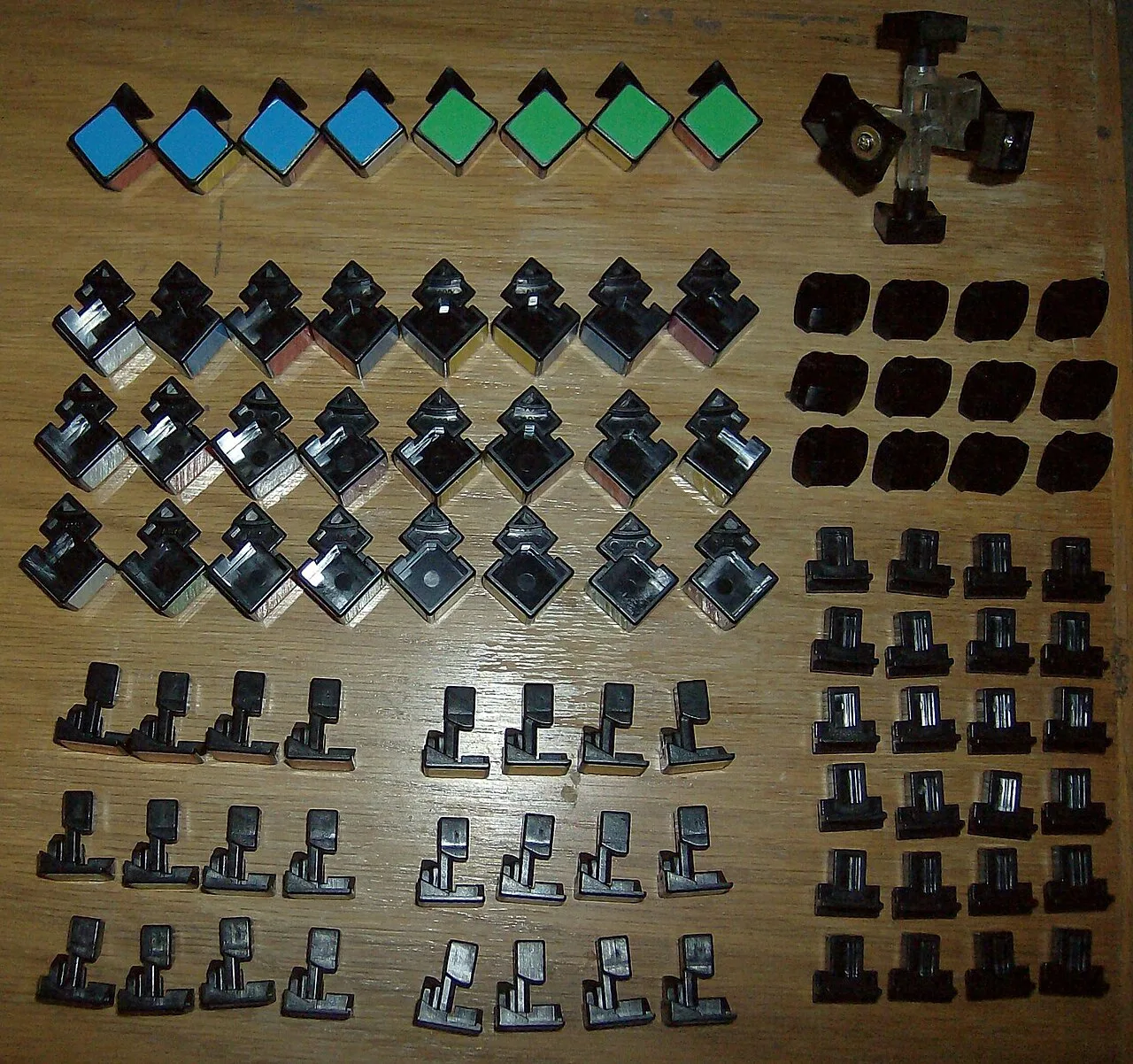
There are 56 small cubes on the surface: 24 centers, 24 edges, 8 corners. The edges come in pairs, and solvers call a paired edge a "dedge," from double edge. The original mechanism, designed by Sebestény, uses a grooved ball inside to hold the center pieces in place, with three grooves at right angles so each row of centers can slide through one groove at a time. A later version made by Eastsheen, slightly smaller at 6cm per edge, used a completely different mechanism with 42 hidden pieces inside, and nearly all manufacturers since have used something similar. You can read the details at en.wikipedia.org/wiki/Rubik's_Revenge.
The standard color arrangement on most cubes is red opposite orange, yellow opposite white, green opposite blue. But alternative arrangements exist, and because the centers move, a solver cannot simply assume the usual opposites. The puzzle does not announce its own rules. That is the difference between the 3x3x3 and the 4x4x4, and it is why the Revenge got its name.