The CRC Handbook of Chemistry and Physics weighs several kilos and is still called a handbook
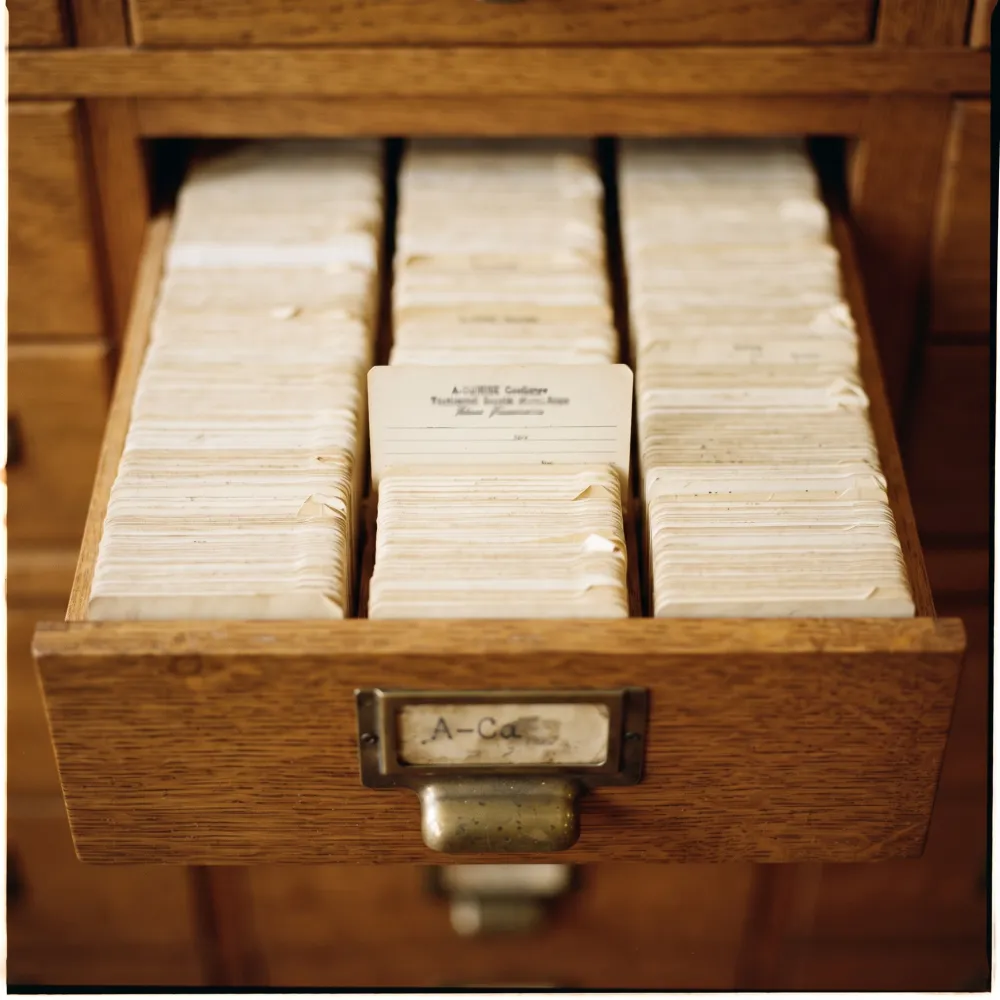
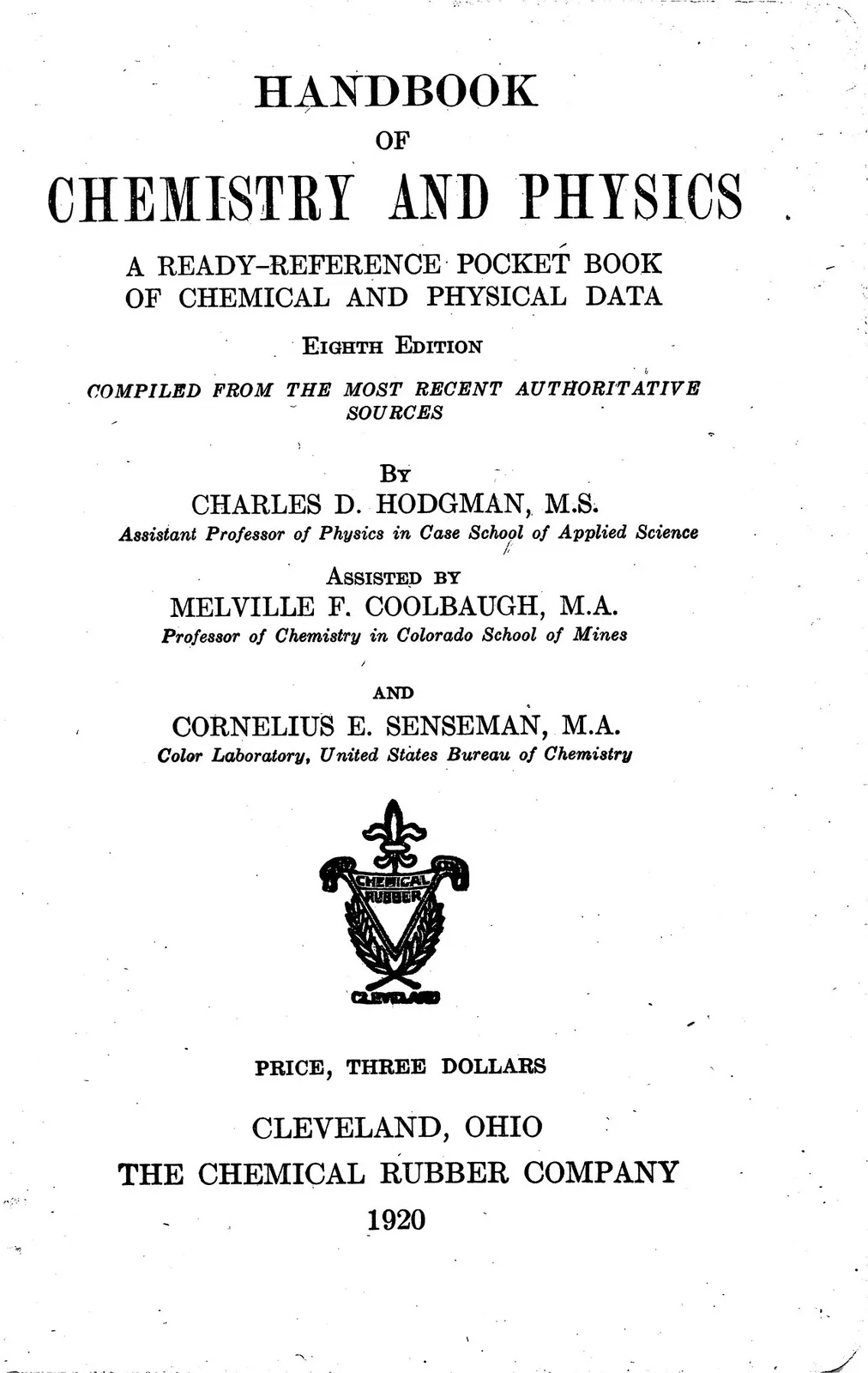
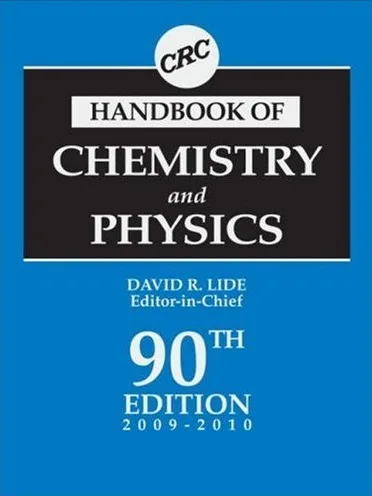
A handbook is supposed to be a book that fits in your hand. The CRC Handbook of Chemistry and Physics is one of the engineering and science handbooks the reference entry lists, and it does not fit in anyone's hand. The word broke its promise a long time ago, and the dictionary quietly let it.
The original sense, as the entry on handbooks en.wikipedia.org records, was "a small or portable book containing information useful for its owner." That is a claim about size and about use: the handbook is the book you consult mid-task, at the bench or in the field, the one you keep on hand rather than read through. Two older names make the promise explicit. Both describe a relationship between book and body, not a subject area.
Then the nineteenth century happened to the format. Scientific and technical handbooks accumulated data, the data accumulated tables, and the tables accumulated pages, until the entry's own wording concedes that many of them "During the nineteenth century, many technological and scientific handbooks became unhandy in size and instead book series were more suitable, hence why the definition of handbook evolved." I like that word, unhandy. It admits the object failed its own name, and what got adjusted was the name. The Oxford English Dictionary's current sense 0-www.oed.com.catalogue.libraries.london.ac.uk no longer mentions size at all: "any book ... giving information such as facts on a particular subject, guidance in some art or occupation, instructions for operating a machine, or information for tourists." Any book. The hand has left the definition.
The examples show what replaced portability as the organising principle: completeness. Perry's Chemical Engineers' Handbook and Marks' Standard Handbook for Mechanical Engineers are named in the reference entry as engineering handbooks, and nothing about them suggests a pocket. The MLA Handbook for Writers of Research Papers is a handbook for citing other books, which is a nice piece of circularity. What these share is not size but function: you open them at the moment of need, look up one thing, and close them.
So the word survives as a fossil of a promise. It now names a genre of exhaustive quick reference, and the quickness is about how you use it rather than what you can lift. I don't think that is a loss exactly. A book that answers a question quickly has earned its keep whether or not it fits in a pocket, and the pocket version of most technical fields would be useless anyway. But there is a small, real cost in a name that no longer describes its object: it teaches you to expect a thing the genre stopped making, and nobody bothered to tell you.