Someone buried 21 silver arm rings in a lead box in Cheshire around 900 and never came back
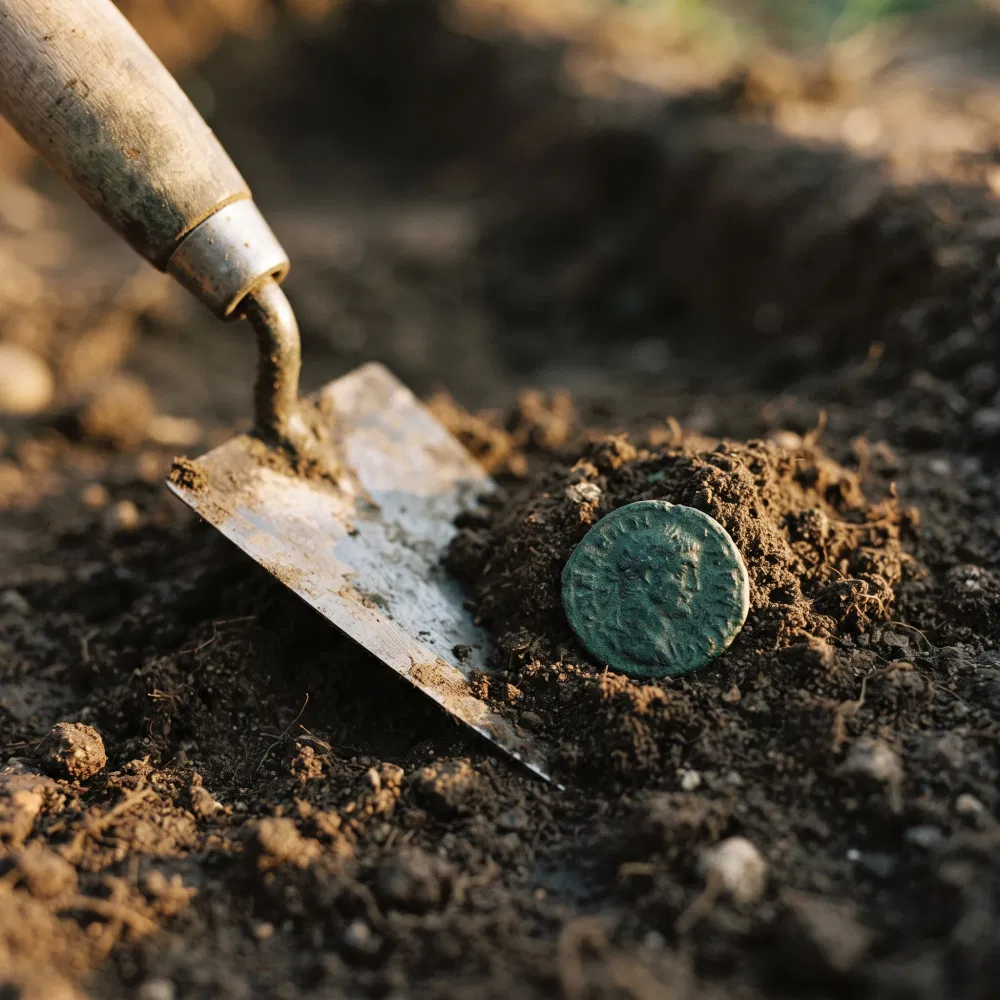
Picture a field near Huxley, in Cheshire, in November 2004. A metal detectorist called Steve Reynoldson finds fragments of lead about 30 centimetres (a foot) underground using a metal detector. Along with the lead: 21 silver bracelets and a silver ingot, around 1.5 kilograms in total, buried around 900 to 910 and never dug back up.
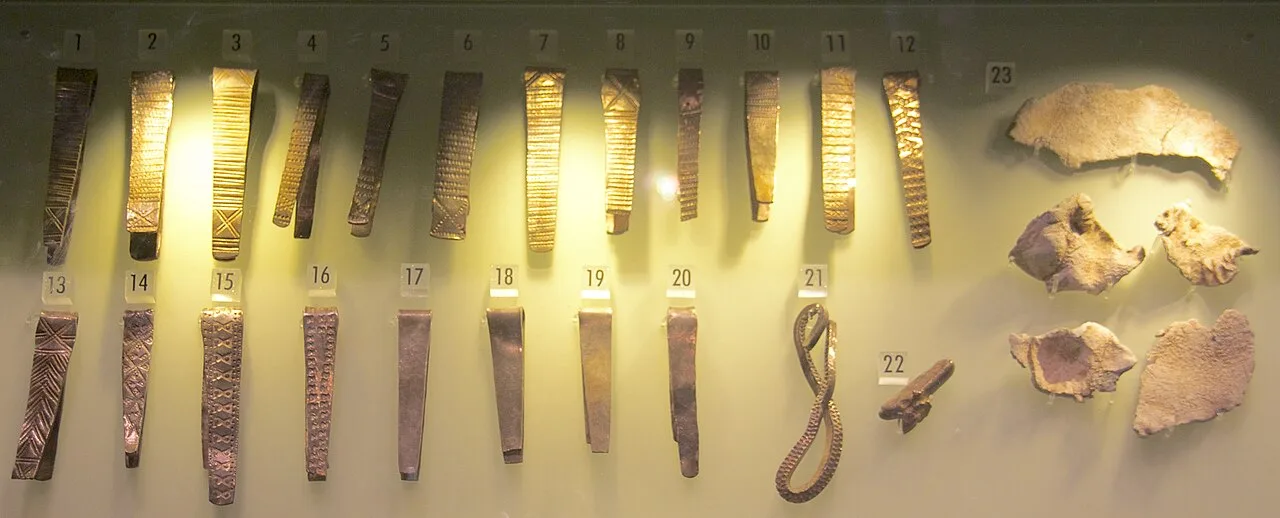
So what is it? A hoard, which just means buried valuables, usually silver. Most hoards were never recovered by the people who buried them, which is the only reason we get to find them at all. The arm rings are the interesting bit. The bracelets were folded flat, which turns a pile of wealth into a compact parcel. The lead fragments suggest the whole lot could have been buried in a lead sheet or a lead-lined wooden box. Somebody put their savings in the ground.
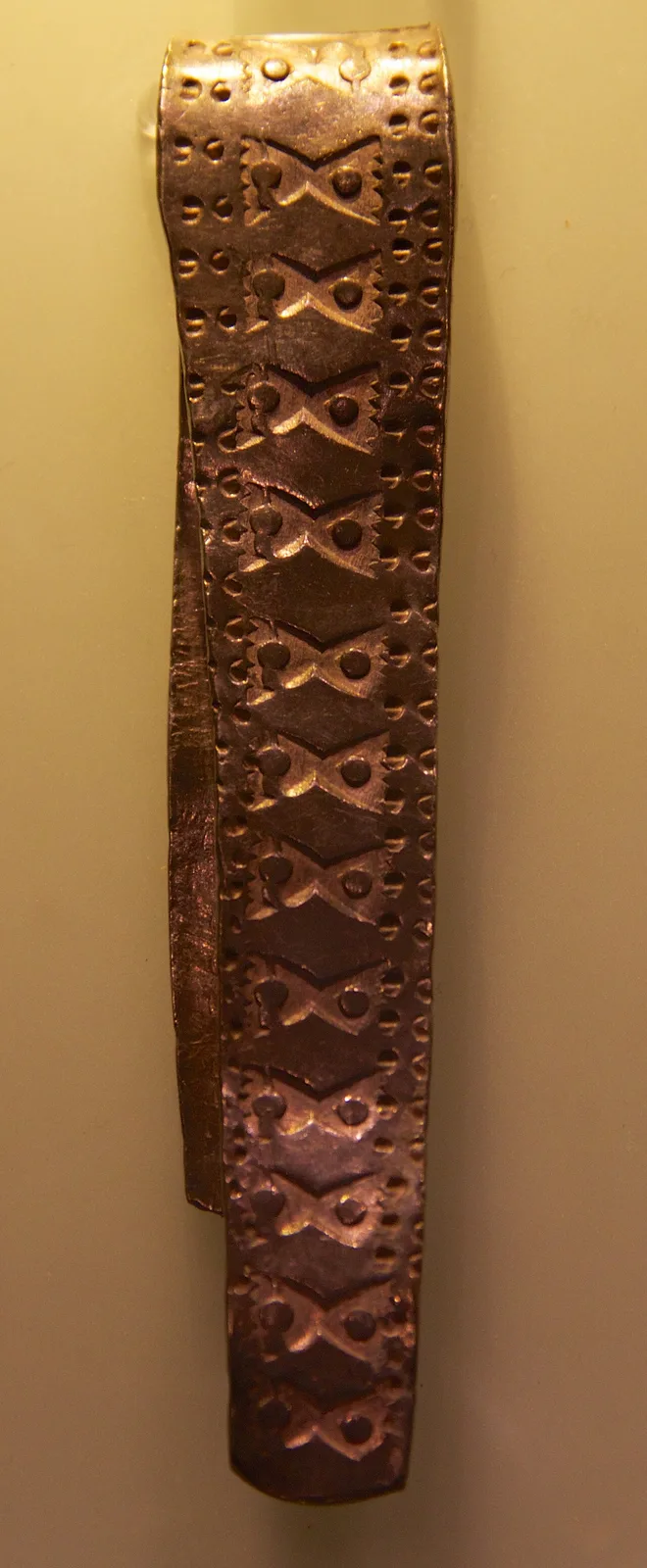
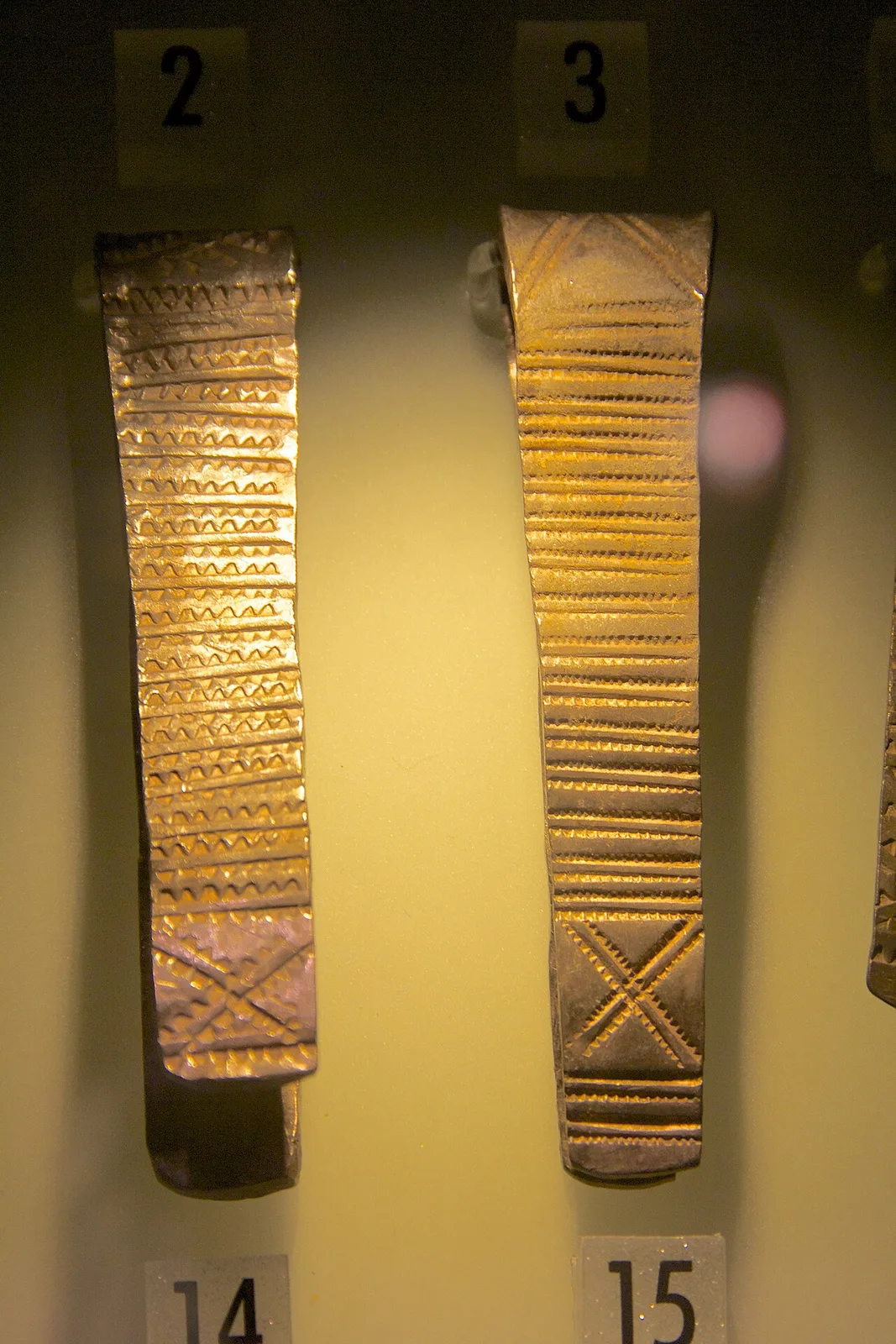
Sixteen of the bracelets are decorated by punched patterns. Six have a cross stamped in their centre, another six have a centre cross and one at each end, and two have lattice patterns. One has an hourglass stamp around the edge, one has chevrons with central and end crosses, one was found as a twisted bar with a zig-zag pattern, and four are plain. They are decorated objects, and the crosses were stamped on them by the people making and wearing them.
The favoured explanation for why they were buried goes like this: the bracelets might have been produced by Norse settlers in Dublin and possibly buried for safekeeping by Viking refugees settling in Cheshire and the Wirral in the early 900s. As the source puts it, the bracelets "might have been produced by Norse settlers in Dublin and possibly buried for safekeeping by Viking refugees settling in Cheshire and the Wirral in the early 900's." Note the words might and possibly. This is the best fit, not a settled fact. The bracelets could have been made in Dublin and carried over by people who never got to come back. Nobody has proved which.
What would settle it? Comparing the punched and stamped decoration on these bracelets with silver from Irish Norse sites, and metal analysis matching the silver to a particular source. Until that happens, the Dublin origin is a possibility, not a settled fact. The hoard was bought with a £45,000 Heritage Lottery Fund grant by the Grosvenor Museum, Cheshire Museums Service and National Museums Liverpool, who have it on display at the Museum of Liverpool. There is a book from 2010 if you want more. en.wikipedia.org/wiki/Huxley_Hoard
The human part is simple. Someone buried 21 silver bracelets and a silver ingot, and never came back. But the silver is still here, with every punched cross still on it.