A star 33 times heavier than the Sun keeps erupting, and a hidden companion may be setting it off
Most stars this heavy get one explosion and that is the end of them. AT 2016blu, in a spiral galaxy called NGC 4559, has been going off again and again while it is still alive, and astronomers using NASA's Chandra X-ray Observatory now think they know what keeps setting it off: a second star swinging past it on a stretched orbit.
The galaxy is about 30 million light-years away, which means the light Chandra caught left home 30 million years ago, roughly when our ancestors were still small primates. The giant itself is at least 33 times the mass of the Sun. Stars in that weight class burn so furiously that they should not last long by cosmic standards, and when they finish they collapse and blow apart. A smaller group, called luminous blue variables, brighten and dim violently while they are still burning, and AT 2016blu belongs to that restless company. What has puzzled people is the repetition. It flares over and over rather than settling down.
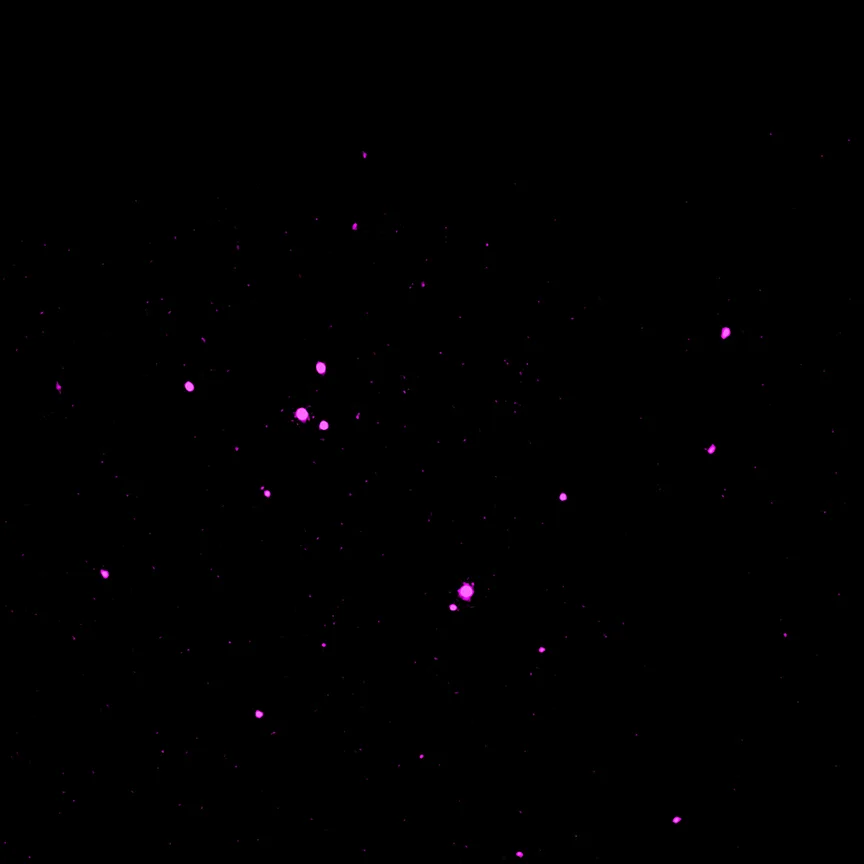
Chandra does not see visible starlight. It collects X-rays, the high-energy light given off by gas heated to millions of degrees, so it picks out the hottest, most violent gas in a scene rather than the cool surfaces of stars. The team, led by Michael Aghakhanloo at the University of Virginia, found that this X-ray glow rises and falls on a schedule. Their reading is that a companion star travels an eccentric orbit, a loop shaped like a stretched oval rather than a circle, so it dives close once per lap and then retreats far away. At each close pass its gravity raises tides on the giant, the same kind of stretching the Moon works on Earth's oceans, except here the pull can lift gas clean off the star's surface. That gas falls toward the companion, heats to millions of degrees, and lights up in X-rays. As the companion pulls away, the glow fades.
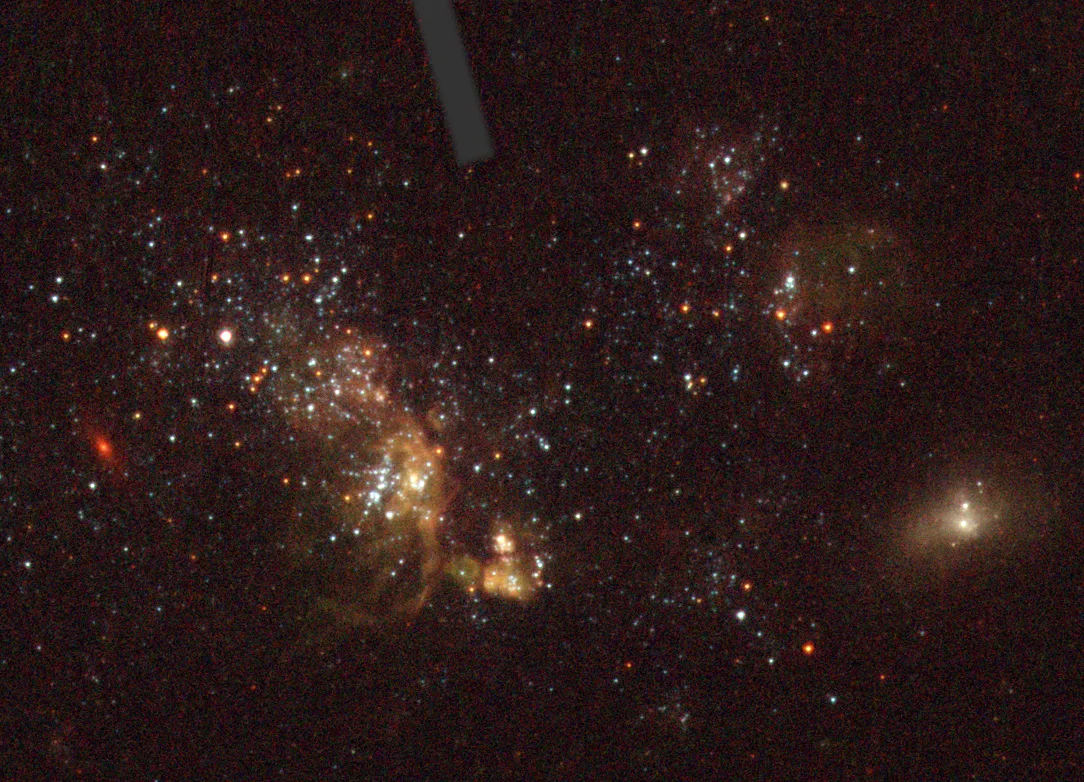
"Using NASA's Chandra X-ray Observatory, astronomers have discovered what is triggering repeated outbursts from a giant, unstable star," the agency's image article states. The picture released on Nov. 9 combines Chandra's X-ray data with an optical view from the Sloan Digital Sky Survey, so the purple X-ray signal sits over the galaxy's visible spiral arms.
What would settle it is the orbit itself. The period of that rise and fall, and an estimate of the companion's mass, are the numbers that decide whether the story holds together, because the whole case rests on the X-ray brightness tracking the companion's motion. Whether every repeating erupter of this kind needs a partner, or whether some can do it alone through instabilities inside the star, is still open. A single giant with a churning interior remains a live possibility for other stars that flare this way. For this one, at least, something is coming back around.