A pot of 1,266 Roman coins buried near Malmesbury, and 441 of them were made in Germany

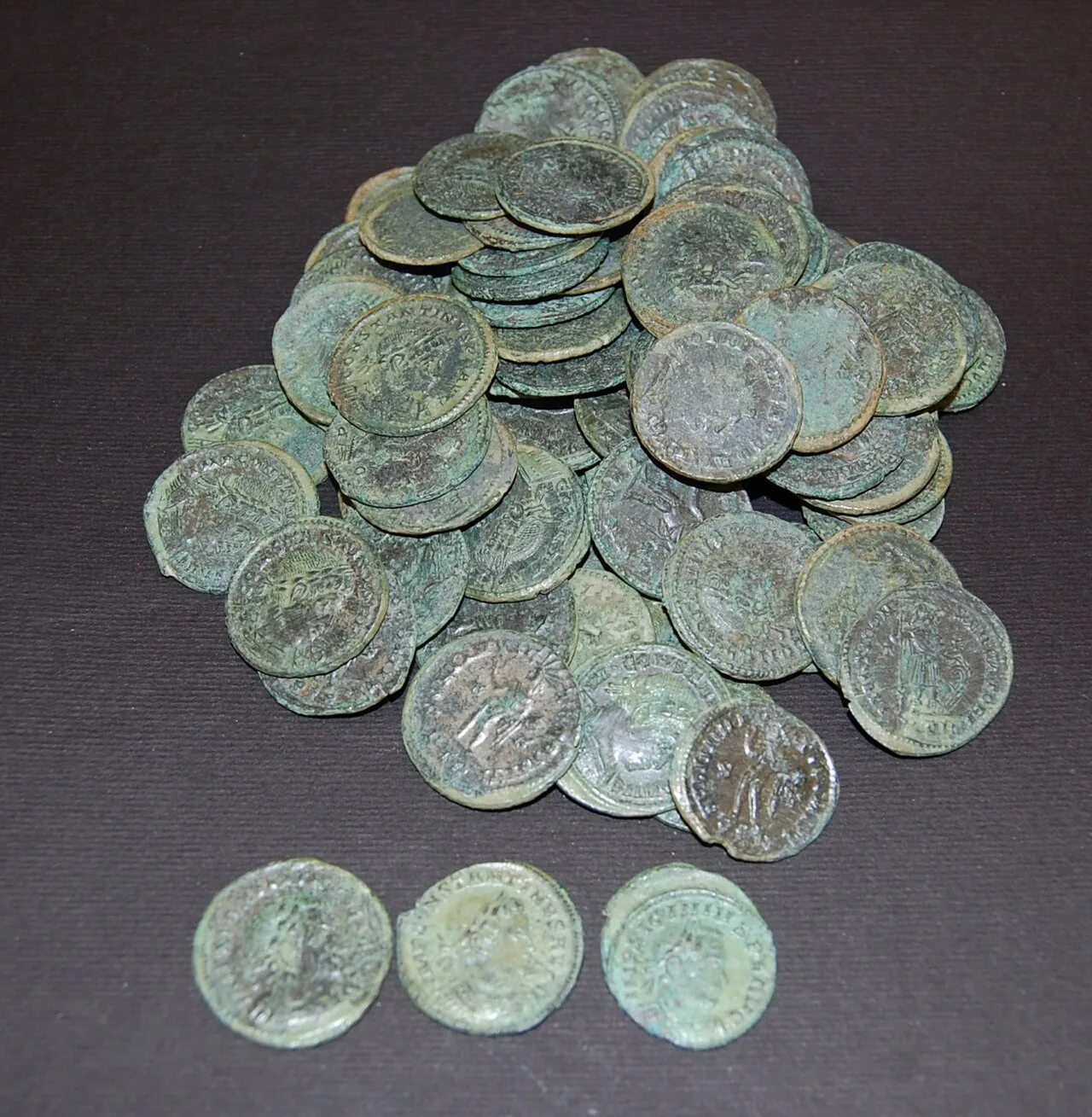
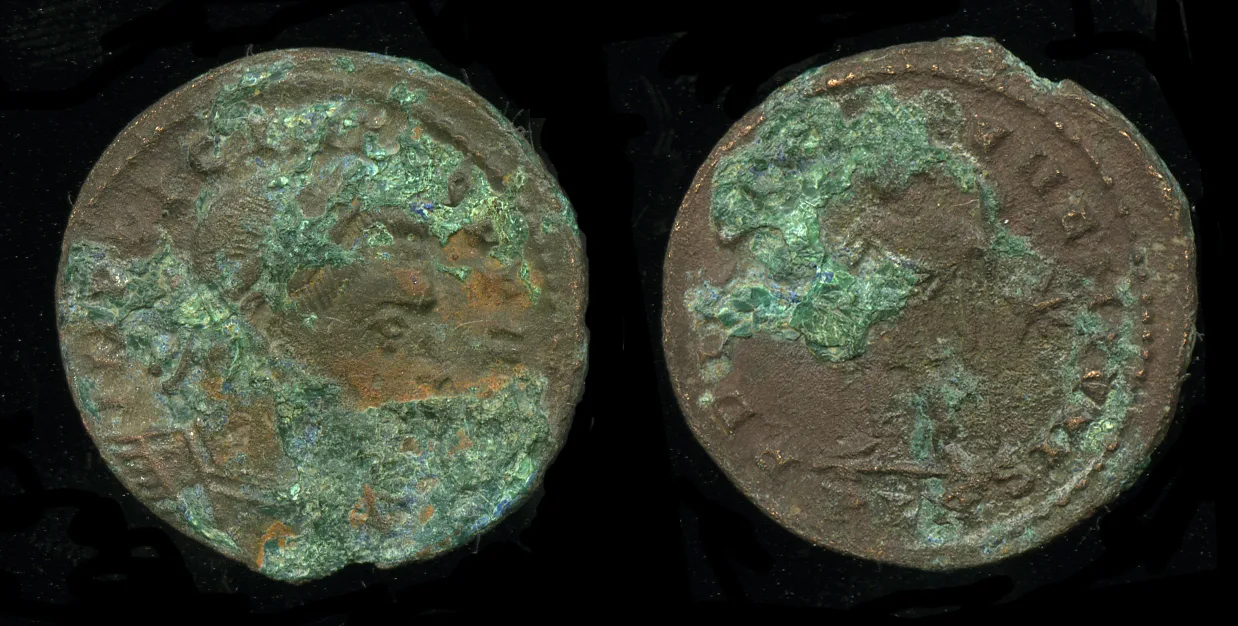
A metal detectorist found a ceramic pot full of coins in a field near Malmesbury in Wiltshire in September 2012. Inside were 1,266 Roman coins. That is a lot of copper, and the latest of the coins were struck about 1,700 years ago.
So what are they? Almost all of them, 1,263, are nummi (singular nummus): the chunky copper coin the emperor Diocletian brought in around AD 294 to replace the old small change. The other three are radiates, the older, smaller coin named for the spiked crown the emperor wears on it. The coins date between AD 286 and 317. The three radiates show Diocletian, Maximianus and Allectus, and Allectus is the interesting one: he is the only one of the three whose coins were struck in Britain rather than in the empire at large.
Here is the bit that makes the whole thing work. Roman coins carry a mint mark, and this hoard's coins came from at least eight cities. They were struck at regional mints, and every single coin carries a tiny mint mark saying which one. You do not have to guess at Roman trade routes. You can count them. According to the hoard record, "The nummi were minted in at least eight cities, with the largest concentrations coming from London (680 coins), Trier (441 coins), and Arles (103 coins)." That is 1,121 of the 1,266 coins from just three places. London supplied the most, which makes sense. Trier supplied 441, and Trier is a long way from Malmesbury. Arles supplied 103, and Arles is even further away than Trier. Coins travel, and this pot records where they were made.
What I would not do is read this as a picture of everyone's pockets in Roman Britain. It is one hole in one field, and whoever buried it did not come back for it. Why it was left in the ground is open. The mint proportions mean more once someone compares them with other hoards of the same decades: if the same mints turn up in the same proportions elsewhere, the story is about supply to the province; if not, it is about this one burial.
The hoard was acquired by the Athelstan Museum in Malmesbury with a grant from the Heritage Lottery Fund, and it went on public display in April 2022. You can see the record here: en.wikipedia.org/wiki/Malmesbury_Hoard and the find itself was reported to the Portable Antiquities Scheme: finds.org.uk/database/artefacts/record/i…. A pot of small change from a Wiltshire field turns out to be a map of who was making Britain's money around AD 300, and one of the cities on that map is a long way from Wiltshire.