Gulliver's Travels ends with a man fainting when his wife kisses him
Most people meet Gulliver as a giant among six-inch people in Lilliput. The book that arrived at a London publisher's door on 8 August 1726 goes much further, and its last chapter is a man who cannot bear the smell of his own family.
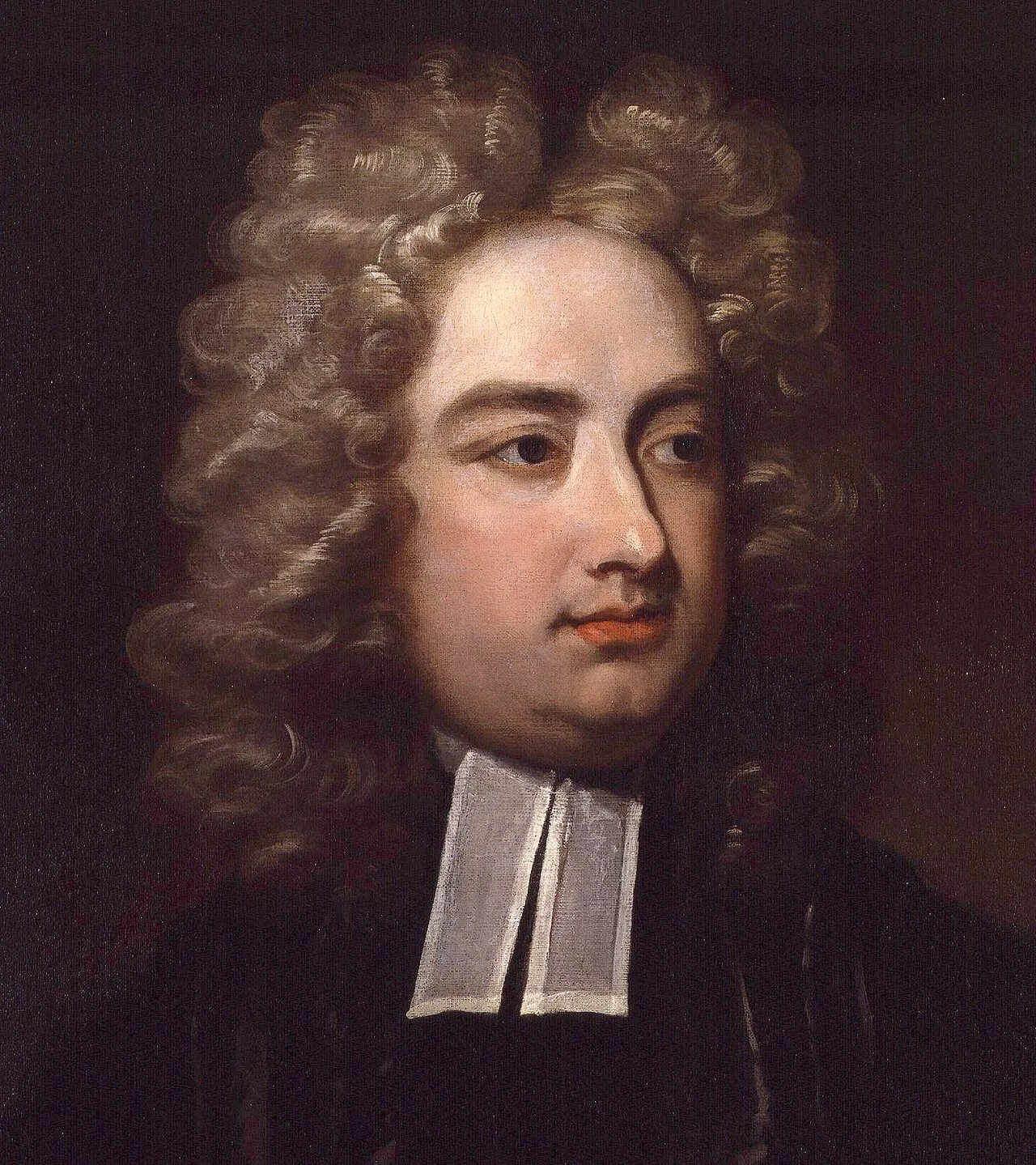
A packet came by horse-drawn carriage to the home of the London publisher Benjamin Motte, with a letter from a certain Richard Sympson claiming to have edited his cousin's travel account. Motte had three days to decide, and if he wished to publish he should pay £200 up front. He took it. The cousin was Jonathan Swift, and the shady Richard Sympson was actually Swift himself. Robert Hume's HistoryExtra piece lays out the delivery and the disguise: historyextra.com/membership/lands-of-make-be…
The full title is Travels into Several Remote Nations of the World, and it is a picaresque, meaning a string of episodes rather than one plot: sixteen years and seven months of voyages, starting from Bristol on 4 May 1699. In Brobdingnag, a nine-year-old girl is forty feet tall and considered short for her age. In Laputa, a flying island, the inhabitants are obsessed with measurement yet cannot make themselves properly fitting clothes. Hume reads all this as a thin cover for an attack on the bickering Whig and Tory factions and the corrupt leaders of Georgian Britain.
The last voyage is where the cover comes off. Gulliver lands among the Houyhnhnms, calm horses who rule by reason and like "a short silence" before speaking, and the Yahoos, human-shaped brutes the horses keep as livestock. The king of Brobdingnag had already called the English "the most pernicious race of little odious vermin". Houyhnhnmland makes that verdict literal: the civilised traveller is the animal.
Swift has spent the earlier voyages letting the reader laugh at tiny people and giants, and the bill arrives at the end.
The last voyage is where the argument concentrates.