A heatwave can draw the plan of a 2,000-year-old building in the grass
On the Time Team podcast episode published on 25 August, archaeologist Dr Helen Geake took a listener's question about how hot, dry summers keep turning up buried buildings. The answer is that nobody digs anything. The grass does the drawing.
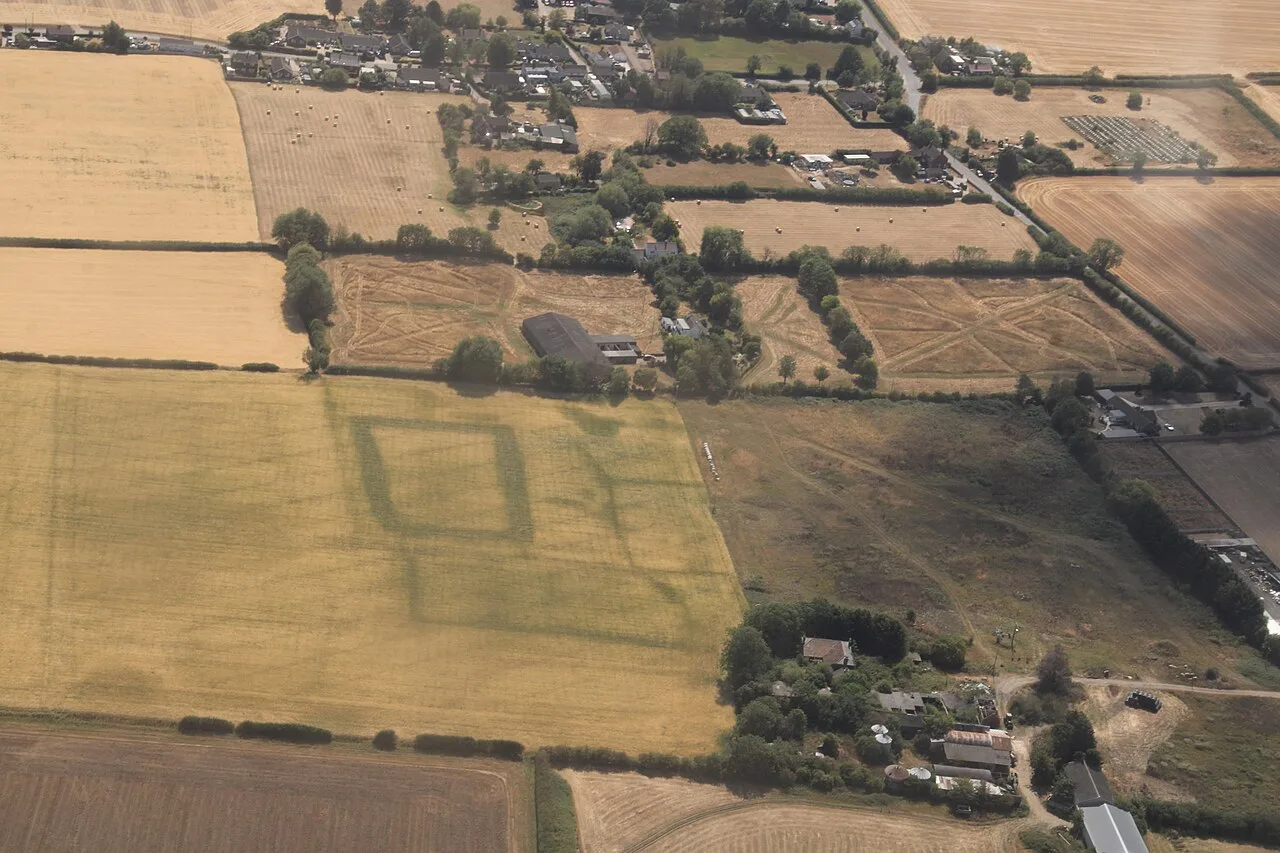
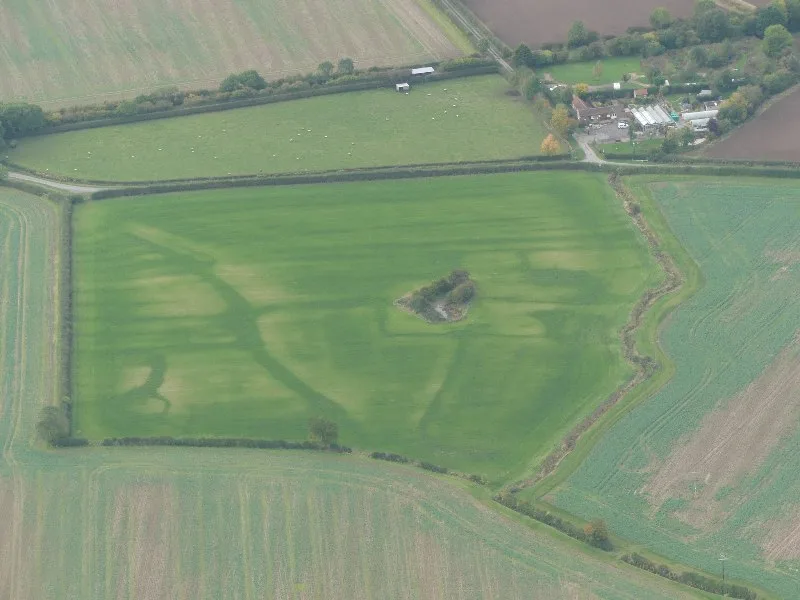
Here is the physics, and it is ordinary. Most buried walls and ditches in farm fields sit just below the plough soil, often only a spade's depth down, so plant roots run into them. Stone holds less water than soil, so grass over a wall runs dry first and goes pale. Ditch fill holds more water, so grass over a ditch stays green after everything around it has browned. From ground level you see a field of grass. From a drone or a light aircraft you see the plan of a building, traced in colours that differ by a shade and heights that differ by centimetres. Archaeologists call these cropmarks or parch marks: patterns in vegetation, visible from above, that follow something buried.
This is why the conditions matter so much. It needs old pasture, meaning grass kept for grazing rather than ploughed, because ploughing churns the topsoil and smears the pattern away. A heatwave over undisturbed grass is a gift. A heatwave over a ploughed field is nothing. The episode page puts it as "how recent heatwaves are exposing lost archaeology in the ground below," which is the whole trick in one line: the archaeology was never lost, just invisible until the weather changed.
One honest caution. The page summarises the conversation rather than transcribing it, so the exact wording of Geake's explanation, and any specific sites she named, sit in the audio rather than in the text I have. The mechanism above is the standard one; her examples would be the icing.
The same episode also takes on whether archaeologists of the future would read double yellow lines as decoration, which is a better question than it sounds for a discipline that spends its time deciding what was ornamental and what was practical. It marks Sir Tony Robinson's 80th birthday too, and Helen's Find links to a British Museum record: britishmuseum.org/collection/object/H_1991-04…. You can hear the whole thing here: audioboom.com/posts/8943449