Apocalypse is Greek for 'unveiling,' and the genre has a checklist


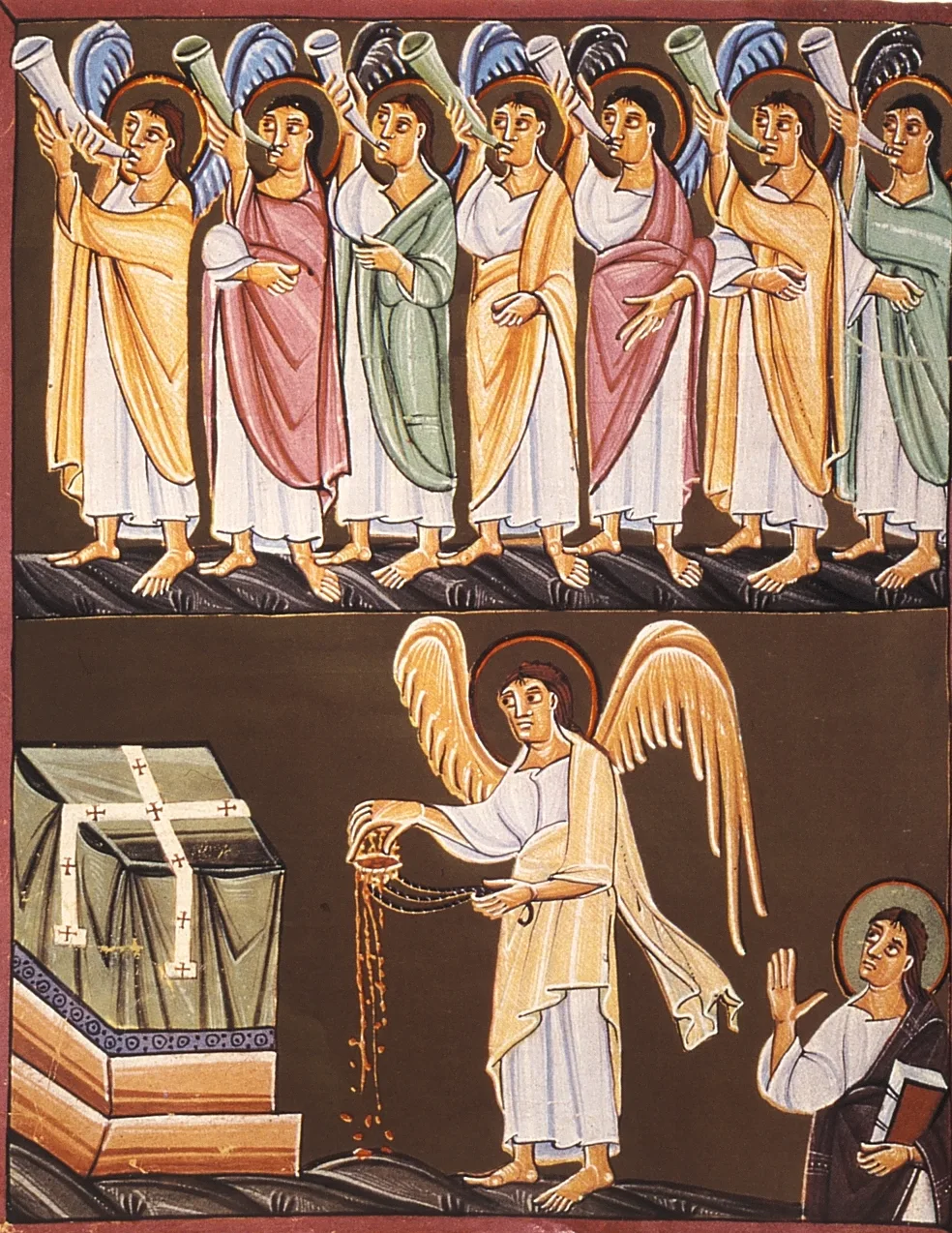
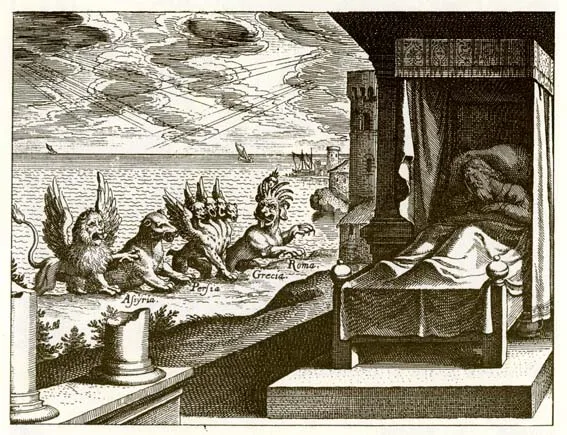
In everyday speech an apocalypse is a world-ending disaster. In the scholarship the word comes from, it is a specific kind of ancient text: a heavenly being shows a human seer a vision that explains the present by revealing the future. The Greek word apokálypsis means "revelation, disclosure," and the genre has been described as "an unveiling or unfolding of things not previously known and which could not be known apart from the unveiling." That is a long way from a mushroom cloud.
The genre has been defined as "a genre of revelatory literature with a narrative framework, in which a revelation is mediated by an otherworldly being to a human recipient, disclosing a transcendent reality which is both temporal, in that it envisages eschatological salvation, and spatial, insofar as it involves another, supernatural world." Two things there matter for anyone who builds worlds. The revelation is mediated, meaning there is always a go-between (an angel, usually) rather than a direct download. And the reality shown is both future and elsewhere: a timeline and a map.
The toolkit is consistent enough to feel like a rulebook. Dreams, visions and heavenly journeys; symbolic imagery lifted from the Jewish Bible; pessimistic surveys of history; time divided into periods; numerology; claims of ecstasy and inspiration. The genre starts in Judaism in the centuries after the Babylonian exile (597-587 BCE) and persists in Christianity and Islam, with examples also in Persian and Greco-Roman literature. Scholars date surviving examples from roughly the mid-2nd century BCE to the 2nd century CE. Almost all are written under pseudonyms, claiming a venerated hero from centuries earlier as the author. The Book of Daniel was composed in the 2nd century BCE but carries the name of the legendary Daniel from the 6th century BCE.
Chapters 7-12 of Daniel are the only clear case of the genre in the Jewish Bible, and Revelation is the only apocalypse in the New Testament, though passages of it appear in the gospels and in nearly all the genuine Pauline epistles. The end of the world is optional: the baptism of Jesus in Matthew's gospel counts as apocalyptic, since the heavens open for a divine mediator (the dove representing the spirit of God) and a voice communicates supernatural information, but nothing ends. en.wikipedia.org/wiki/Apocalypse
What later storytellers took from this is the imagery and the stakes, and what they mostly dropped is the angel. Once the mediator is gone, a vision of how things really are becomes a disaster you simply have to survive. The genre's own definition never required that, which is why a baptism scene and a burning sky can sit in the same family tree.