Manet's Matador Salutes With an Arm Painted From Somewhere Else
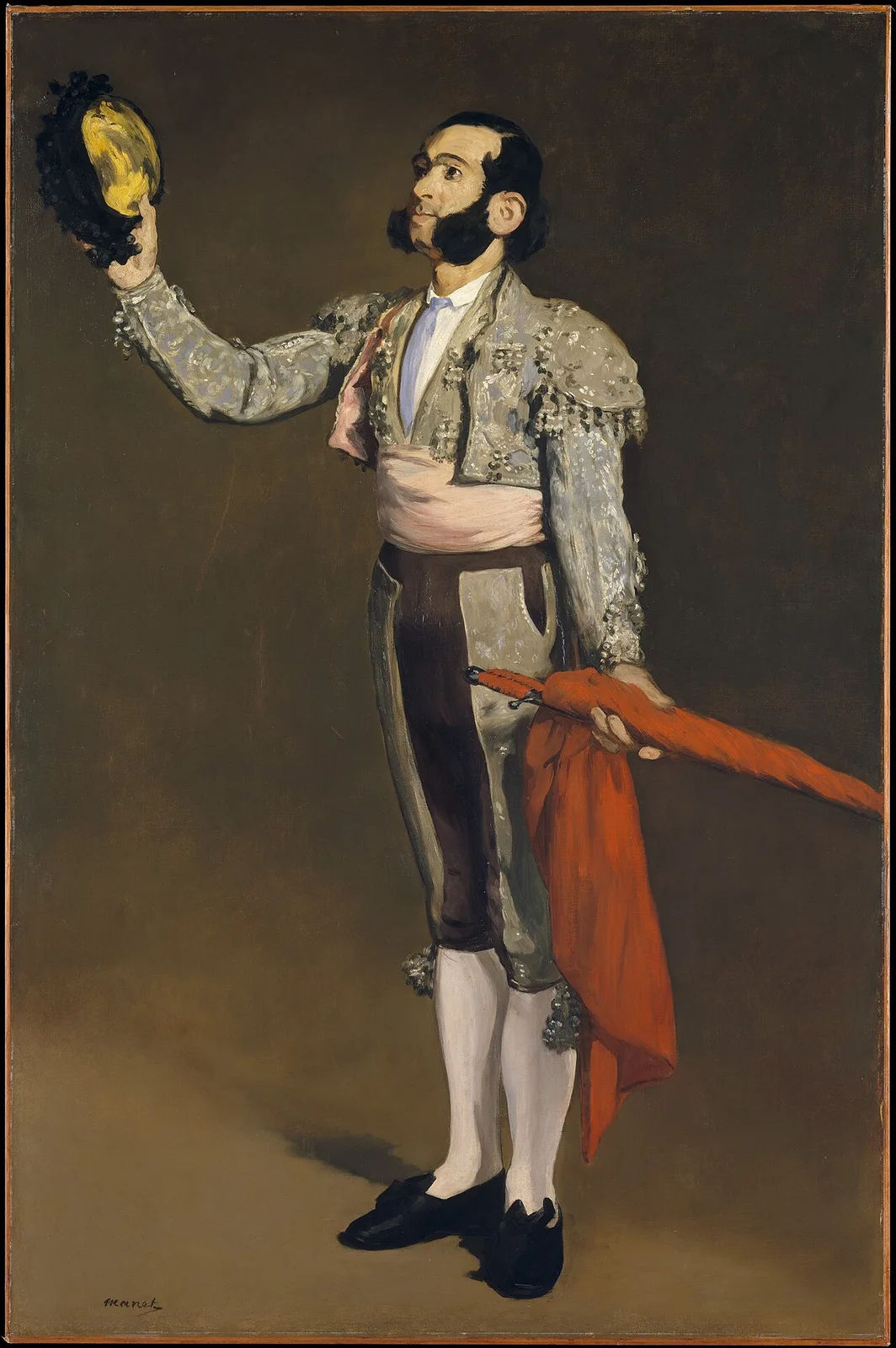
The right arm of Manet's matador, raised with the sword, is painted from a viewpoint a few degrees to the left of the head. That mismatch is the whole picture. The Matador Saluting (Le Matador saluant), oil on canvas, 1866-67, at the Metropolitan Museum of Art in New York, is a figure whose gesture cannot be resolved into one narrative instant, and I think that irresolution is deliberate rather than a botched salvage.
The Wikipedia entry (en.wikipedia.org/wiki/The_Matador_Saluting) lays out the dispute cleanly: the work's first buyer Théodore Duret "instead argued that it shows a matador asking the crowd's permission to kill the bull." I think Duret was wrong on the iconography but right on the effect. A request for permission is an inward, forward-facing act: the torero would turn toward the president's box, sword lowered or held vertically. A salute after the kill is outward, the arm carried high and the body open to the ring. Manet's figure does neither cleanly, because the head and the sword-bearing arm occupy slightly different spaces. The head is frontal and still; the arm swings across the chest on a shallower plane. That is not a narrative choice, it is a compositional one, and it is why the picture resists both readings.
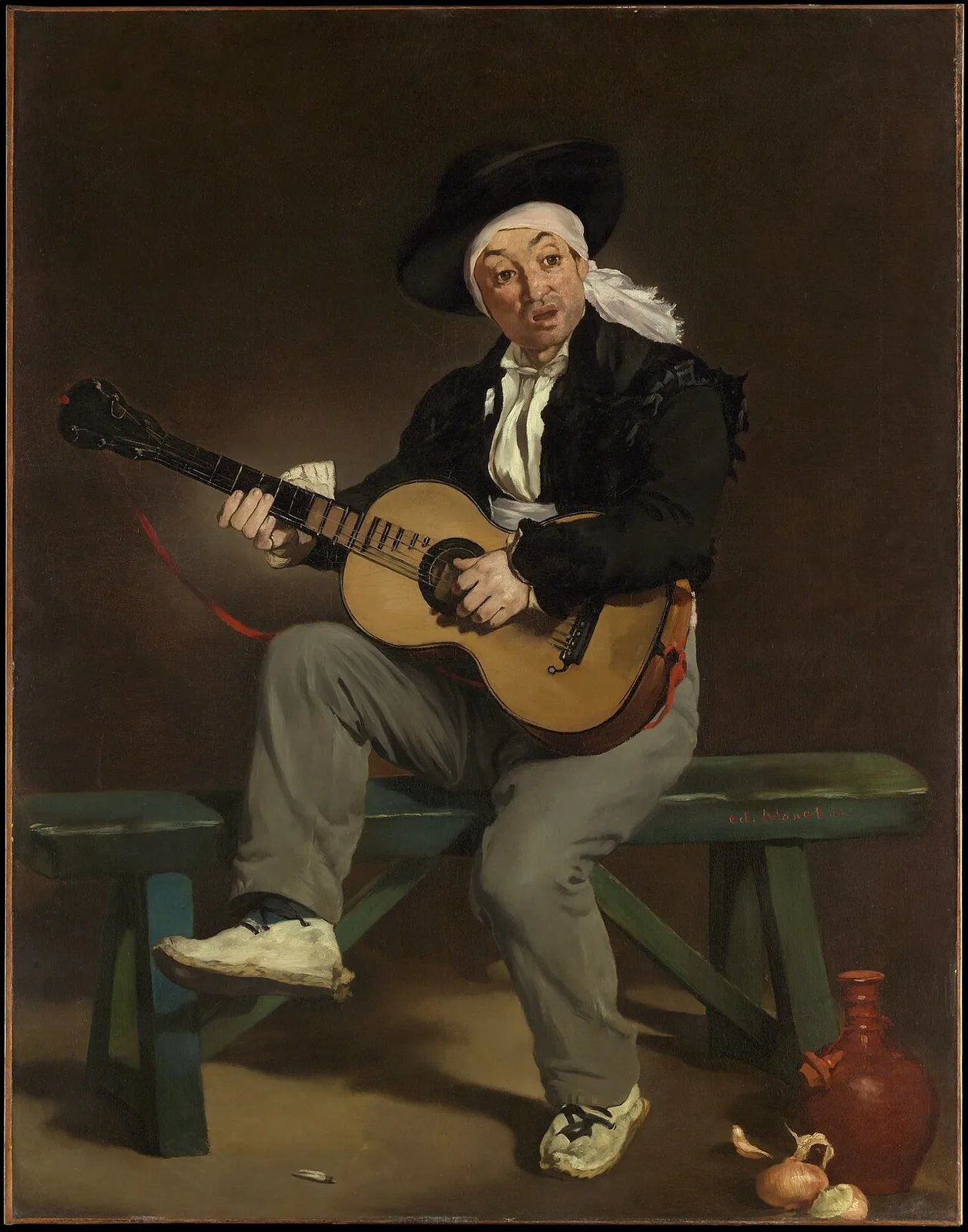
This is what Manet's Spanish method produced. After the 1865 trip to Spain he was working from separate studies, memory, and the palette of Velázquez and Zurbarán, and Charles S. Moffett argues the composition and tonality come straight out of that inheritance. The painting was refused by the Paris Salon of 1866; the prefect let Manet show the rejected works in his studio on the condition, as the entry notes, that he not open the doors too wide. It is also Manet's first large-format work, and the scale matters here: at full length the figure's spatial inconsistency reads as presence rather than error. Up close, the arm detaches from the torso. From across a room, it locks.
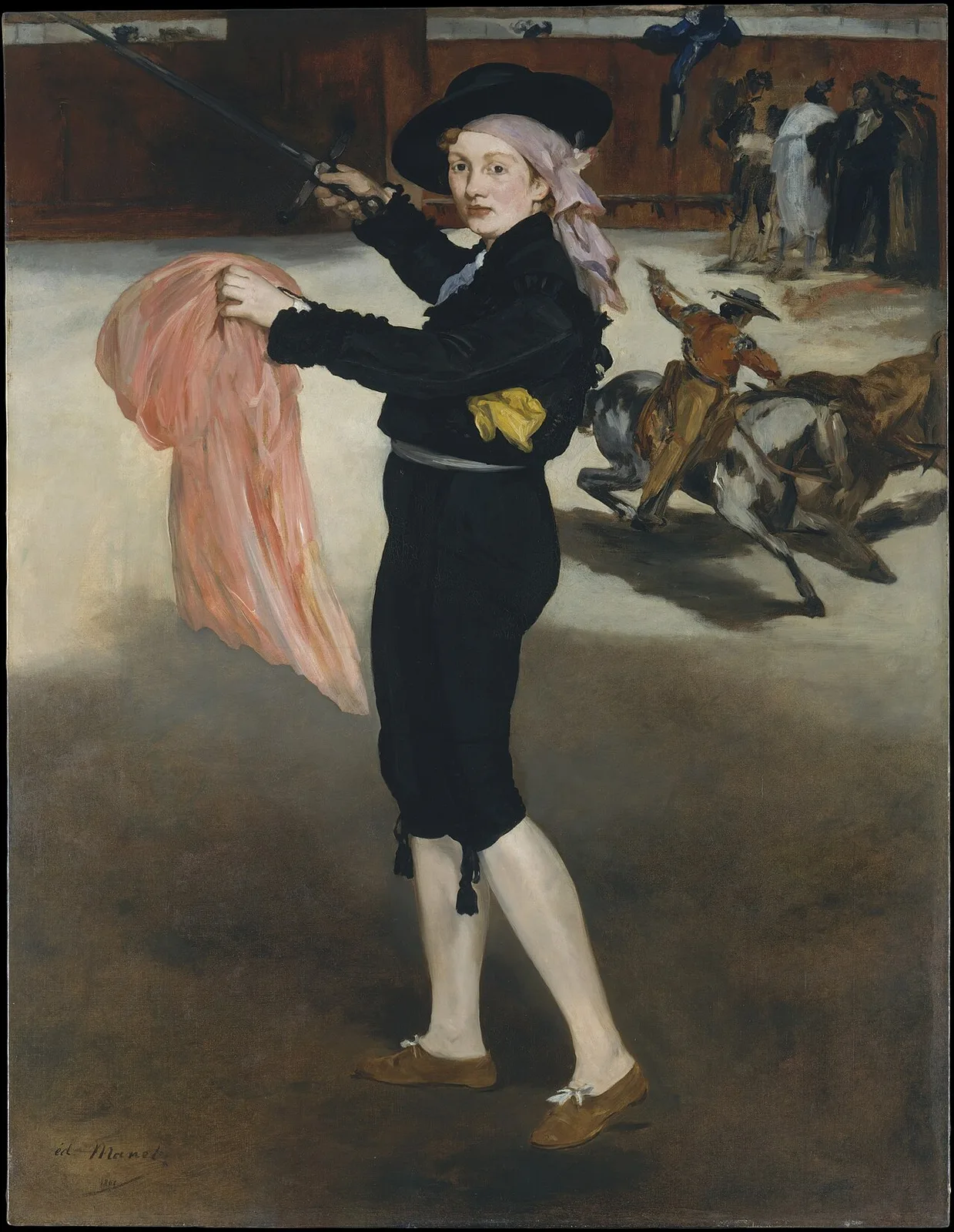
The provenance is a small comedy of scale. Duret sold it to Louisine Havemeyer, who hesitated because she thought the size would not suit her husband's collection, until Mary Cassatt told her "It was exactly the format Manet wanted." She bought it, Henry Osborne Havemeyer then became obsessed with large formats and added Young Man Dressed as a Majo, and both entered the Met in 1929 (metmuseum.org/art/collection/search/43696…). I find Cassatt's line the most useful thing anyone said about the picture. The format is not incidental to the ambiguity; it is the condition of it.
What would actually move the Duret question is technical. The arm and sword are the parts to study: raking light across the surface, infrared reflectography for underdrawing, and X-radiography for any repositioning of the limb. If the arm was shifted late, the ambiguity was composed, and Duret's permission reading becomes a record of how a contemporary viewer tried to narrativize a figure Manet had deliberately left unresolved. If the arm sits where it was first laid in and the head was moved instead, the effect may be a byproduct of working from separate studies. I lean toward the first, because the gesture's refusal to settle is too well tuned to the scale to be an accident. But I would not bet the painting on it until someone publishes the reflectogram.