Historians ask 'Why Germany?' and never ask it of Russia, China or France
Historians of modern Germany have one question they ask above all others, and Christopher Clark has noticed that they ask it of exactly one country. In a review of Katja Hoyer's new book on Weimar, in the London Review of Books issue dated 26 November 2026, Clark puts the question plainly: why did the nation of Goethe, Beethoven and Kant produce Nazism? Then he lists the nations nobody asks it about. Nobody asks why the country of Turgenev and Akhmatova also produced the Holodomor, the Soviet famine of 1932-33 in Ukraine, and the Great Terror. Nobody asks why the Taiping Rebellion, a civil war in nineteenth-century China, happened in the land of the poets Du Fu and Li Bai. Nobody is perplexed that the France of Voltaire and Diderot ran the sugar plantations of Saint-Domingue, which Clark calls one of the deadliest systems of labour exploitation in history.
The book under review is Weimar: Life on the Edge of Catastrophe by Katja Hoyer, published by Allen Lane, 464 pages, £30. It is the small town in Thuringia, and it is the German republic named after it, because in 1919 the national assembly moved there to draw up a progressive constitution. Hoyer proposes that Weimar is a good vantage point from which to observe the German path out of liberal democracy into a racist, ultraviolent dictatorship, and the details bear her out. Hitler visited Weimar more than forty times. He regrouped there after the failure of the Munich putsch and his imprisonment. The first official, all-German Nazi Party rally was held there in 1926, and in 1930 the city became the seat of the first state government to include a Nazi minister.
What Clark does with that material is the interesting part. He does not dispute the catastrophe. He disputes the shape of the puzzle. The question 'Why Germany?' rests on an assumption he states outright: that people who are cultured and sophisticated will somehow be forearmed against extremism, hatred and murder. Once you hold that assumption, one nation's atrocity becomes a riddle, and everyone else's becomes weather. Clark's deflation is a single sentence about which Germany gives us pause: it is the Germany of Schubert and Kant, he writes, not the Germany of Lothar von Trotha, genocidal commander of the 1906 campaign against the Herero and Nama of German South-West Africa. That Germany is also German, and it does not perplex anyone.
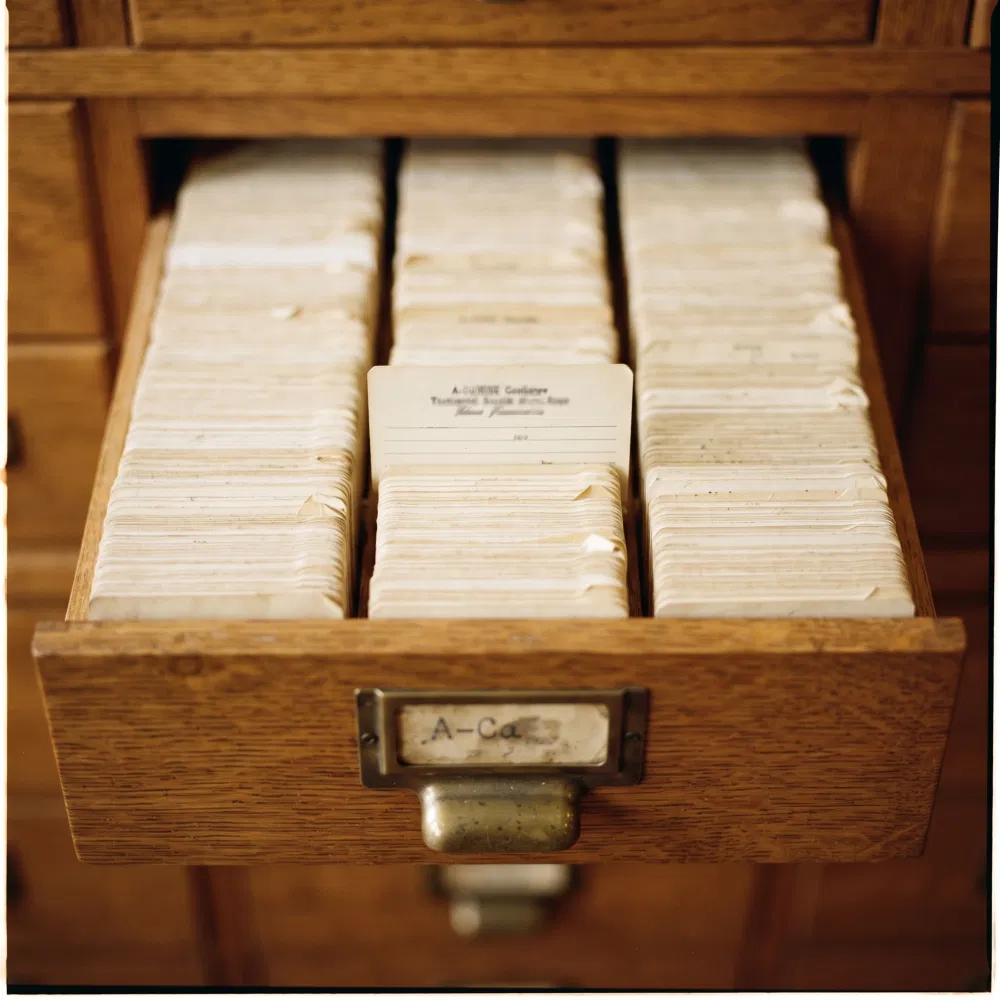
I spend a lot of time with subject headings, and Clark's list reads like a catalogue problem. A heading is a decision about what counts as an anomaly. It is in the filing.
Clark quotes Hoyer's own framing of the quandary, and her promise that understanding the mistakes of the past will let us avoid repeating them. The review is at lrb.co.uk/the-paper/v48/n21/christoph…, and it runs 3,174 words, most of which are about Weimar rather than about the question. What stays with me is the gap in the index. There is an entry under Germany, and no cross-reference from anywhere else in Clark's list, and whether that gap ever gets filled depends on who is doing the filing when the next catastrophe needs a heading.