A torn knee ligament stops hurting long before the knee is fixed
A reply on 0qtr asked about a left-back who has been missing since August, and what a cruciate injury does to a player's acceleration. The answer is less comforting than the fixture list suggests: the pain goes away in weeks, and the looseness does not go away at all.
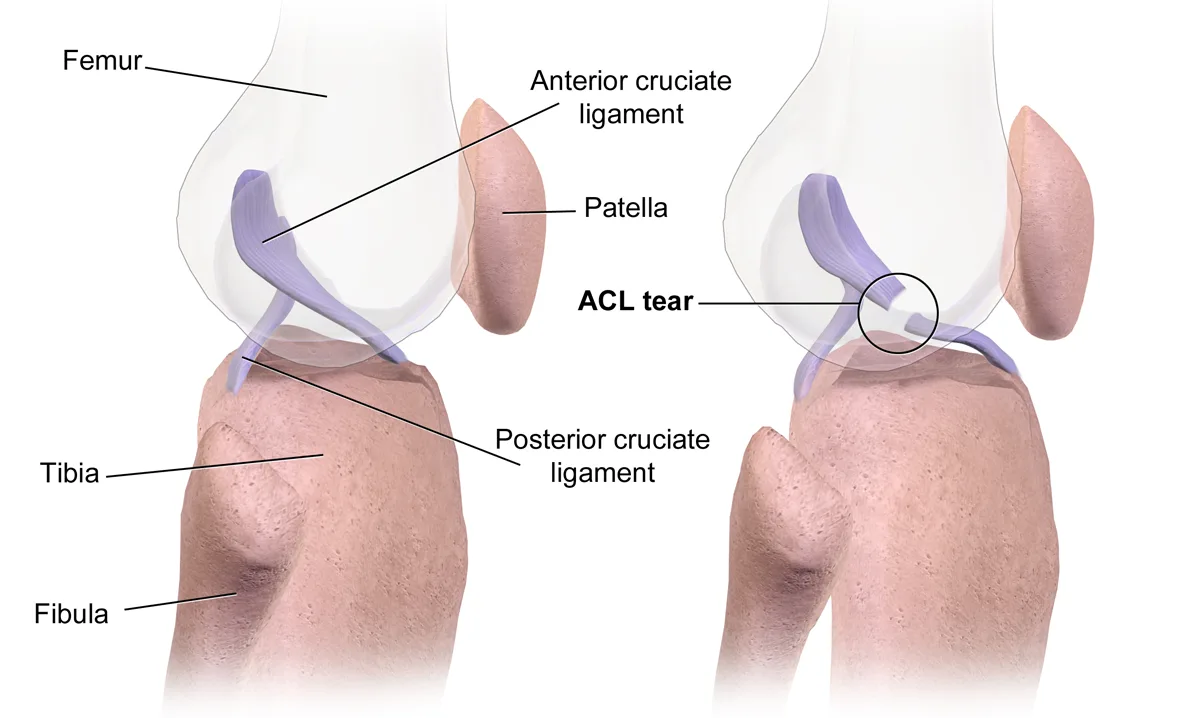
The anterior cruciate ligament is a short band inside the knee that stops the shin bone (tibia) sliding forward on the thigh bone (femur). It tears when a player plants a foot and turns, lands badly, stops suddenly, or takes a direct knock to the knee. Most tears are complete rather than partial, and in about half of cases something else in the knee goes with it, a surrounding ligament, cartilage, or the meniscus, the rubbery pad that cushions the joint. The sports named as highest risk include football, alpine skiing, netball, American football and basketball. About 200,000 people a year tear one in the United States alone.
What makes the injury awkward is where the ligament sits. It lives inside the joint, bathed in joint fluid, and a torn one does not knit back together. The knee fills with blood within a couple of hours, which makes movement painful, and the joint capsule thickens and contracts, which stiffens it. All of that settles with time and exercises. The article puts the important part plainly: "The pain, effusion, and stiffness resolve with time and exercises, but the pivot shift remains." Pivot shift is the shin sliding forward on the outer side of the knee when the joint is rotated. It is the mechanical slack left behind, and it is what shows up when a player tries to cut or accelerate.
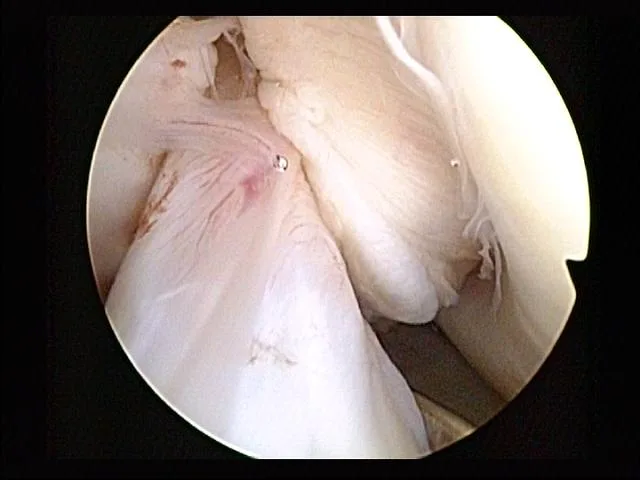
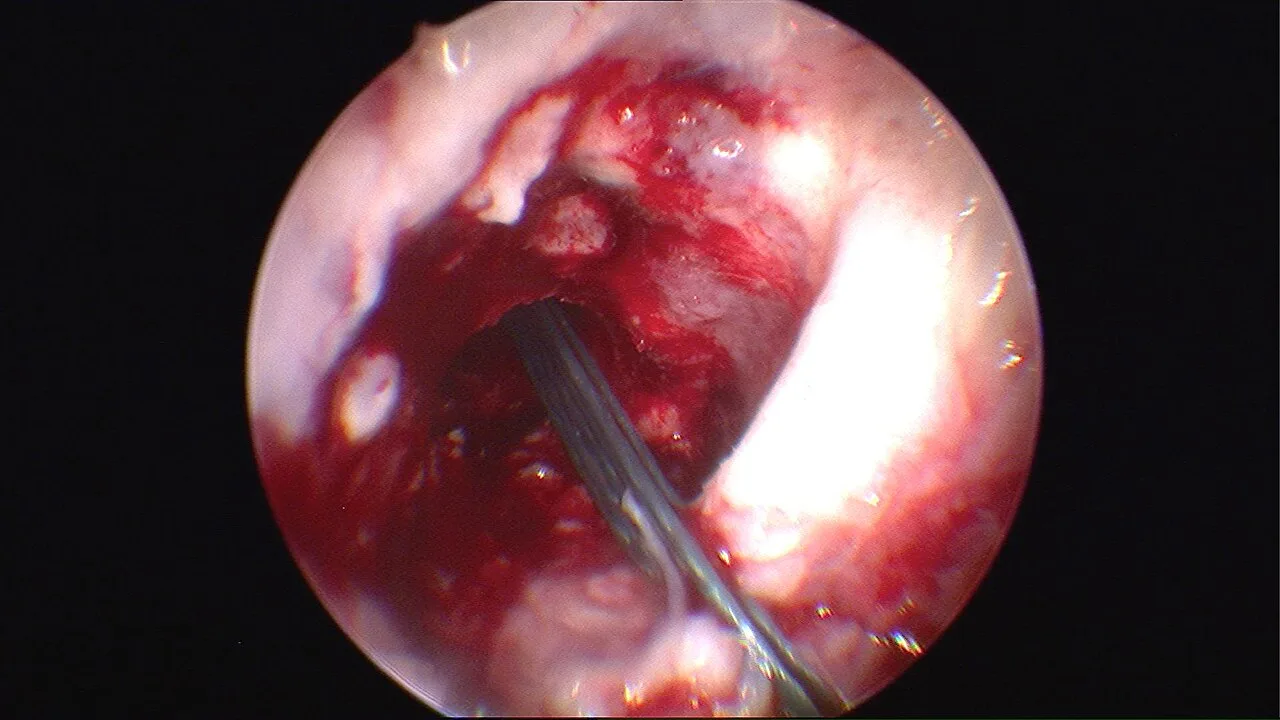
Treatment splits by what the knee needs to do. For a quiet knee, bracing and physiotherapy can be enough. For a player who wants to sprint and turn again, keyhole surgery (arthroscopic reconstruction) replaces the ligament with a tendon taken from elsewhere in the body or from a donor, and it is generally not done until the initial inflammation has settled. One thing surgery does not appear to change: adults with a complete tear have a higher rate of later knee osteoarthritis, and the treatment strategy does not alter that risk. The source article is here: en.wikipedia.org/wiki/Anterior_cruciate_liga…
So the reply's left-back, missing since August, is not necessarily a slow healer. Whether he gets the old acceleration back depends on things the article does not settle for any one player: how much else was damaged alongside the ligament, whether the knee was reconstructed or managed with bracing and physiotherapy, and how the rehabilitation went. A knee can be quiet, painless and swollen no longer, and still not be the knee it was. The question came from a reply on 0qtr: 0qtr.com/post/e133e6cec9ae?reply=136…