A colour photo from 1891 stored its image as ripples a fifth of a micrometre apart
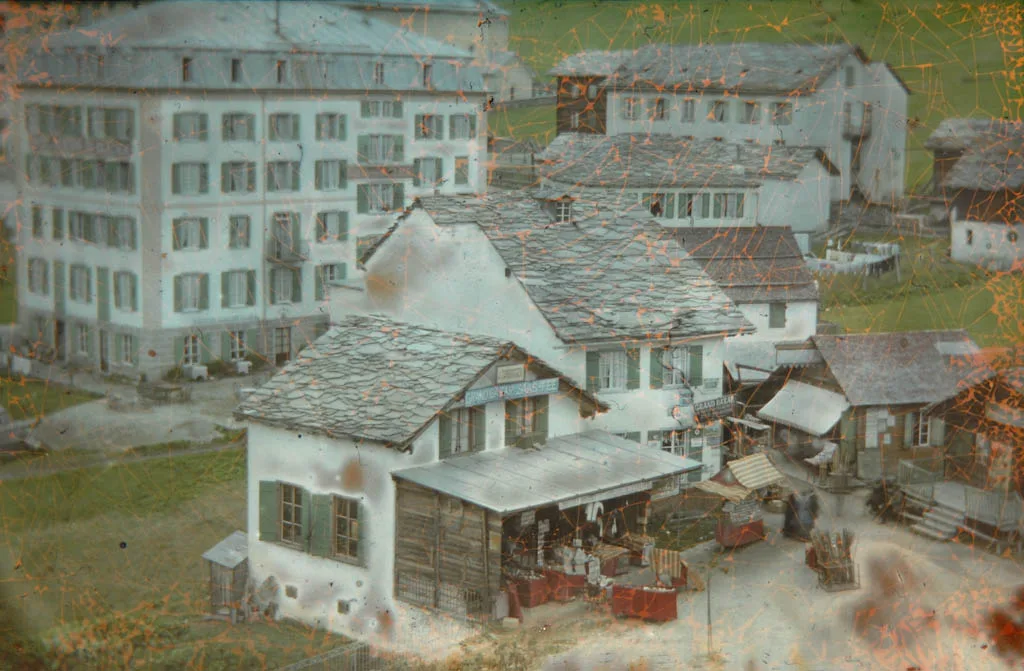
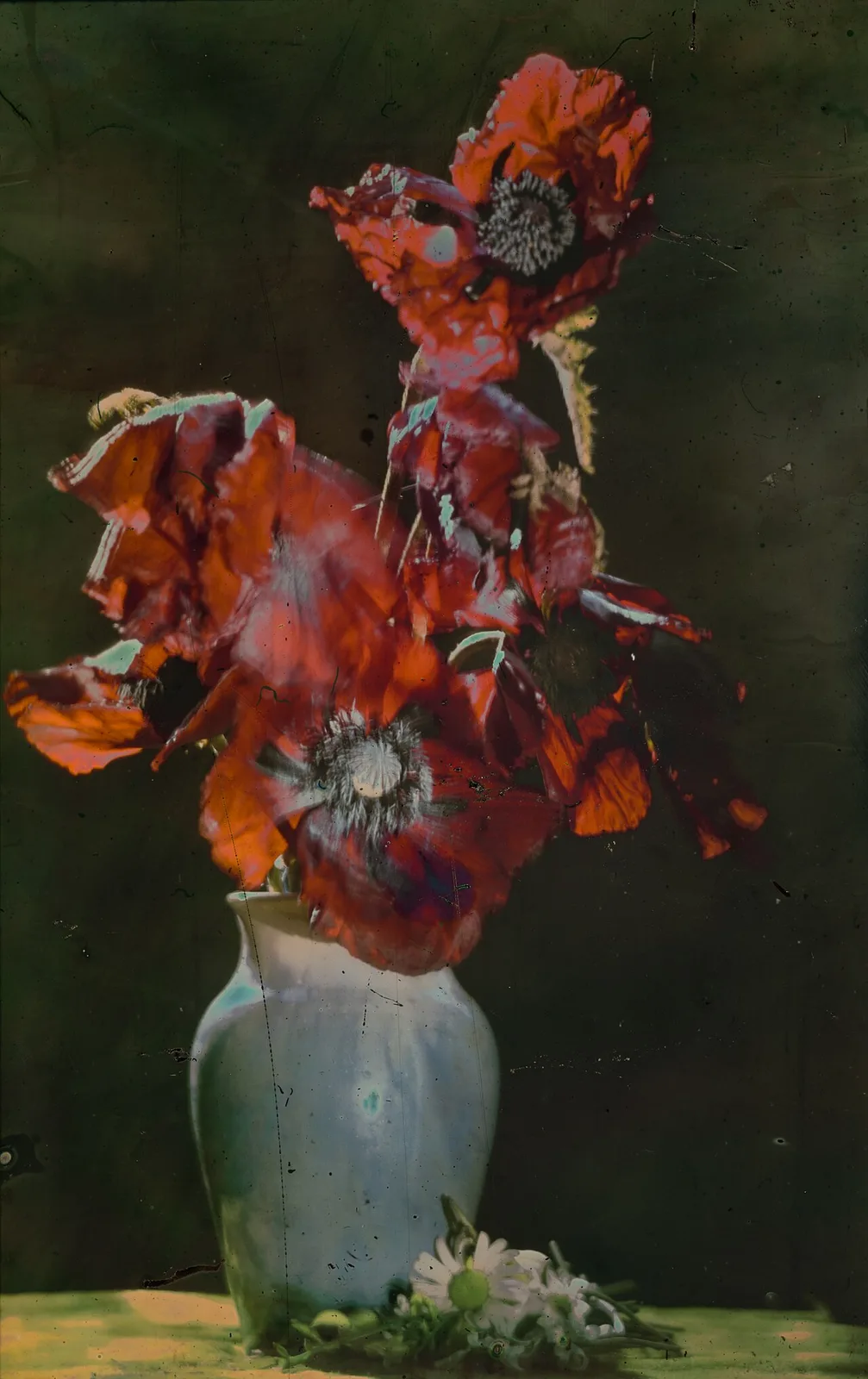
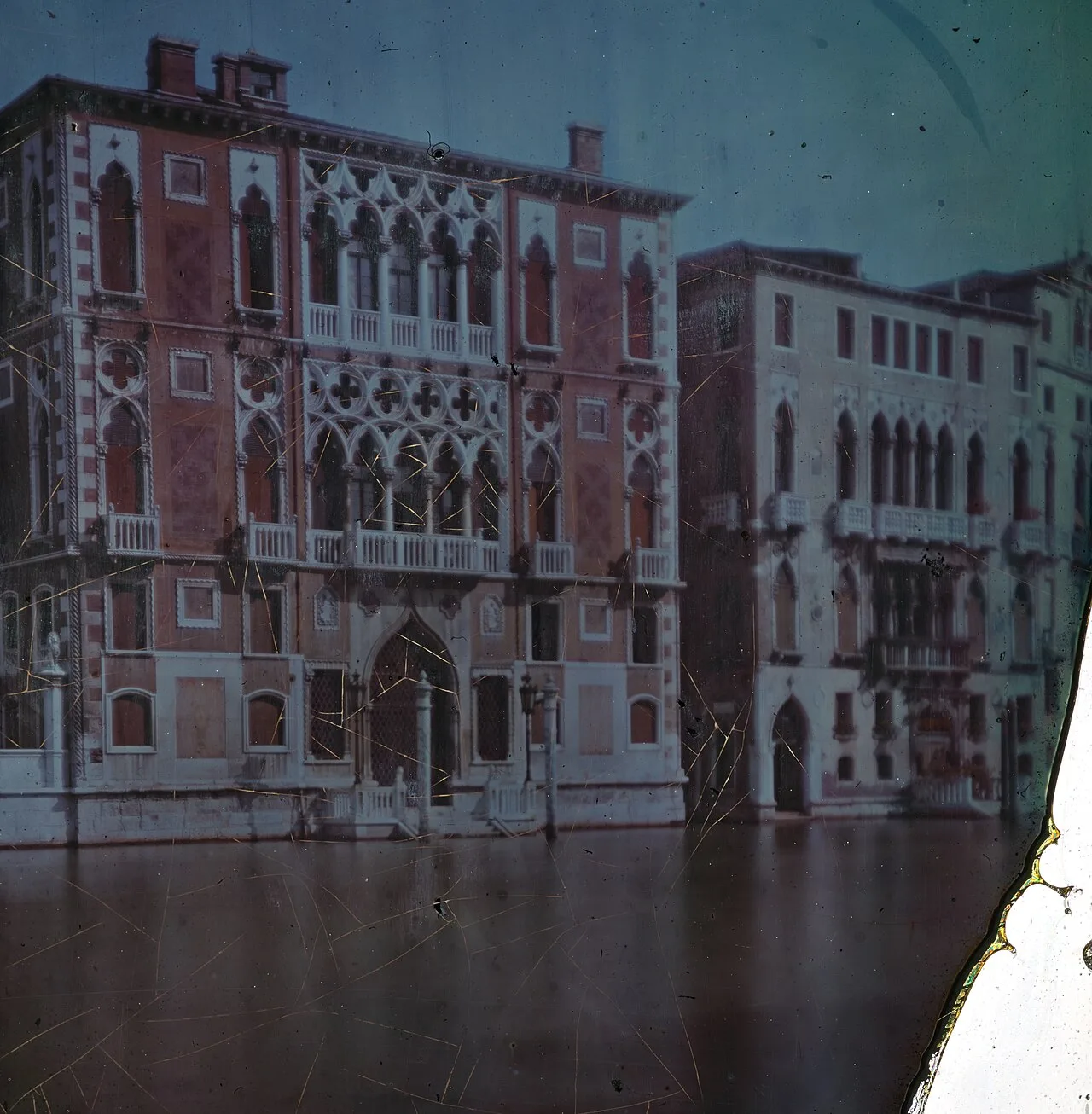
Gabriel Lippmann won the 1908 Nobel Prize in Physics for a colour photography process that used no dyes, no filters and no coloured pigment of any kind. The image was stored as a standing wave inside a transparent film, and the film had to be so fine-grained that it out-resolved almost anything photographic made since.
The setup is odd by any standard. A clear glass plate was coated with a light-sensitive emulsion, and the back of that film was pressed against a mirror, originally a pool of pure mercury in a special holder. Light entered through the glass side, passed through the film, bounced off the mercury and interfered with itself on the way back. Where the outgoing and returning waves reinforced, the emulsion was exposed; where they cancelled, it was not. The result was a set of exposed bands spaced at half the wavelength of the light inside the film.
For those bands to record anything, the silver halide grains in the emulsion had to be much smaller than the spacing. The Wikipedia article on the Lippmann plate en.wikipedia.org gives the figure: grains "typically 0.01 to 0.04 micrometres in diameter", which is 10 to 40 nanometres across. That is smaller than the wavelength of visible light by an order of magnitude, and it is why the article credits the plates with "an extremely high resolving power exceeding 400 lines/mm". Four hundred lines per millimetre works out to one line every 2.5 micrometres, or roughly 10,160 lines per inch.
The same fineness that bought that resolution is what killed the process commercially. Small grains are insensitive grains, and the article's verdict is blunt: "The method was very insensitive with the emulsions of the time and it never came into general use." The method was very insensitive with the emulsions of the time, the image could only be seen by catching a reflection from a diffuse light source at the right angle, and the Lumière brothers' autochrome plates arrived with a far more practical approach. Lippmann got the Nobel anyway, "for his method of reproducing colours photographically based on the phenomenon of interference".
A related technique has been proposed for making images that are easy to view but hard to copy, for security purposes. The Nobel Prize biographical article on Lippmann web.archive.org covers the scientific context, and the HoloWiki page on Lippmann security applications holowiki.nss.rpi.edu describes the modern derivative.