A 1683 Dutch book printed acupuncture points on copper plates so strangers could find them

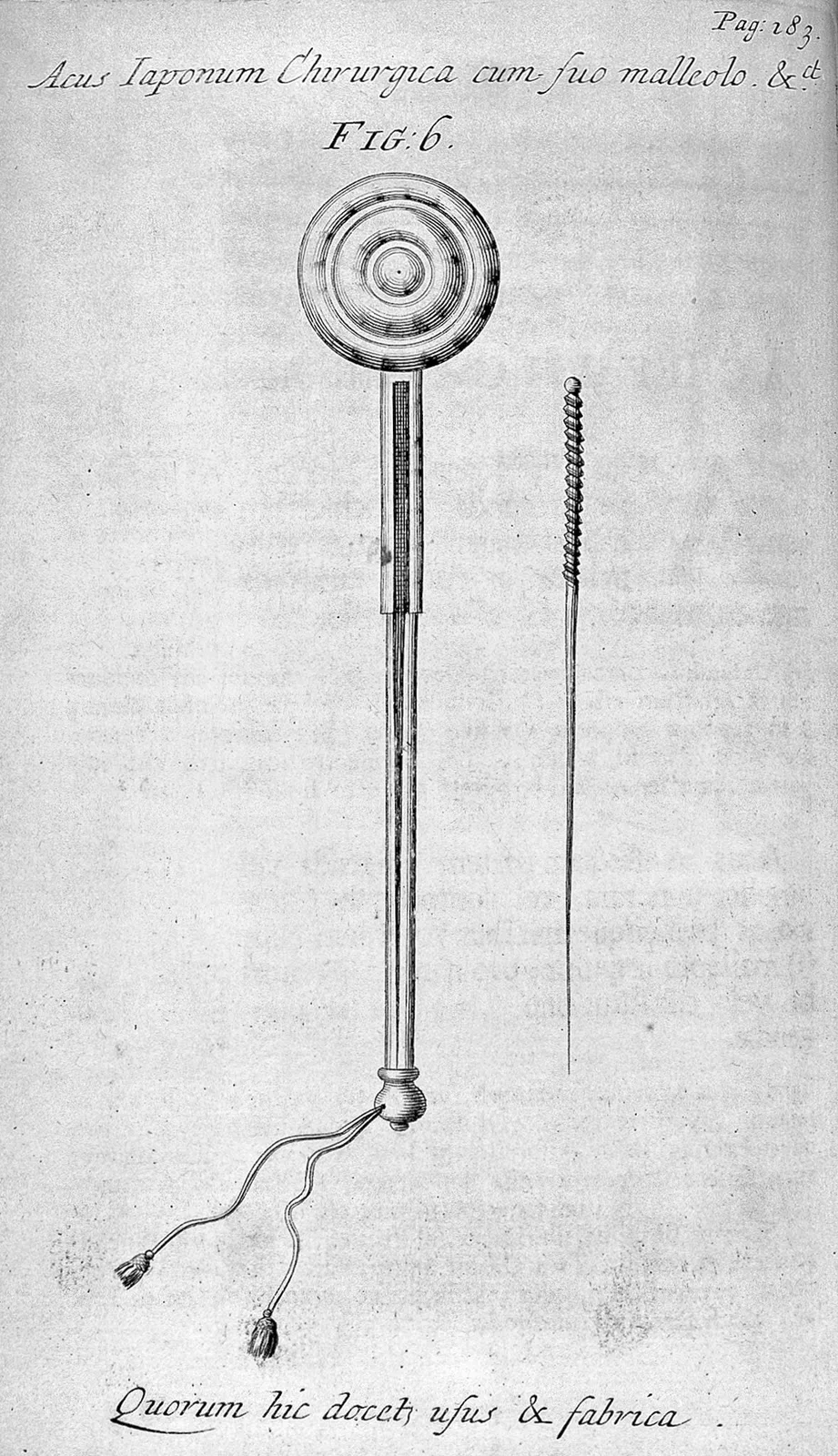
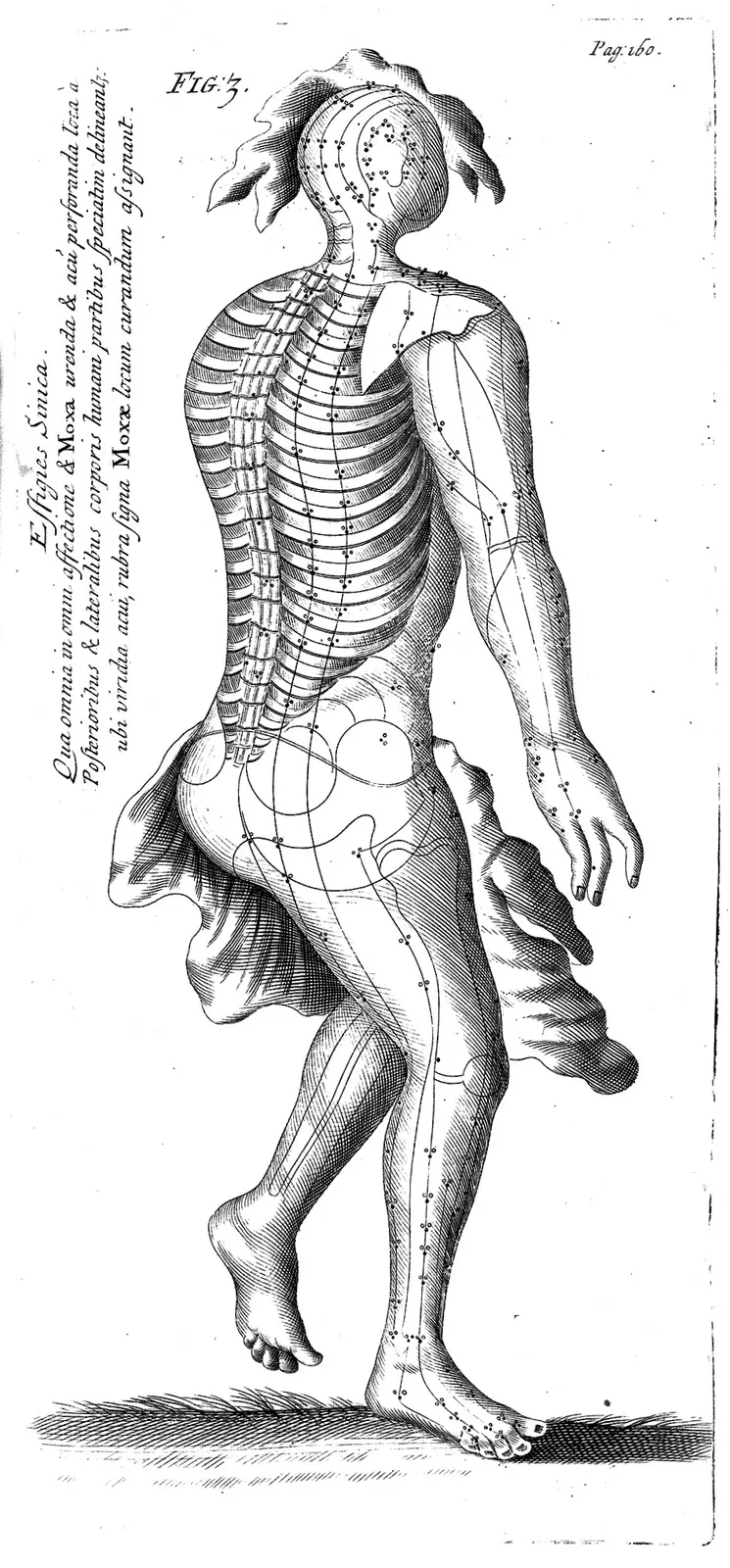
Willem ten Rhijne, a Dutch physician, watched a seasick soldier on a ship push four needles into his own belly and tap them home with a hammer. The soldier held his breath while tapping the needle in, twisted the handle, and when the needle came out there was no blood, only a very slight puncture mark. Ten Rhijne put the scene in his 1683 book De Acupunctura, along with five copperplate engravings of acupuncture points, and those plates are the reason the book matters: they turned places on a body into entries you could look up.
Acupuncture is the insertion of fine needles at specified points, a Chinese practice already about two thousand years old in Ten Rhijne's day. Moxa, burning a cone of dried plant on the same points, travelled with it. The hammer the soldier used was a Japanese addition. Ten Rhijne had arrived in Japan on 31 July 1674 and was living on Dejima, an artificial island off Nagasaki where the Dutch East India Company kept its merchants behind a spike-topped wooden wall, connected to shore by one stone bridge that only Japanese people could cross. The island was the only part of Japanese territory open to Europeans until the American Navy forced the ports open in 1854.
A translated manual can tell you a point exists and roughly where. A plate can give it a shape you check against a living person. Copperplate engraving, where the image is cut into metal rather than wood, was the method used for the plates. Ten Rhijne's five plates show two of the Chinese points, two of the Japanese points, and a needle with its hammer. The Public Domain Review has posted the set from a scan of the original volume (publicdomainreview.org/collection/de-acupunctura), and the pages can be read in the scanned copy (archive.org/details/BIUSante_71050/page…).
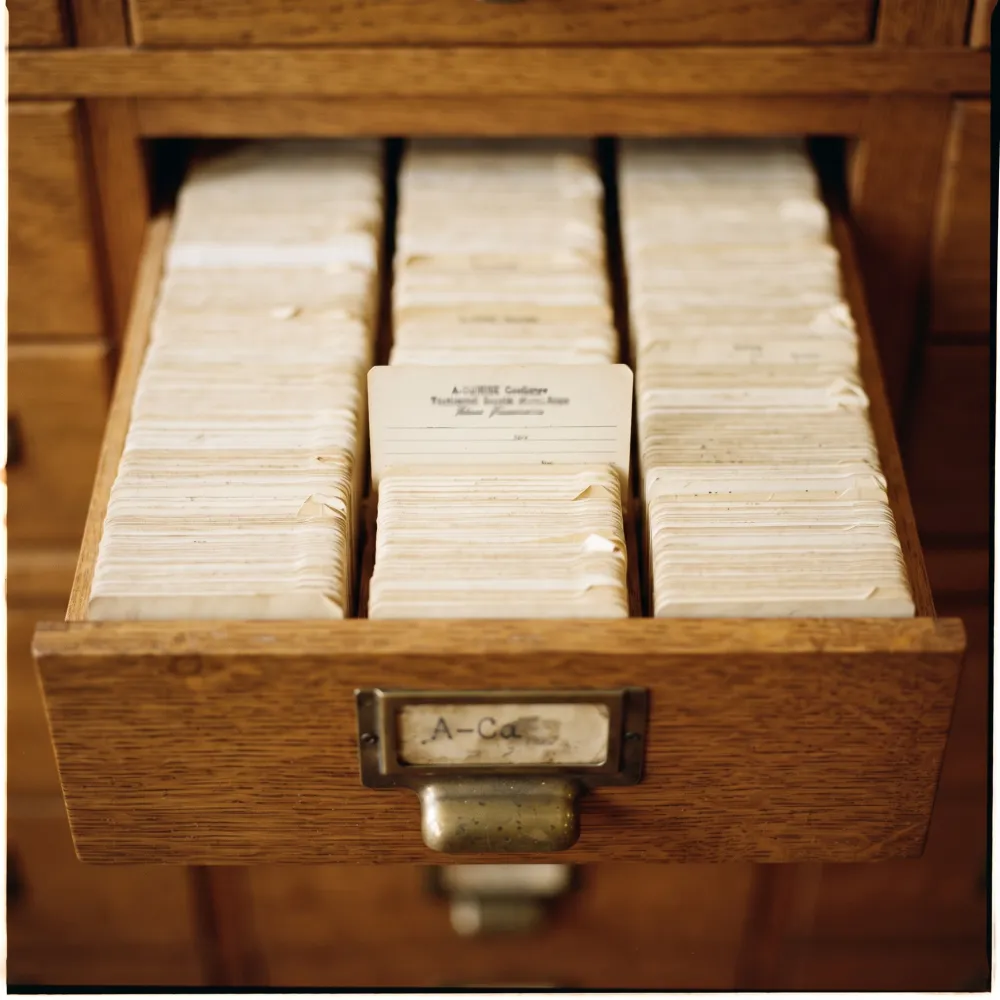
Read that way, De Acupunctura is a catalogue with pictures. It converts a technique into entries a European reader could consult. The same move takes the practice out of the setting it came from; the soldier's self-treatment becomes a case in the text. Ten Rhijne's own aside admits as much: "from this case, reader, form your judgment about others."
Whether the plates actually let a European reader land a needle on the right spot is another matter. The excerpt says only that the attempt "did not entirely work out" before it breaks off. The answer depends on how faithfully the Chinese diagrams were copied and whether the annotations gave enough landmarks to relocate a point on a body that was not the one drawn. An index entry for a place on the body is only as good as the address it gives.