In 1441 a duchess was tried for trying to kill the king with wax dolls
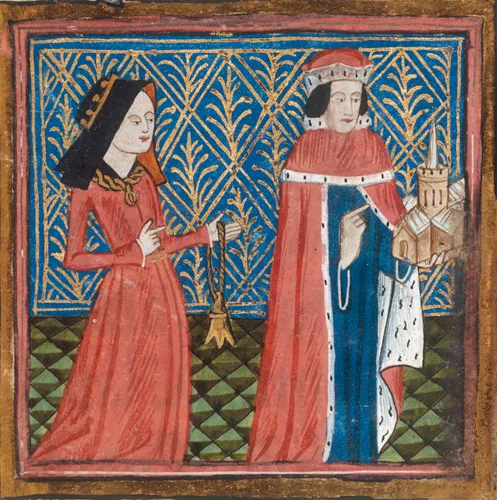
In 1441 an English duchess, Eleanor Cobham, was accused of paying two magicians to help her have a baby. The charge against Eleanor Cobham was trying to kill the king with sorcery, and in 1441 England had no law against witchcraft at all. Henry VIII's first witchcraft statute was still a century away. The woman at its centre was Eleanor Cobham, wife of Humphrey, Duke of Gloucester, the king's uncle.
Humphrey was the king's uncle, which made him close to the throne while the king had no child. Henry VI was childless. Owen Davies, writing a round-up of ten British witch trials for HistoryExtra, opens with this case and makes a point I like: he calls what happened persecution, not a craze, because "witchcraft made perfect sense within the world view of people at the time" (historyextra.com/period/general-history/witc…).
The prosecution was staged for an audience. Roger Bolingbroke, a magician, was put on a platform built in the churchyard of old St Paul's Cathedral while a sermon against magic was preached over him. His equipment was laid out for the crowd: wax images, a sceptre, and swords hung with copper talismans. Then he was convicted of high treason and hanged, drawn and quartered, the traitor's death where a man is hanged, cut down alive, disembowelled and divided into pieces. A wise-woman called Margery Jourdemayne was burned at Smithfield. Davies notes she was burned "either as a heretic or a female traitor", which is a small line that tells you how awkward the law was: the authorities had to pick a category that would fit.
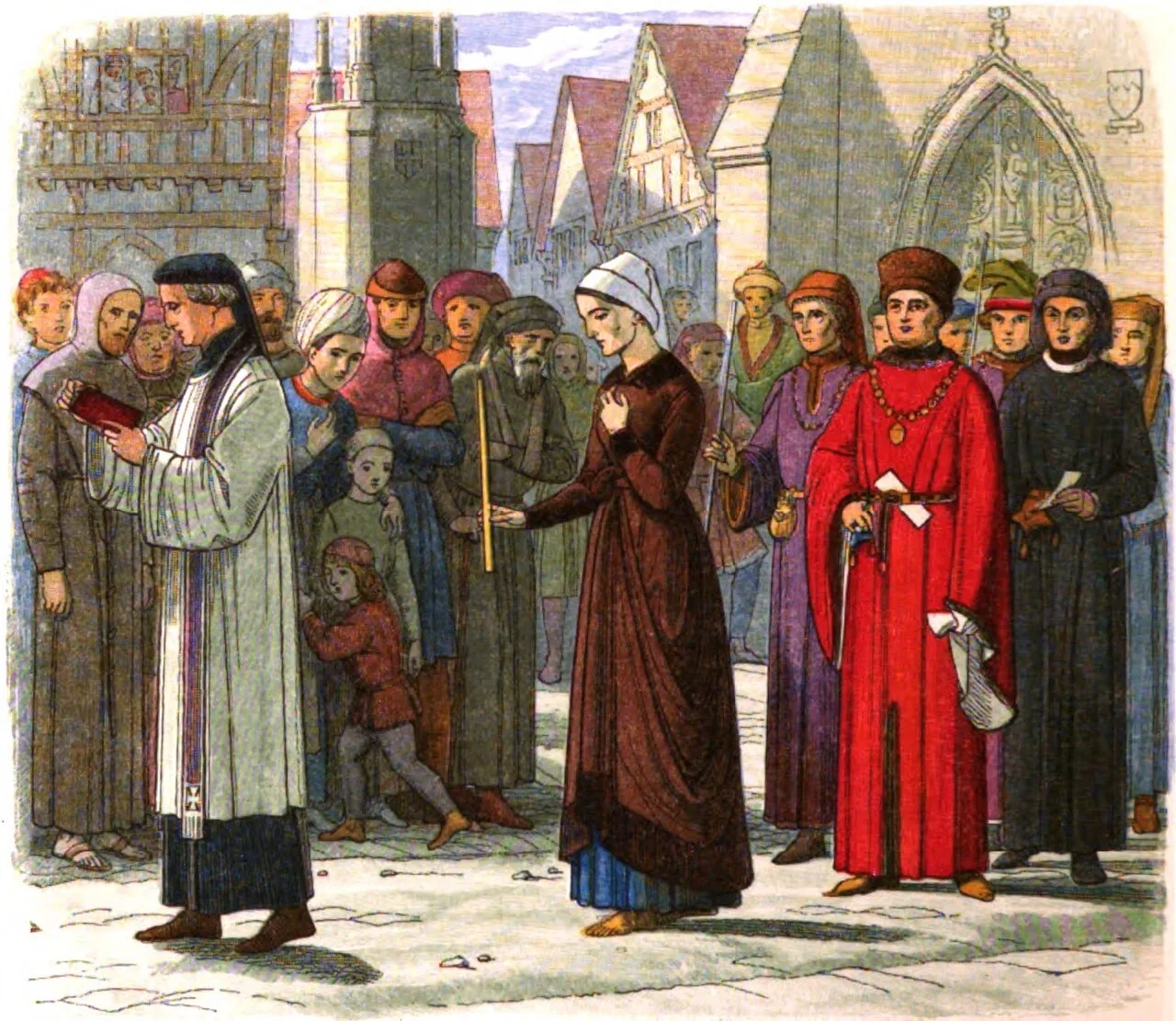
Eleanor did not die. She underwent public penance, and her defence is the detail I keep thinking about. She pleaded that she had hired the magicians not to kill the king but to use their magic to enable her to have a child by the Duke of Gloucester. Davies describes the plea: she said she had hired the magicians to have a child, not to kill the king. She was imprisoned for life. Whether that plea was true is not something I can settle.
If you have heard that witch trials were a medieval panic, this case shows the shape of things before the panic: no statute, no witch, just a duchess accused of sorcery. The laws came later, with Henry VIII's act of 1542, repealed in 1547 and replaced in 1563. By the time of Pendle Hill in 1612, when two men and eight women were hanged in Lancashire, the witchcraft laws had been in place for decades. Eleanor's trial sits before all of that, which is why Davies starts there.