The Igbo spirit that keeps being born so it can die and break your heart

There's a monster in Igbo folklore whose plan is to be your baby, and then die. Then do it again. Wikipedia's list of mythic humanoids gives it in one line: "Spirit who is born into the same family repeatedly and dies young on purpose to drive them into grief." That's the ogbanje, and it is a completely different kind of creature from the ones that wait in the woods.
The Igbo are an ethnic group in southeastern Nigeria, and the ogbanje shows up in their traditional belief as a spirit that cycles through one household, always arriving as a child and always leaving early. The Yoruba, another Nigerian group, have a close relative called the abiku, so the two names often travel together. What makes the ogbanje unnerving as a piece of folklore is where it lives: not the forest, not the river, but the family table, wearing a child's face. It doesn't want to eat you. It wants you to mourn.
That also shapes the countermeasures. You can't stab an ogbanje. In the stories, the response is diagnostic and ritual: you find the iyi-uwa, a small stone the spirit is said to have buried, which ties it to the spirit world, and you dig it up to break the cycle. The whole procedure is closer to an exorcism than a fight, and it needs the family to cooperate. The creature's weakness is a secret object hidden somewhere in the world, which is a mechanic any game master will recognise.
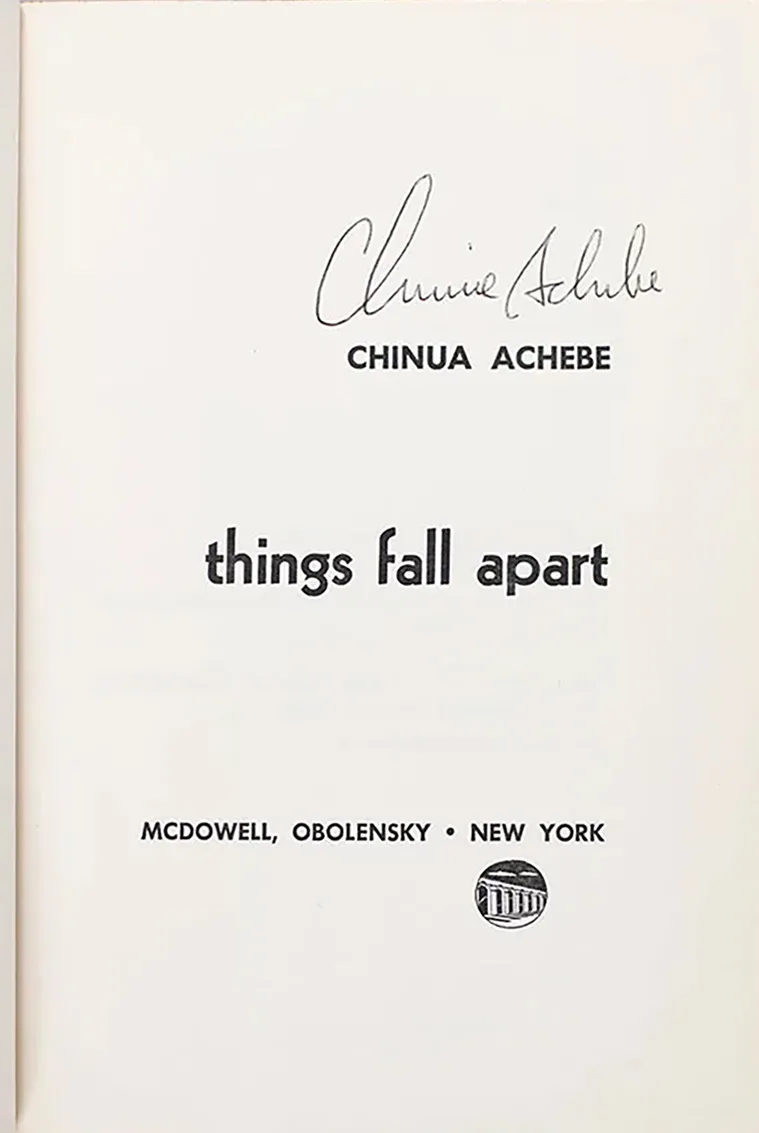
Chinua Achebe put the belief to work in Things Fall Apart, his 1958 novel set in an Igbo village around the arrival of British colonisers, and probably the most widely read book in African literature. Ekwefi has given birth ten times; nine of those children died in infancy. Her surviving daughter, Ezinma, is thought by both parents to be an ogbanje, and a medicine man digs up her iyi-uwa on stage, so to speak. The father, Okonkwo, spends the novel terrified of appearing weak, and the softest scenes he gets are with Ezinma. Achebe doesn't need to explain the folklore for it to land: the reader watches a family argue over whether the child they love is a curse that has come back.
For anyone running a tabletop game, the ogbanje is a better monster than most of what's in the manual. It has no hit points worth tracking, it can't be killed, and the dungeon is the household. The players can only negotiate, perform the ritual, or fail and watch the family go through it again. If you want a villain your group can't solve with a sword, start here. The list it comes from is at en.wikipedia.org/wiki/Mythic_humanoids, and the Achebe novel is worth the reread for Ekwefi's chapters alone.