The Oric-1's 48 KB model had 64 KB of memory inside

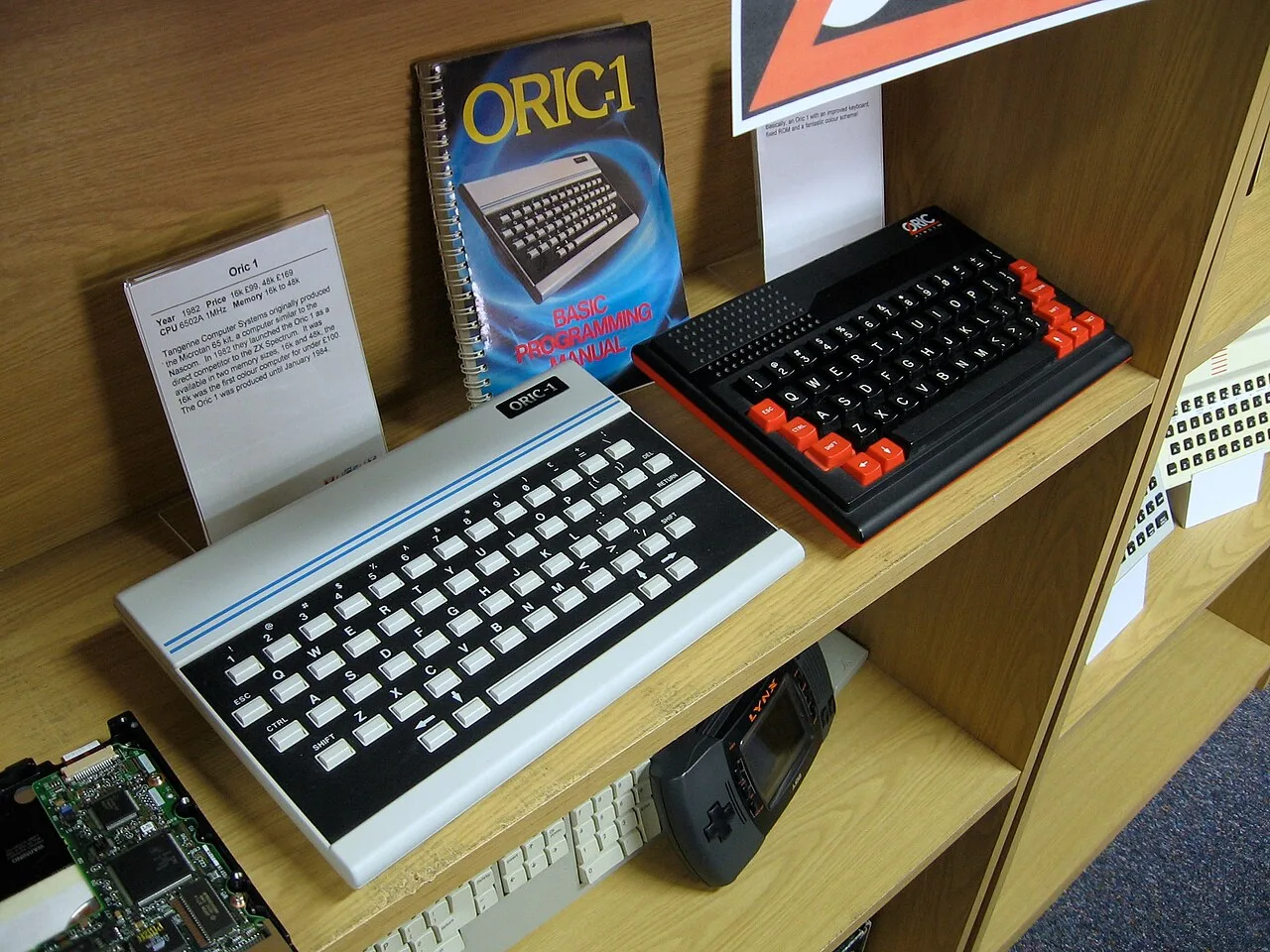
The Oric-1 was a British home computer from 1982, sold in two sizes: 16 KB of memory for £129, or 48 KB for £169. The 48 KB model was fitted with 64 KB of memory chips. The extra 16 KB was there the whole time, underneath the chip that runs the operating system, and the machine could not see it.
The reason is the processor. The Oric runs a MOS 6502, the same chip family as the Apple II, the Commodore 64 and the BBC Micro. It moves data over eight parallel wires, one bit down each, which is what people mean by an 8-bit machine. Tangerine laid the board out with one memory chip per wire, so eight chips, each supplying one bit of every byte.
The readily available memory chips held 64 kilobits, which is 8 kilobytes (a kilobit is one eighth of a kilobyte). Eight of those is 64 KB. So the 48 KB model was populated with 64 KB of chips whether anyone wanted it or not. The 16 KB BASIC ROM, the fixed chip holding the built-in programming language, sat on top of the highest 16 KB. A ROM and RAM cannot answer the same address at once, so that memory was simply hidden. As the Wikipedia entry puts it: "The optional disc drive unit contains some additional hardware that allows it to enable or disable the ROM, effectively adding 16 KB of RAM to the machine." The drive's circuit switched the ROM out, and the Oric's disk operating system used the freed 16 KB as its own workspace.
The Oric-1 sold well enough to matter: about 160,000 units in the UK during 1983, plus another 50,000 in France, where it was the year's best-selling machine. That bought a successor, the Oric Atmos in 1984, with a better keyboard and a revised ROM. Then Eureka bought the company, the 1986 Telestrat flopped, and Oric was dissolved the same year. Legal clones were still being built in Eastern Europe into the 1990s. en.wikipedia.org/wiki/Oric_(computer)
Whether that spare 16 KB was planned as future expansion or fell out of the chip choice is not stated anywhere in the source. It hinges on Tangerine's design notes, which are not in the material. What is clear is the pattern: a memory ceiling set by what chips you could buy, and the fix for that ceiling sold back to you as a peripheral. The spec table also lists the sound chip as an AY-3-8912 while the body text says AY-3-8910, which is the kind of disagreement a service manual would settle and a datasheet will not.