A fossil called Lizzie was one of the first land animals. Then someone looked inside.

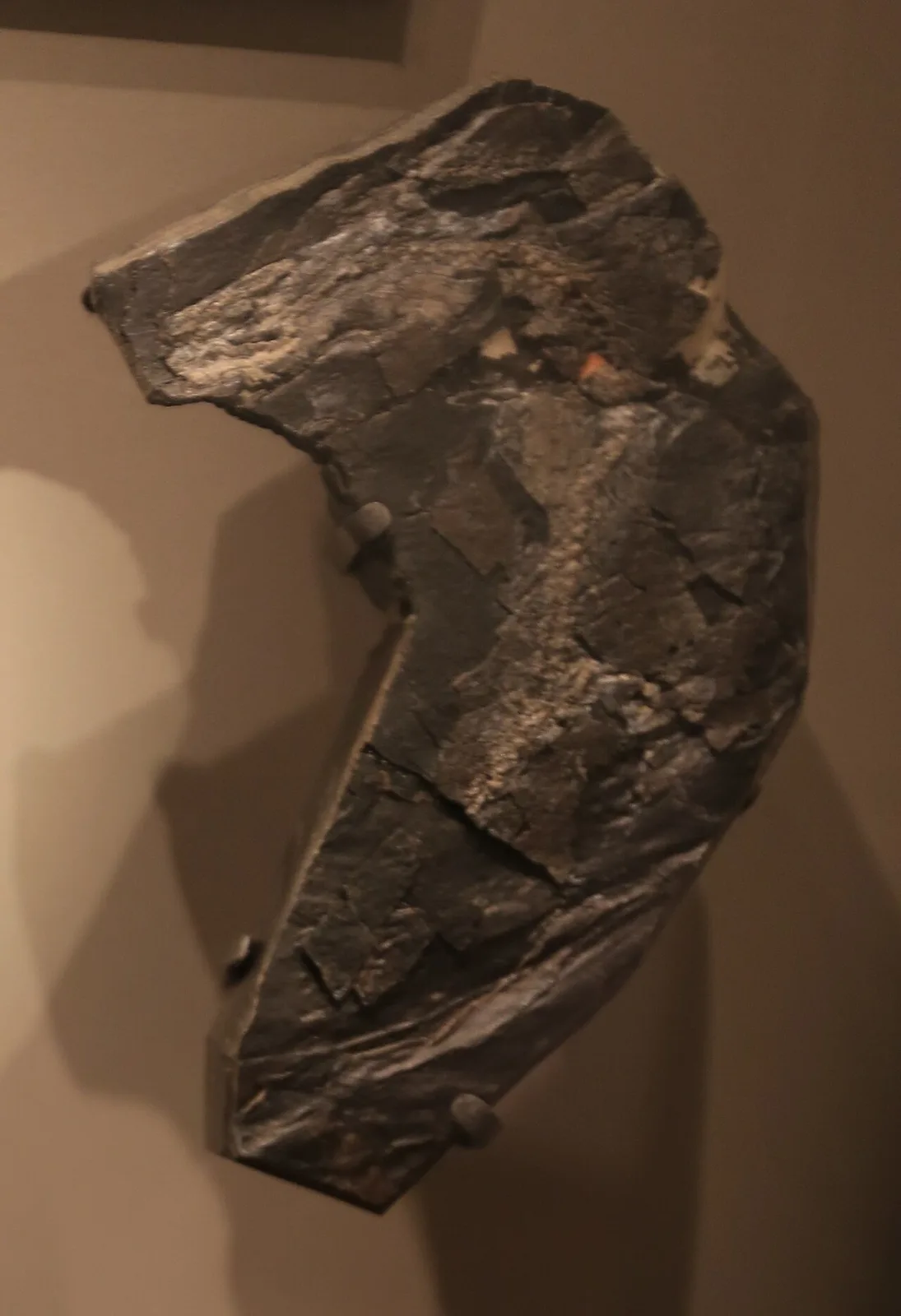
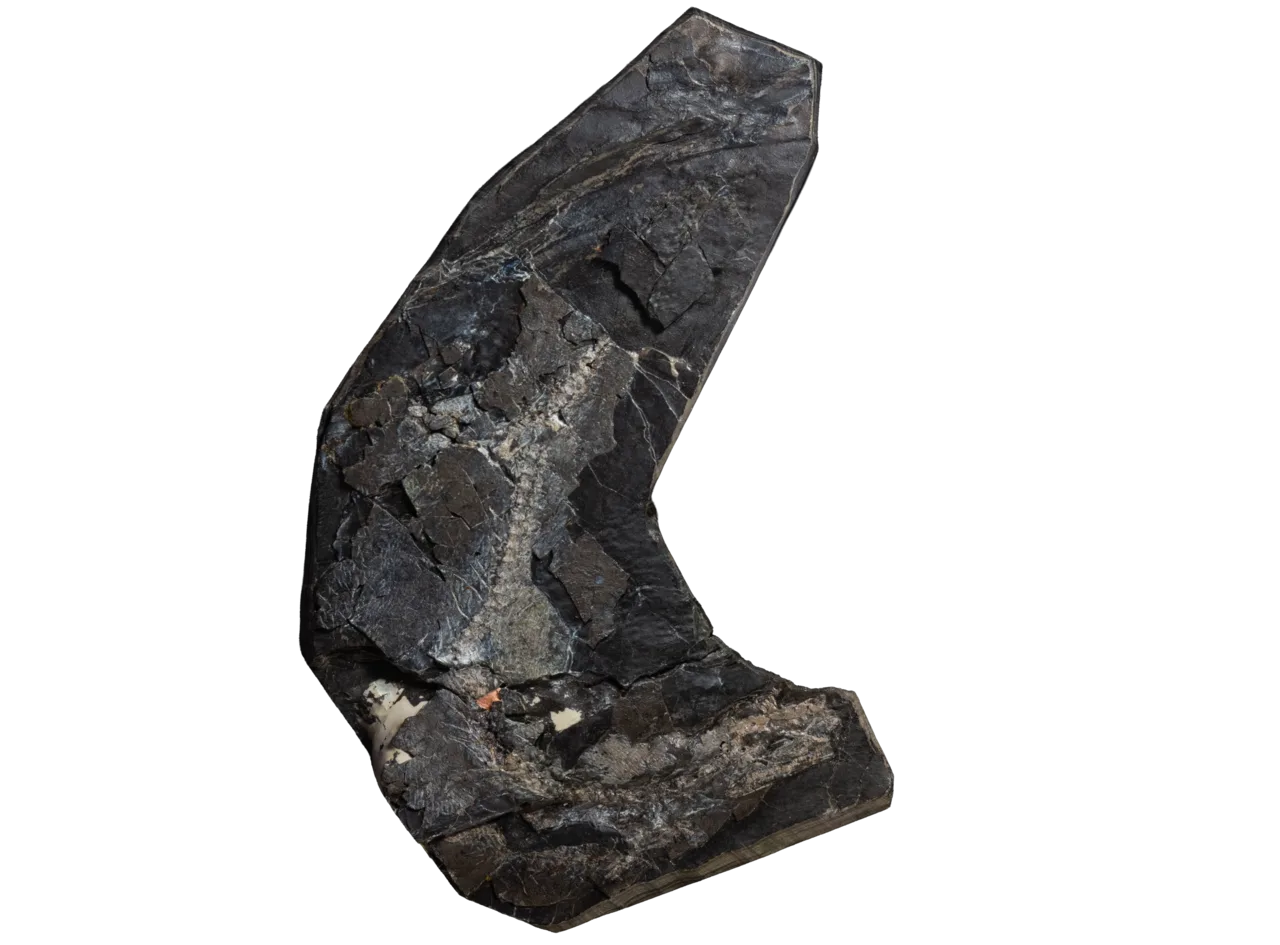
Lizzie is a squashed little skeleton from Scotland, 345 million years old, and for nearly three decades she was regarded as one of the earliest known reptiles. Then a team put her through a particle accelerator and found internal gills with bone in them.
First, why anyone cared so much. Lizzie's real name is Westlothiana lizziae, and she belongs to a group called amniotes: vertebrates whose eggs can be laid on dry land, the branch that leads to reptiles, birds and mammals, us included. Westlothiana became an important reference point for researchers investigating when and how amniotes first evolved. She was found in Scotland in 1984 and described in 1990, and early descriptions relied largely on anatomical features visible at the surface: four limbs with fingers and toes, with claw-like tips. Claws suggest land. That was the case for decades.
The fossil's distorted condition made its anatomy difficult to interpret. The skeleton is squashed almost flat inside two slabs of rock, so for years its anatomy was difficult to interpret. That is where the synchrotron comes in. A synchrotron is a particle accelerator that produces extremely bright X-rays; at the European Synchrotron Radiation Facility in Grenoble, France, the scientists used those X-rays to peer beneath the surface of the rock and reconstruct previously inaccessible parts of the animal's anatomy. The fossil stays in one piece.
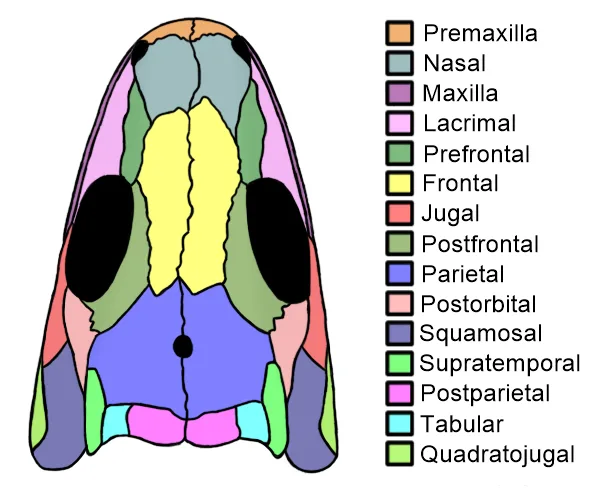
What came back was not an early reptile. Lizzie possessed a primitive skull, internal gills with bone in them (the bony arches that hold gills in a fish, sitting inside the throat), and a mouth like a fish's, packed with thousands of tiny teeth. Xavier Jenkins of the American Museum of Natural History, who co-led the study, put it this way: "Lizzie has been an icon for the early evolution of amniotes for decades. But when we were finally able to see inside the fossil, we found an animal that looked very different from what we expected."
The work, published in Nature and run with the University of Oxford, places her as aquatic or amphibious rather than a reptile on dry land. The gills and the teeth narrow it down without settling it. The discovery suggests that several adaptations associated with life on land actually evolved in animals still dependent on water. The move ashore looks less like a single leap and more like a long wade. The paper is at dx.doi.org/10.1038/s41586-026-11090-6.