An 1832 English guidebook turned Sufi saints into a planet travellers had to dodge
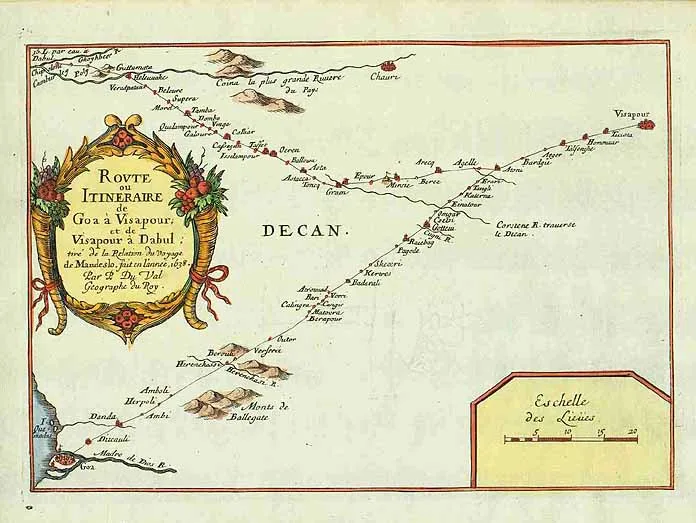

A merchant carrying diamonds from the Kollur Mine, near modern Vijayawada, northwest along the Krishna River to Golconda, had a schedule to keep: leave on a Tuesday or a Thursday, on the 5th, 13th or 28th of the lunar month. On Tuesday eat coriander seeds first. On Thursday, jaggery. And keep the rijāl al-ghayb behind you or to your left, because God help you if your path faces it.
That last instruction is where the interesting trouble sits. Rijāl al-ghayb is Arabic for "the men of the Unseen", and from the Andalusian mystic Ibn ʿArabī (died 1240) onward it was how Sufis spoke of saints, a hidden hierarchy whose intercession held the world together. In the 1832 English edition of the Qanoon-e-Islam, the East India Company surgeon Gerhard Herklots glossed the same phrase as "an invisible being which moves in a circular orbit round the world". A company of saints had become one orbiting hazard. The rule about which side to keep it on survived intact, but the theology that gave the rule its sense did not.
The book itself is a 570-page account of Deccan Muslim life, and the travel material is one chapter of it. Herklots (1790 to 1834) commissioned it from Jaʿfar Sharīf, an Urdu teacher in Madras, working from a manuscript in what Sharīf called "the genuine Dukhunee language" that no longer survives. Herklots then translated it and added appendices, a glossary, a list of clothing terms. He spelled the phrase rijal-ool-gyb, and admitted his transliterations "have been guided by the ear". That is the whole mechanism of the loss in five words. An ear-guided rendering carries the sound across and drops the category.
The charts are the retrieval apparatus, and this is what they do: they compress a tangle of astrology and saint-veneration into something a traveller can act on at a glance. Day, date, snack, orientation. Whatever the underlying doctrine was, the diagram decides what gets used. The same compression shows up further west. Ottoman sailors worked from manuscript tables to determine when and where the rijāl al-ghayb would appear, and the source leaves open whether those tables told a captain to steer toward it or away. That is not a small gap. A finding aid that has lost its explanatory layer can still be followed exactly, and can still be followed backwards.
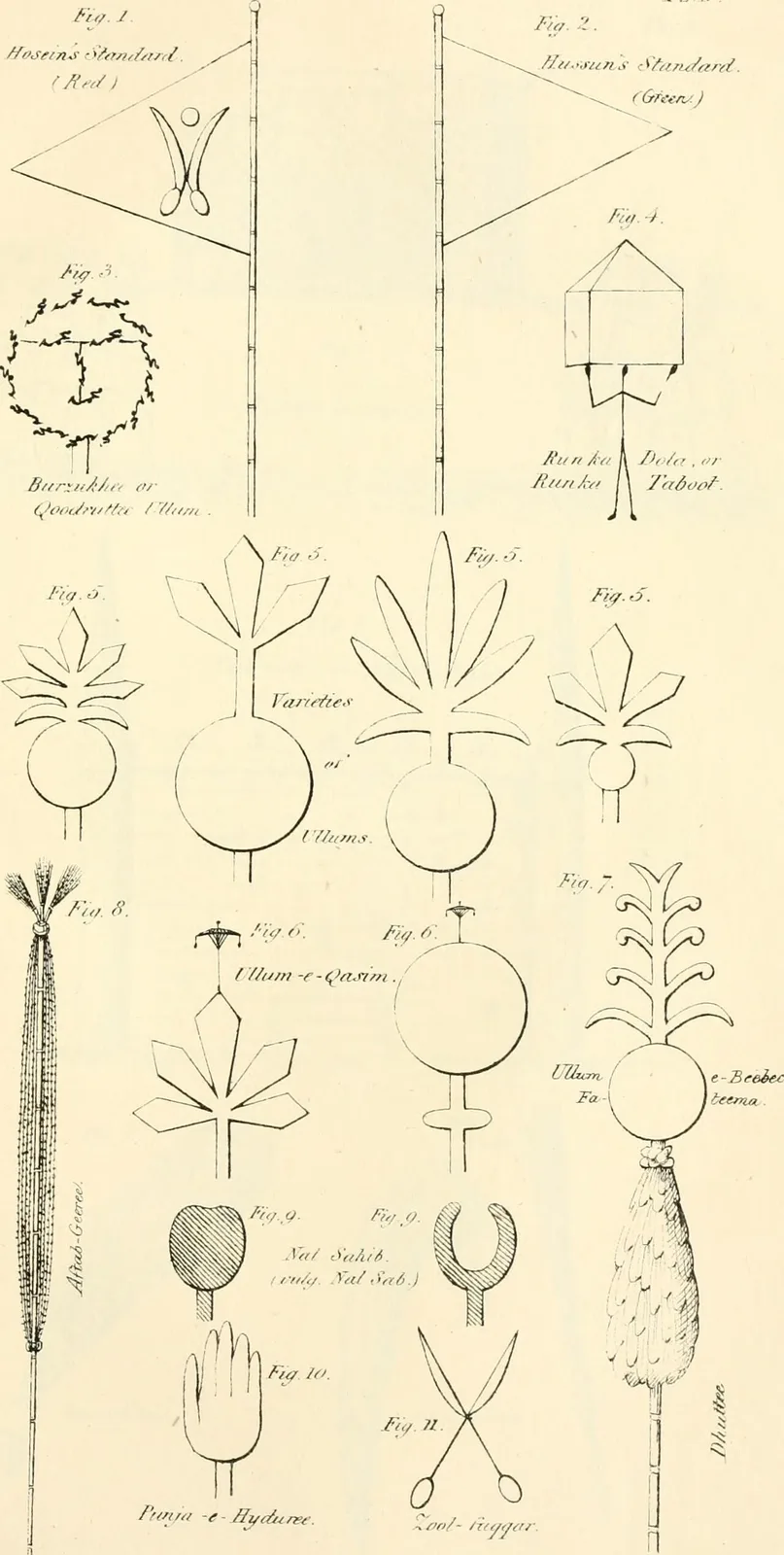
The full book is on the Internet Archive at archive.org/details/qanooneislamorcu00j…, and the Public Domain Review collection that reproduces the diagrams is at publicdomainreview.org/collection/diagrams-for-tra…. What I keep returning to is that nothing here is a mistranslation in the ordinary sense. Herklots was working from a lost original, in a language he learned late, for readers who wanted customs explained rather than metaphysics preserved. The apparatus did what apparatus does. It made the rule findable, and in making it findable, made it mean something else.