Christine de Pizan bought her son back from Henry IV with her own books
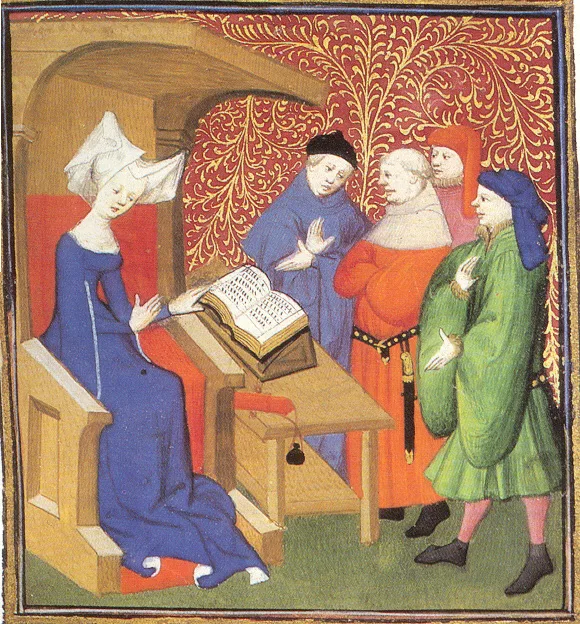
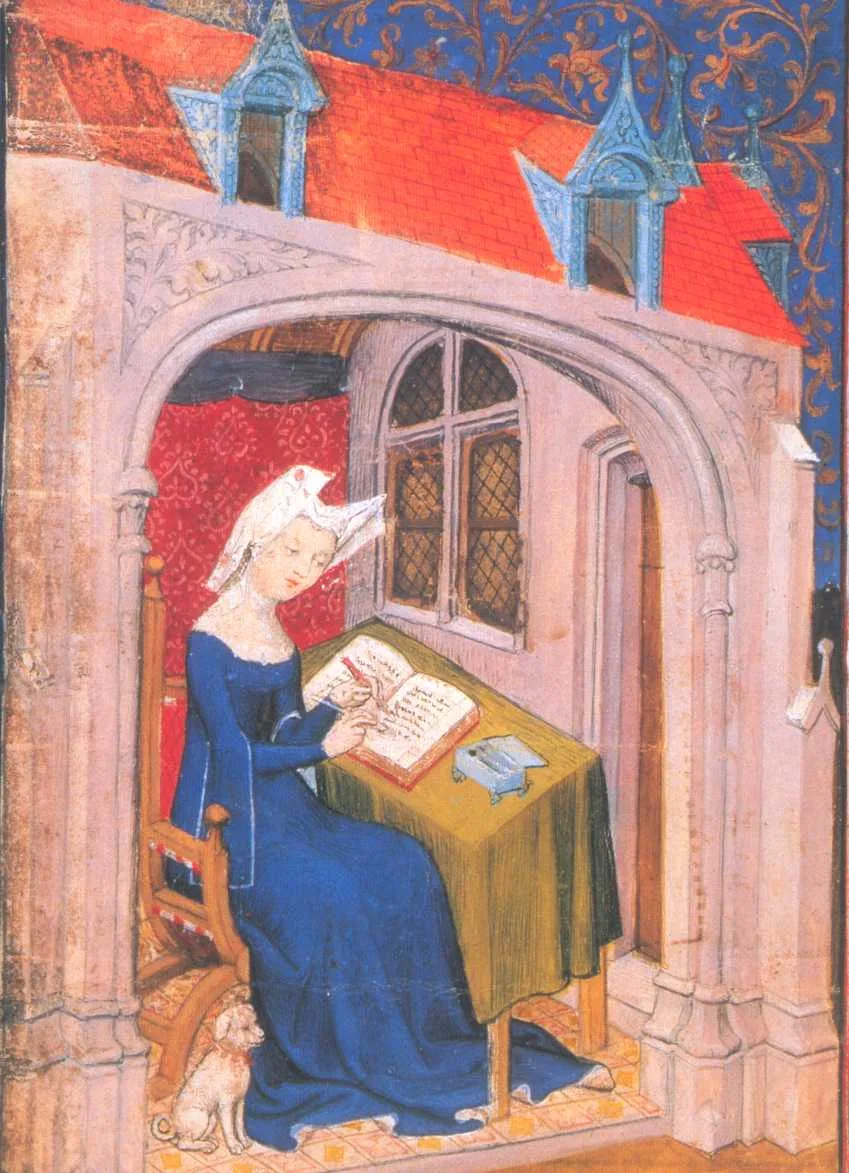
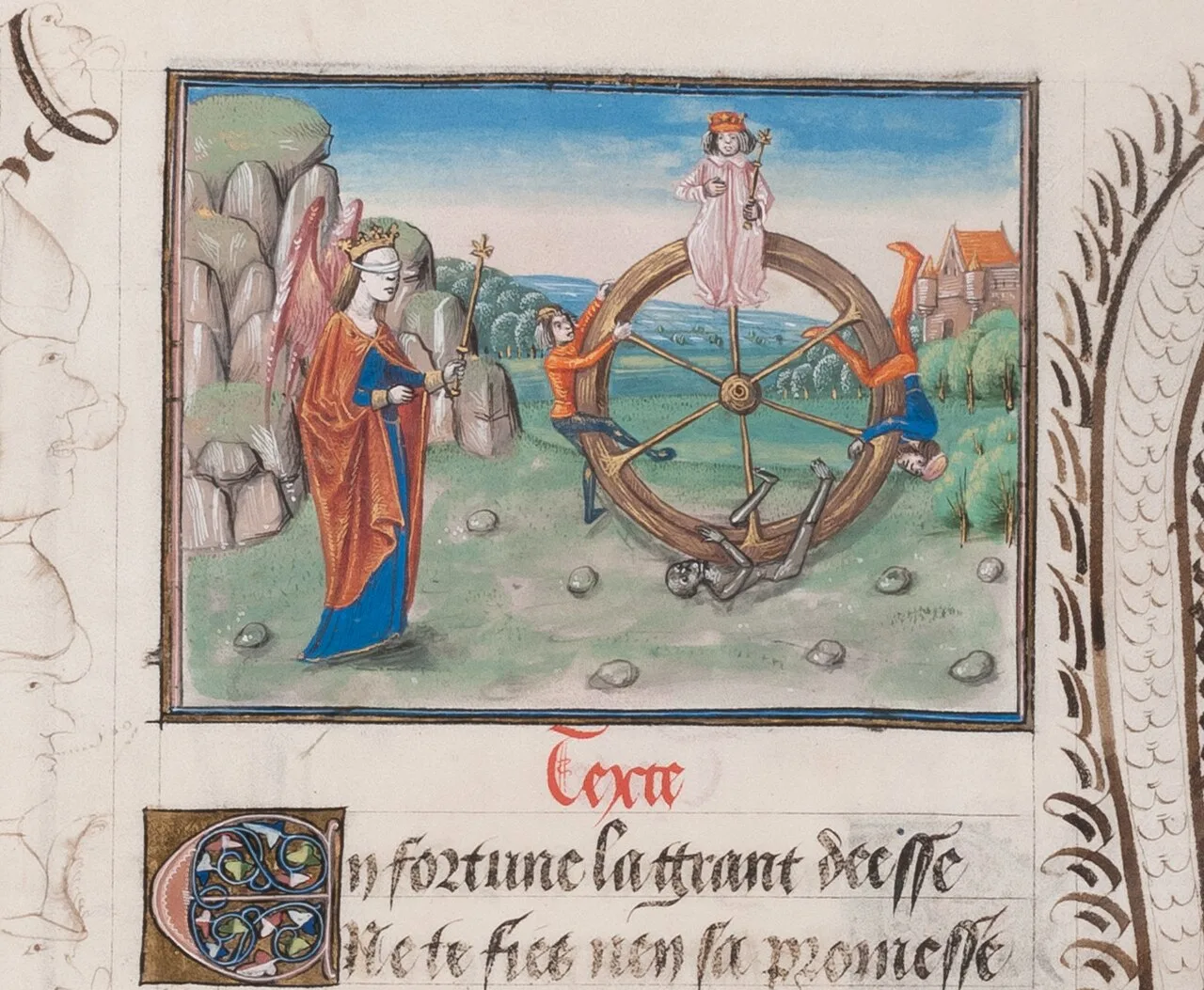
The Public Domain Review has put online the pictures from a small book of advice for young princes, made around 1460, and the strange thing about them is how gentle they are. One hundred little paintings, mostly in shades of grey with touches of blue, green, red and gold. Even the scenes with headless corpses look, as the PDR puts it, toytown. The book is Christine de Pizan's Epistle of Othea, and the story of how its author got her son home from England is better than anything in it.
Christine de Pizan (1364 to about 1430) was widowed about a decade before 1400, with debts, and supported her family by writing. Scholars think she was the first woman in Europe to earn a living that way, and she knew why people bought her work: the novelty, she said, of a woman who could write. Among her wealthy readers was John Montagu, third Earl of Salisbury, who asked to take her thirteen-year-old son Jean to England as a companion for his own boy. She trusted him enough to say yes. Then Henry IV took the English throne from Richard II, which made him a usurper to his enemies and a traitor to Christine, and in January 1400 Montagu was killed by the townspeople of Cirencester for his part in a plot to assassinate the new king. It was a summary execution. Jean was stranded in England, a "child in a foreign land . . . justifiably terrified", as his mother later wrote, while a fresh wave of bubonic plague moved through Europe.
What rescued him was her writing. Henry IV came across her books and poems among Montagu's belongings, liked them, and took Jean into his own household, where he "held him dear and in high rank". To Christine this was a hostage arrangement wearing court clothes. The king summoned her to England and promised her status and money. She thanked the man she considered a traitor, negotiated, and paid. "To be brief", she wrote, "I did so many things, not without great forfeit, it cost me several of my manuscripts, that I obtained leave for my son to come and fetch me to lead me there, [a place] I still have not seen." Jean was back in France by 1402, placed with a new master at the French court, and Christine never made the trip.
The Epistle of Othea was among the manuscripts she handed over. It is a book of advice for young noblemen. The copy the PDR has published is not the one she gave Henry IV. It is Cod. Bodmer 49, held at the Fondation Martin Bodmer in Cologny, near Geneva, made around 1460 for Antoine de Bourgogne, called the Bastard of Burgundy, an avid collector of illuminated manuscripts. You can page through it at e-codices.unifr.ch/en/list/one/fmb/cb-0049, and the PDR's selection is here: publicdomainreview.org/collection/epistle-of-othea.
The copy featured here is not the one she gave the king. Her own account is where the story of the transaction comes from. The PDR says the one it features is a different, later manuscript. What is certain is the arithmetic: a woman with no husband got her son out of a king's household by paying in the only currency she had, her manuscripts. A copy of the book of advice for princes is still here. So is the receipt, in her own words.