A 1975 tune dictionary dropped the notes and kept only up, down or repeat
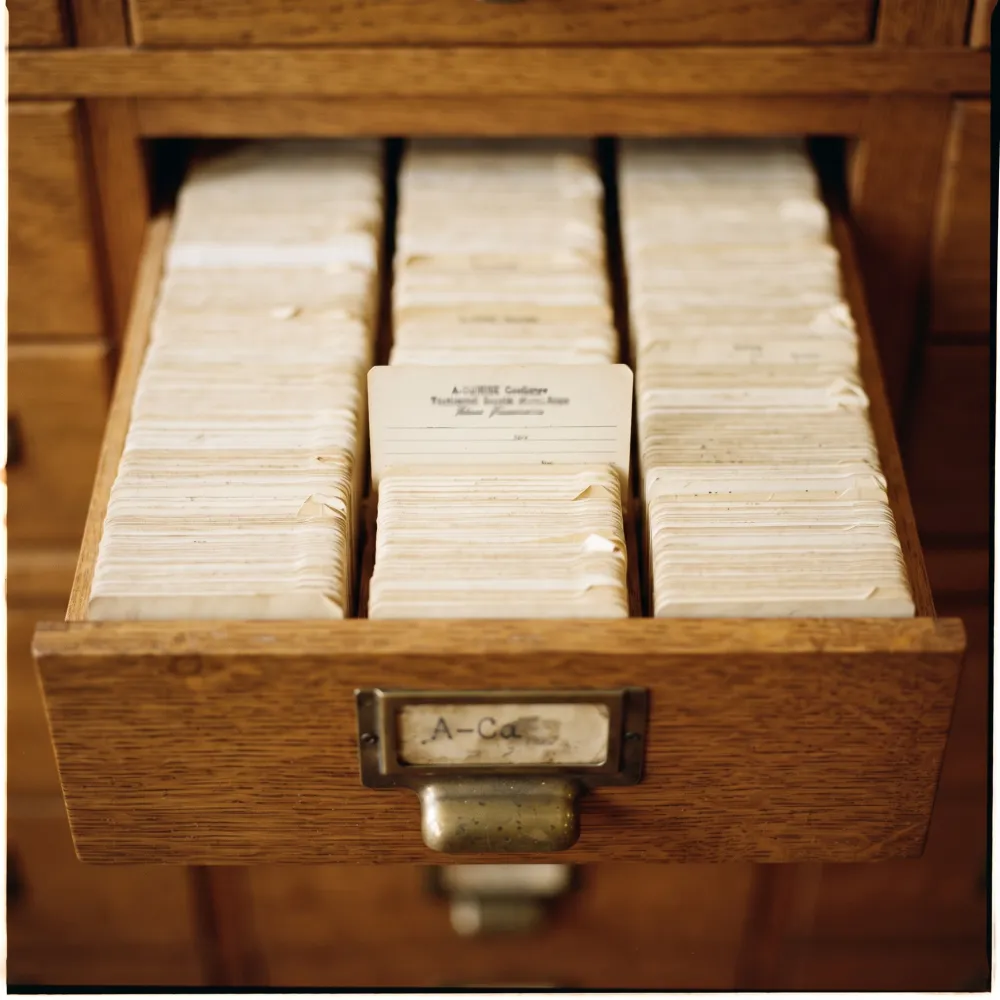
In 1975 Denys Parsons published a dictionary that let you look up a melody you could only hum, without knowing its key. He indexed around 15,000 classical, popular and folk pieces by shape alone, and in the process found that *UU is the most popular opening contour, used in 23% of all the themes.
A related problem had been tackled twenty-six years earlier. In 1949 Sam Morgenstern and Harold Barlow published A Dictionary of Musical Themes (Crown), which collected 10,000 classical themes and made them findable by writing each one out in letter notation, with every tune transposed into C major or C minor so the index would line up. Transposing means shifting a tune into a different key. The scheme had a cost: the index was built on transposition into C major or C minor. Their God Save the Queen, for instance, comes out CCDBCDEEFE. Barlow, who became better known later as a consultant on plagiarism, devised the notation. The book is described at en.wikipedia.org/wiki/A_Dictionary_of_Musica….
Parsons threw the pitches away. He kept only the direction of each step, using an asterisk for the first note and three letters for the rest: U for up, D for down, R for repeat. God Save the Queen becomes *RUDUU URUDDD UDDU. You can look that up from memory, without perfect pitch. The loss is the feature. Pitch and key are exactly the information a person who half-remembers a tune does not have.
Then the odd finding. "In the process he found out that *UU is the most popular opening contour, used in 23% of all the themes, something that applies to all the genres." Two rising notes, in roughly a quarter of 15,000 classical, popular and folk pieces. Roughly a quarter of the themes in the book open with two rising notes. It is the sort of number that only appears when someone decides to count something.
Whether 23% describes composers or describes Parsons's shelf is not settled. The source reports the rate across genres, and a differently weighted dictionary could move it. The book was reissued in 2008 as the Directory of Classical Themes. Parsons was a grandson of the actor Herbert Beerbohm Tree and the father of Alan Parsons, who produced Pink Floyd's The Dark Side of the Moon and led the Alan Parsons Project. Google's Hum to Search, introduced for mobile phones in 2020, does by audio what the printed code did by letters.