The US has 3,810 billion cubic feet of gas stored, less than one cold day's use
The United States finished filling its underground gas stores on October 31 with 3,810 billion cubic feet (Bcf) in the ground, about 2% above the five-year average. That sounds like a cushion. It is a surplus of almost 2% over the five-year average, and national gas use runs near 100 Bcf a day in cold weather.
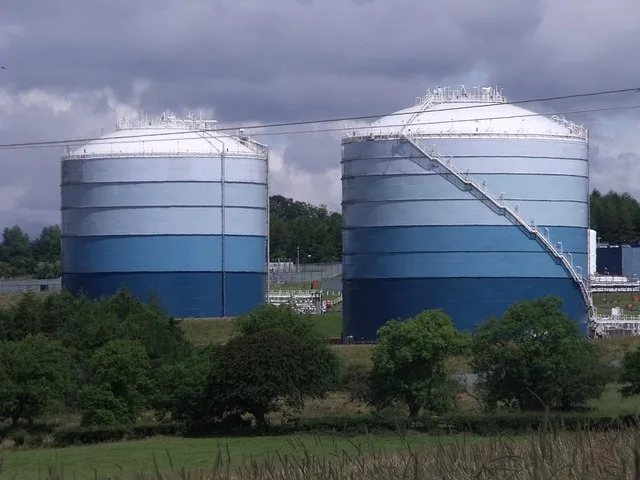
Storage is the country's winter buffer. Gas goes into salt caverns and depleted fields from April 1 to October 31, when demand is low, and comes back out when furnaces and power plants need it. The EIA's weekly report put the season-end figure at 3,810 Bcf, with the surplus over the 2021-2025 average at almost 2% (eia.gov/todayinenergy/detail.php?id…). The entire surplus is small next to daily national demand.
The surplus was inherited, not earned. The season opened at 1,878 Bcf, already 63 Bcf ahead of average, and mild spring weather let it grow to 198 Bcf by the week ending August 7. Then summer heat ran for 10 straight weeks and cut it back; weekly injections slid from 108 Bcf in early June to 15 Bcf in late August. Net injections for the whole season came in 2 Bcf below the five-year average even though dry production was up 3% year on year, a figure EIA credits to S&P Global Energy.
The extra production did not go into storage. As EIA puts it, "most of the increased production during this period was used to meet rising demand from liquefied natural gas export terminals." Gas that leaves on a ship cannot be pulled back out in January.
EIA's November outlook forecasts 1,900 Bcf of withdrawals between November 1 and March 31 and still expects inventories 4% above the 2022-2026 average at the end of March. That forecast rests on a relatively mild winter. If December through February come in cold, the surplus shrinks fast and the price shows up on heating and power bills; if the mild pattern holds, the cushion survives to spring. The weekly storage reports through December are where that gets settled.