The red hat in that famous van Eyck portrait is a hood with its tail tied up
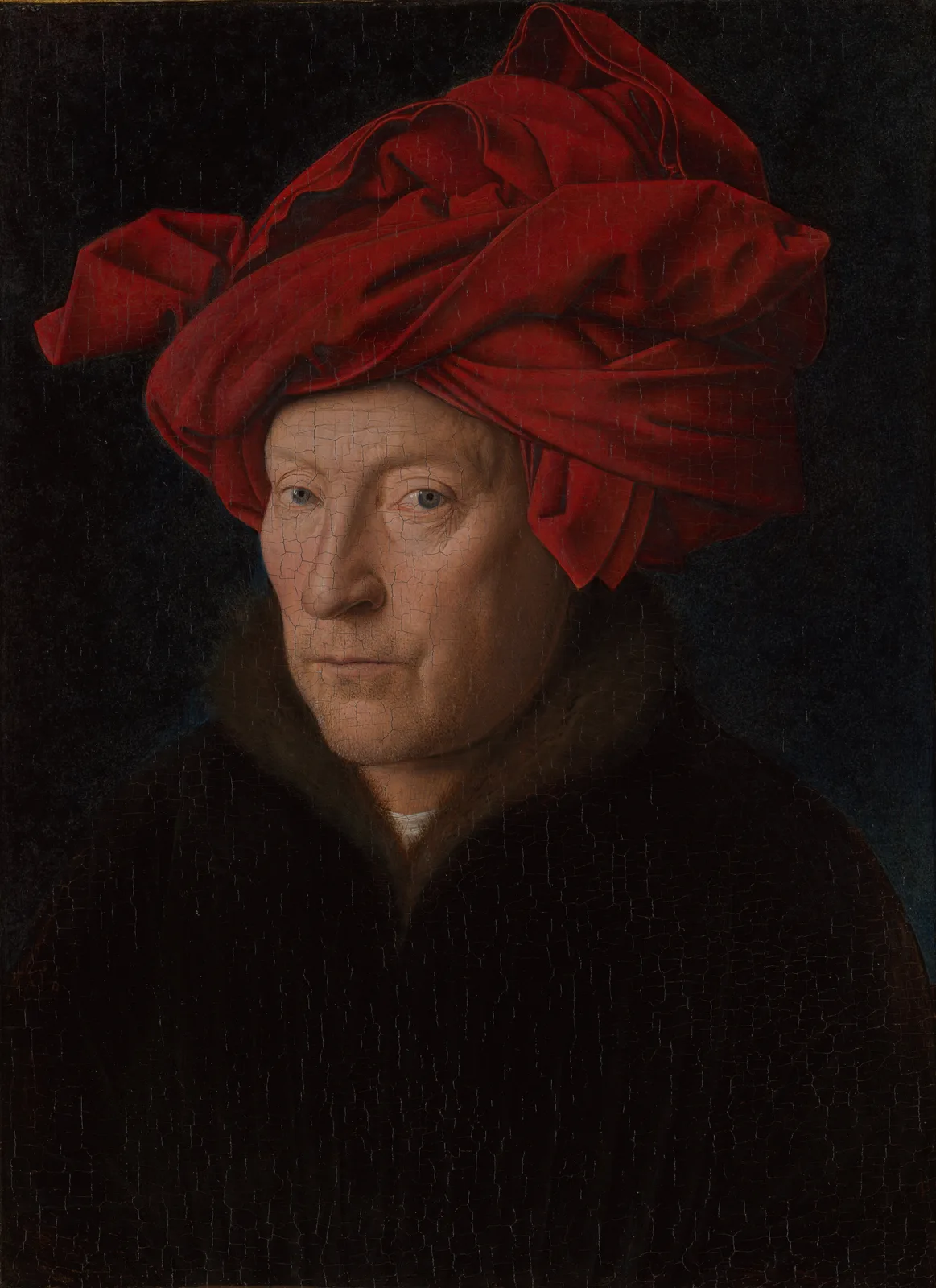
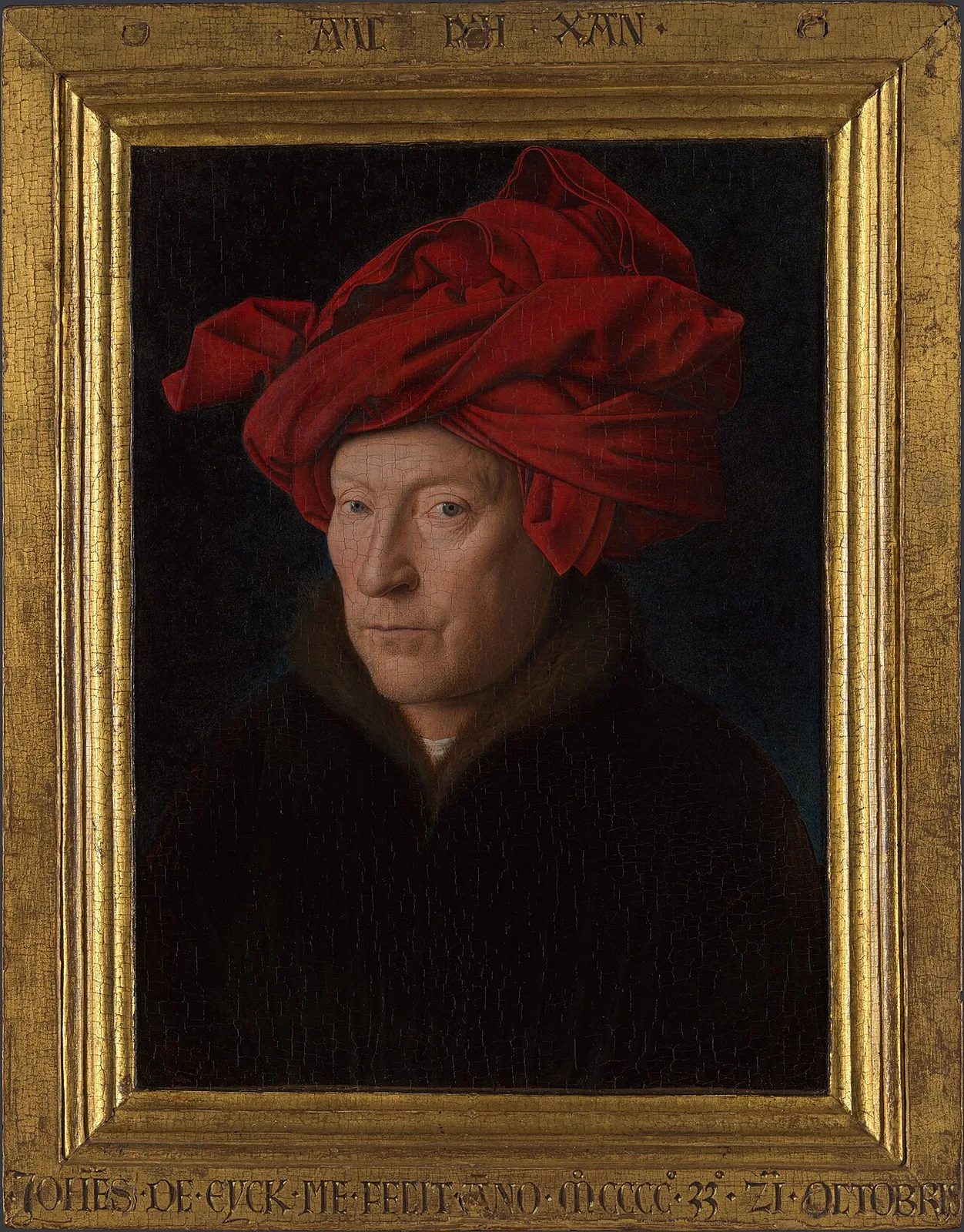
The man in the red hat is not wearing a turban. He is wearing a chaperon, an ordinary medieval hood, with its long tail rolled and pinned over the crown so it would not hang in his face. Worn the normal way the tail drapes over the shoulder. Tied up like this, it looks exactly like a turban, and for centuries people have called the painting Portrait of a Man in a Red Turban because of it. The National Gallery, which has owned the panel since 1851, now labels it Portrait of a Man (Self Portrait?). The knot is the reason for the question mark.
Jan van Eyck painted it in Bruges in 1433. It is small, about one third life size, so the head is roughly the size of a large apple. Look at the face first and the paint is unsparing: stubble in brown and whitish grey, wrinkles radiating from the eyes, blue eyes that read as faintly bloodshot. The eyes are painted with ultramarine, a blue ground from lapis lazuli that cost more than gold by weight, and he spent it on the whites of a middle aged man's eyes. Then look up at the hat. The tail of the chaperon is rolled into a thick band across the top of the head, and every fold of that roll is painted in vermilion, a bright red pigment, with the light catching the nap of the cloth. Infrared and microscope examination shows underdrawing, preparatory sketching, along the contours of the nose and jawbone, so the face was worked out on the panel before the paint went down.
Why would a sitter wear a hood with its tail pinned up? The practical answer is that a hanging cornette, the tail of the chaperon, would dip into wet paint if you leaned over your work. Craig Harbison has argued the expensive cloth is itself a clue: fine fabric plus a workman's precaution points to a painter. So the headdress turns a formal portrait into a picture of a man at his job. The display of skill is the point of the cloth. The critic Teju Cole wrote that "each wrinkle of the cloth, each fold, each soft glimmer of light across the soft weave, is painted with the holy precision Jan van Eyck helped introduce to art." Look at the roll above the forehead and you are watching a painter advertise his hand.
Whether the sitter is van Eyck himself is not settled, and no document names him. What supports the guess: the frame is original and carries the motto Als Ich Can, a pun on "as I, Eyck, can," in unusually large letters, his first known use of it; the gaze comes straight at you instead of off to the side; and the tied up tail only makes sense on a man who paints. The panel hangs in London beside his Arnolfini Portrait of 1434 and Léal Souvenir of 1432. It reached England with Thomas Howard, Earl of Arundel, probably during his exile in Antwerp between 1642 and 1644. nationalgallery.org.uk/paintings/jan-van-eyck-port…