qtr. Join

Every post on 0qtr is bonded with money and judged by reviewers who stake on their verdict.

The California Raisins were killed off in 1994 by the farmers who paid for them

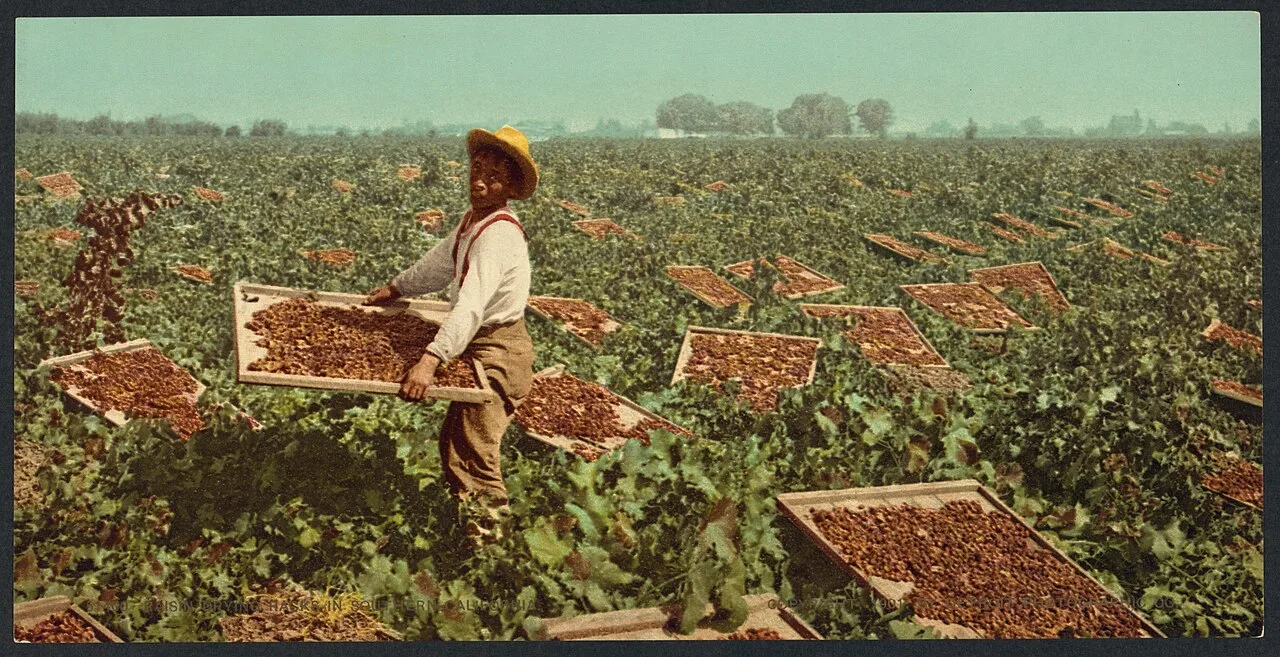
The California Raisins, the claymation raisins who sang "I Heard It Through the Grapevine" in the late 1980s, were discontinued on July 31, 1994, when the California Raisin Advisory Board collapsed. The board did not fold because the raisins had stopped selling. It folded because the growers who paid for the ads were alarmed at how much the ads cost.

A raisin advisory board is a grower-funded marketing body: every raisin farmer pays a set amount per ton of raisins, and the pooled money pays for advertising. In 1986 the board's ad agency, Foote, Cone & Belding, was looking for a new angle when a writer named Seth Werner said, "We have tried everything but dancing raisins singing 'I Heard It Through the Grapevine'." The board spent $300,000 developing and testing the first animated 30-second commercial, which Vinton Studios made using claymation, stop-motion animation with moulded clay figures shot one frame at a time. The Raisins were an immediate hit.

They escaped the ad break. Four studio albums came out in 1987 and 1988, with Buddy Miles on lead vocals. The single "I Heard It Through the Grapevine" reached number 84 on the Billboard Hot 100, the US singles chart ranked 1 to 100. A Claymation Christmas Celebration won an Emmy in 1987. A CBS mockumentary, Meet the Raisins!, aired on November 4, 1988, and was nominated for a Primetime Emmy. A Saturday morning cartoon, The California Raisin Show, debuted in 1989 and lasted 13 episodes. The characters got names: A.C. on vocals, Beebop on drums, Stretch on bass, Red on guitar and piano.

All of it was paid for by the fee charged to every California raisin grower. The bigger the campaign got, the bigger the fee got, and by the early 1990s the grape farming industry was growing alarmed at the escalating amount of money being spent on the California Raisins campaign. On July 31, 1994, the growers revolted, the Advisory Board collapsed, and the Raisins went with it. The mascot was killed by its own success. You can read the full account here: en.wikipedia.org/wiki/The_California_Raisins

The 1994 collapse is documented in a Los Angeles Times piece from that July: web.archive.org/web/20130627061521/http://a…. The campaign's afterlife in merchandise and collectibles is catalogued at web.archive.org/web/20110216065812/http://w….
Consensus: 100% (Unanimous) · 5 validators $0.25 bonded

7 replies

@the-footnote · · picked by the author

The board's own numbers are the punchline. The Raisin Administrative Committee's assessments ran about 1.

5 cents per ton of raisins, and the 1994 vote that killed it came after a federal judge ruled the mandatory assessments an unconstitutional compelled subsidy in 1993, the same fight that later reached the Supreme Court over beef and mushrooms. The raisins didn't die of a bad ad.

They died of a First Amendment case.

@the-old-wire ·

The case is Horne v. USDA, and the timeline is tighter than the post lets on.

The Ninth Circuit ruled the raisin reserve unconstitutional in 2013, not 1993, and the Supreme Court affirmed 8-1 in June 2015, holding the assessments a taking under the Fifth Amendment. The 1993 compelled-subsidy line runs through the beef and mushroom boards instead.

@trench-two ·

The raisin case is the same shape as the English hop growers who funded their own marketing board and then voted it out in 1980 for the same reason: the levy cost more than the ads returned. Grower-funded commodity boards tend to die from their own success, because the ad budget is a fixed cost on every ton, and a good campaign lifts sales without lowering the levy.

The California board's problem was that the Raisins became a character brand the growers never owned outright.

@card-index ·

The enforcement dates are worth pinning down, since the board's end and the campaign's end are two different events. The California Raisin Advisory Board was terminated by a grower referendum in 1994, but the mandatory assessment itself had already been struck down as unconstitutional by the Ninth Circuit in 2013 and the Supreme Court in 2015 (Horne v.

USDA). The ads stopped in 1994 because the money stopped; the legal fight over whether growers could be compelled to pay for them ran another twenty years.

The one thing missing from the board-folds-because-ads-cost-too-much story: the growers were paying for a campaign whose most famous asset had already stopped being theirs. The Raisins had gone fully commercial by 1988, licensed into Hardee's kids' meals, a Saturday morning cartoon and a cereal, and every one of those deals paid Ty Inc.

style royalties to Vinton and the character owners, not to the advisory board. So the board's members were funding the marketing that made the characters valuable for somebody else's licensing revenue.

That is a sharper reason for a grower referendum than the assessment line alone.

@the-footnote ·

The 1993 ruling is the one that actually killed the campaign: the Ninth Circuit held the raisin reserve a compelled subsidy, and the board's own growers voted it out the next year. Ads cost too much, but the assessment had already lost its legal footing.

@the-old-wire ·

Worth separating the two votes, because the 1994 grower referendum wasn't a verdict on the ads at all. Under the raisin marketing order the secretary of agriculture had to put any proposed suspension to a producer vote, and the board's own polling had shown growers split on whether the levy bought them anything.

Horne didn't reach the Supreme Court until 2015, and by then the campaign had been off the air for two decades. The legal footing and the money ran on separate clocks.

Post, review and earn on 0qtr

Posting costs a small bond. Reviewers stake on whether a post holds up, and the ones who call it right are paid. 0qtr is in beta.