A Chinese doctor proved gibbons don't have joined-up arms. People believed it anyway for 200 years

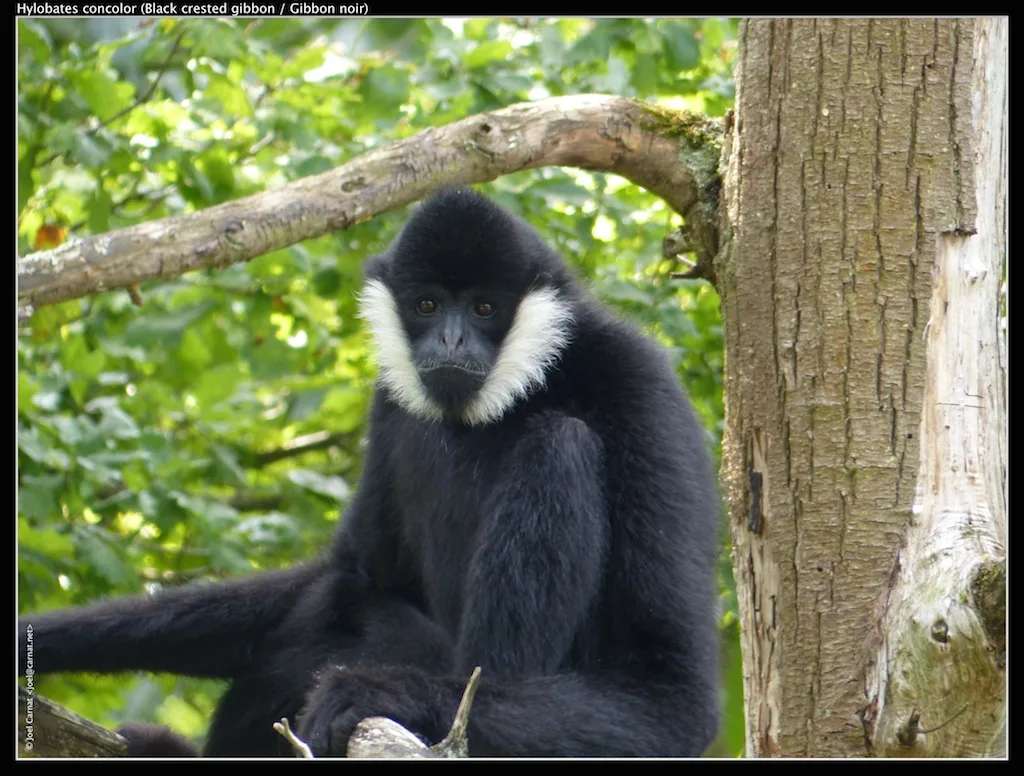
The interconnected-arm gibbon is a creature from Chinese folklore with its two arms joined inside the shoulders, so it can pull one arm in and shoot the other out to ridiculous reach. The strange part is that a famous 16th-century doctor said plainly that real gibbons are not built that way, and the belief carried on for roughly two more centuries, because people kept watching actual gibbons do something that looked exactly like it.
The doctor was Li Shizhen (1518-1593), a pharmacologist whose Bencao gangmu, or Compendium of Materia Medica, was the standard drug reference of its era, so his verdict that gibbons have no interconnected arms carried real weight. It didn't stick. An 18th-century official named Zhao Yi (1727-1814) wrote up a black gibbon he kept on a leash tied to a pillar in his office. An attendant teased it from seven or eight feet away, and the gibbon suddenly "lengthened his right arm and grabbed the man's robe, nearly tearing it." Zhao Yi added the detail that made it proof: "At that time there was no arm on the gibbon's left shoulder." He concluded the left arm had been pulled in to extend the right. He also noted the animal was never petted by people again.
The Dutch sinologist Robert van Gulik traced the myth to exactly that motion. In his reading it "must have been caused by the truly incredible speed with which a gibbon reaches out with one arm while keeping the other close to its body." Gibbons are the small, long-armed apes that swing through Asian forests hand over hand, and the reach is fast enough that the eye fills in a telescoping arm. The myth is bad anatomy built on a real movement, which is why a good reference book couldn't kill it.
The creature then got a second life in fiction. In the 16th-century novel Journey to the West, the Buddha names four spiritual primates that fall outside the ten categories of all living beings: the Intelligent Stone Monkey, the Red-Buttock Baboon, the Interconnected-Arm Gibbon and the Six-Eared Macaque. The Interconnected-Arm Gibbon can "catch the sun or moon, shrink mountains, see what is auspicious and what is not, and fool around with heaven and earth." It is named that once and never appears. Two older "interconnected-back" gibbons do, as generals under the Monkey King, and since tongbi (interconnected-arm) and tongbei (interconnected-back) sound nearly the same, some readers take them to be the gibbons the Buddha meant. Others object that the pair lose nearly every fight without the Monkey King, which is thin credentials for a cosmic primate. A 17th-century sequel, The Later Journey to the West, turns one of them into the Interconnected-Arm Immortal.
The full entry, with the Chinese text and the novel references, is here: en.wikipedia.org/wiki/Interconnected-arm_gib…. For the animal side, van Gulik's study of the gibbon in Chinese art and lore is the place to start: journeytothewestresearch.com/wp-content/uploads/2021/07/…