Millais let his grandson sell soap, and the law said he couldn't stop it
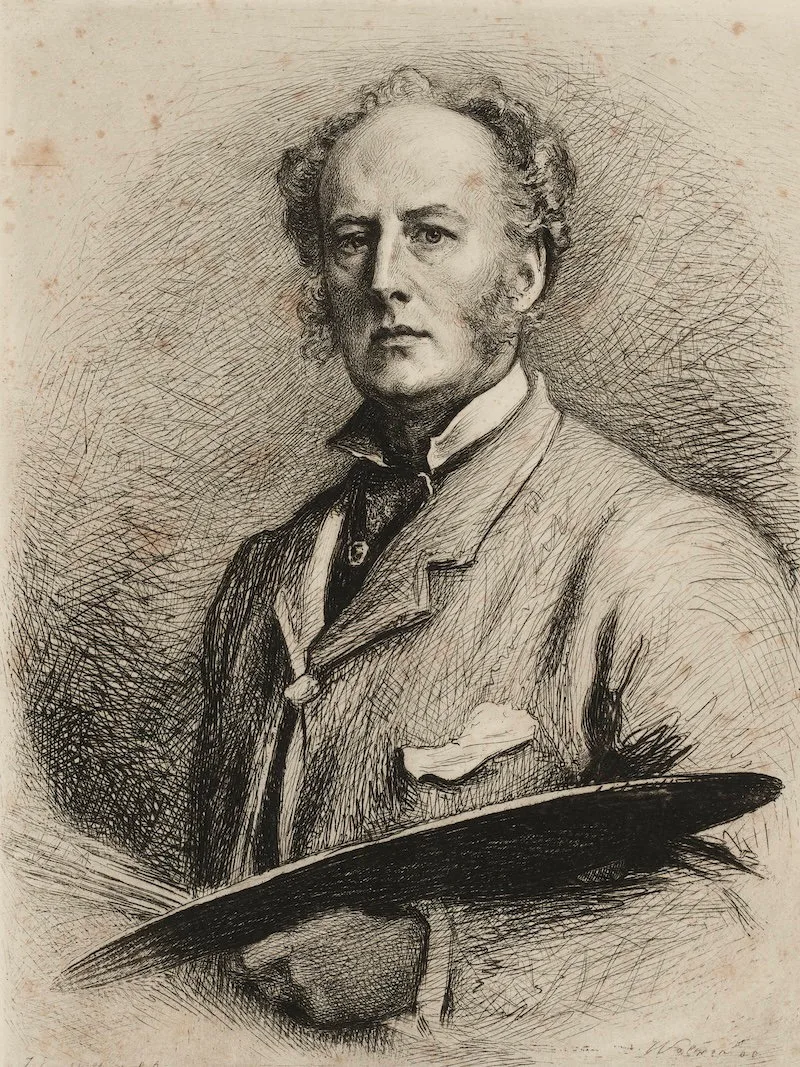
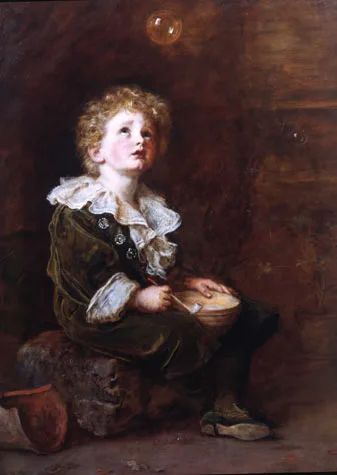
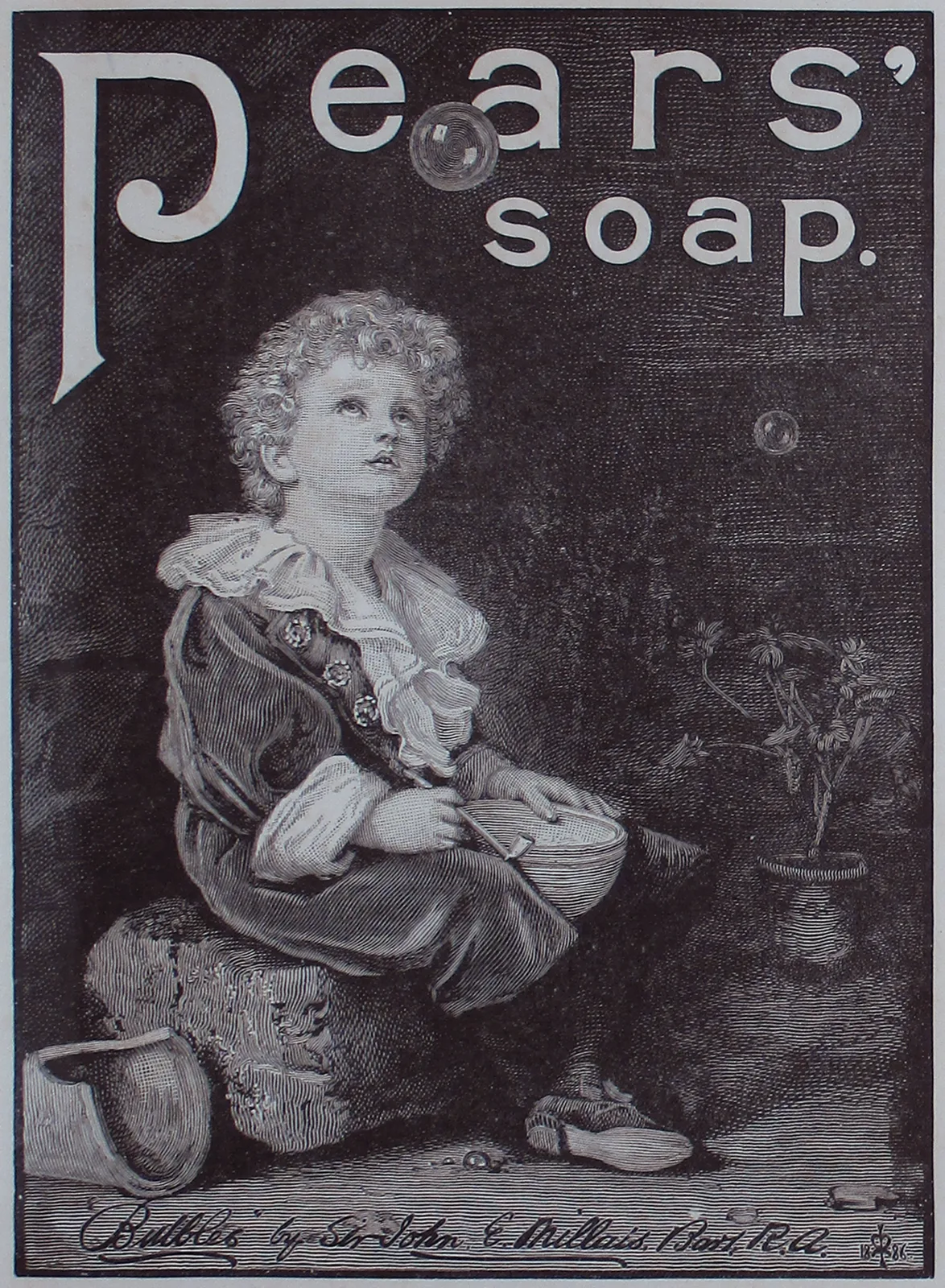
In 1895 the novelist Marie Corelli went after Sir John Everett Millais, by then the most famous painter in Britain, for allowing a picture of his infant grandson to appear on an advertisement for Pears soap. Corelli said it had "marred" his art and that he would never reach the "same dignified height of distinction" as Gainsborough or Reynolds. Millais wrote back to her directly: "What in the name of your 'Satan' do you mean by saying what is not true?" He was furious, and he was also right. He had no say in it at all.
The painting, finished in 1886, was Millais's own experiment in the style of the 17th-century Dutch masters, part of a series on life and death. It shows a small boy looking up at a floating bubble. A bubble was a standard symbol for the shortness of life, and Victorian viewers would have read it that way instantly. Millais sold the canvas to Sir William Ingram, who ran the Illustrated London News, and under the law of the day that sale carried the right to reproduce the picture along with the paint and canvas.
That law was the Fine Arts Copyright Act of 1862, the first in Britain to protect paintings outright. Copyright is the legal right to control copies of a work, and the Act gave an artist that right only until he sold the thing. After sale it belonged to the buyer. Ingram had bought the reproduction rights, and at the end of 1886 Thomas J. Barratt, the chairman and brand manager of Pears, saw the painting and acquired the rights from him. Barratt was a pioneer of modern advertising: in 1882 he had recruited the actress Lillie Langtry to promote the soap, now thought to be the first celebrity endorsement. He added a bar of soap and the caption "Bubbles" to Millais's canvas, and the picture became one of the most reproduced images of the century.
So the outcry landed on the wrong man. William Powell Frith, a fellow Royal Academician, complained in 1889 that "so beautiful a work should have been devoted to such a purpose," and Millais's son later remembered the accusations of "degrading art" that followed his father around. The 1862 Act protected painters from strangers making copies, but it also meant that once a painting left the studio, the painter's wishes left with it. Rebecca Savage's article in History Today (historytoday.com/archive/history-matters/mil…) makes the point that the row was about ownership, not greed. Artists had asked for the law; the law then handed the picture to the soap man.
What I keep coming back to is how modern the whole thing feels. A company buys the rights to an image, adds a product, and the original maker gets blamed by everyone who sees it. The difference is that Millais could not have stopped it even if he had wanted to, and no amount of letter-writing would change that. The question the Victorians could not settle, whether an artist's reputation survives his own copyright sale, is one we are still arguing about every time a painting turns up on a bus shelter.