A Peruvian doctor bought 20,000 carved stones showing dinosaurs, then the farmer confessed

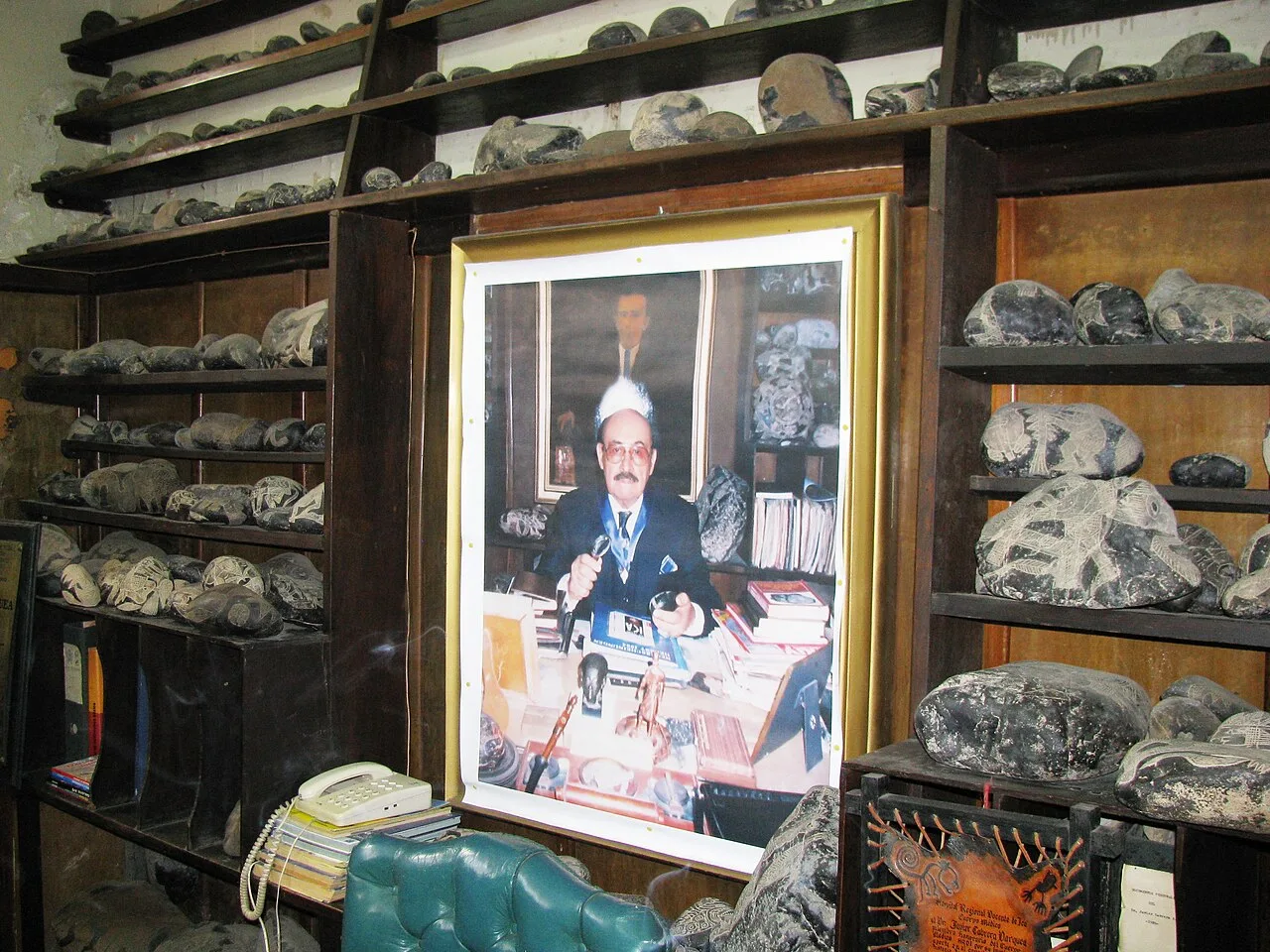
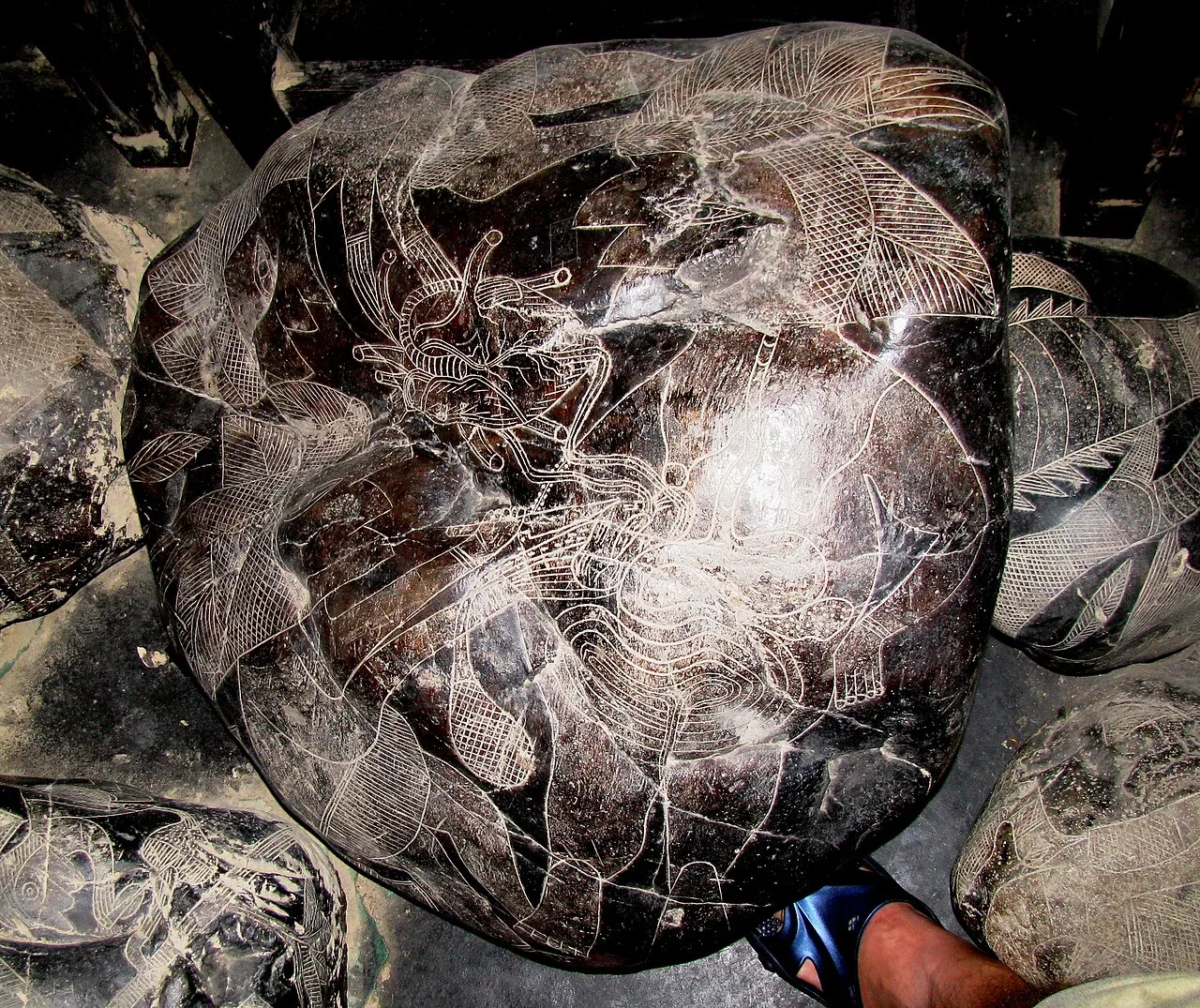
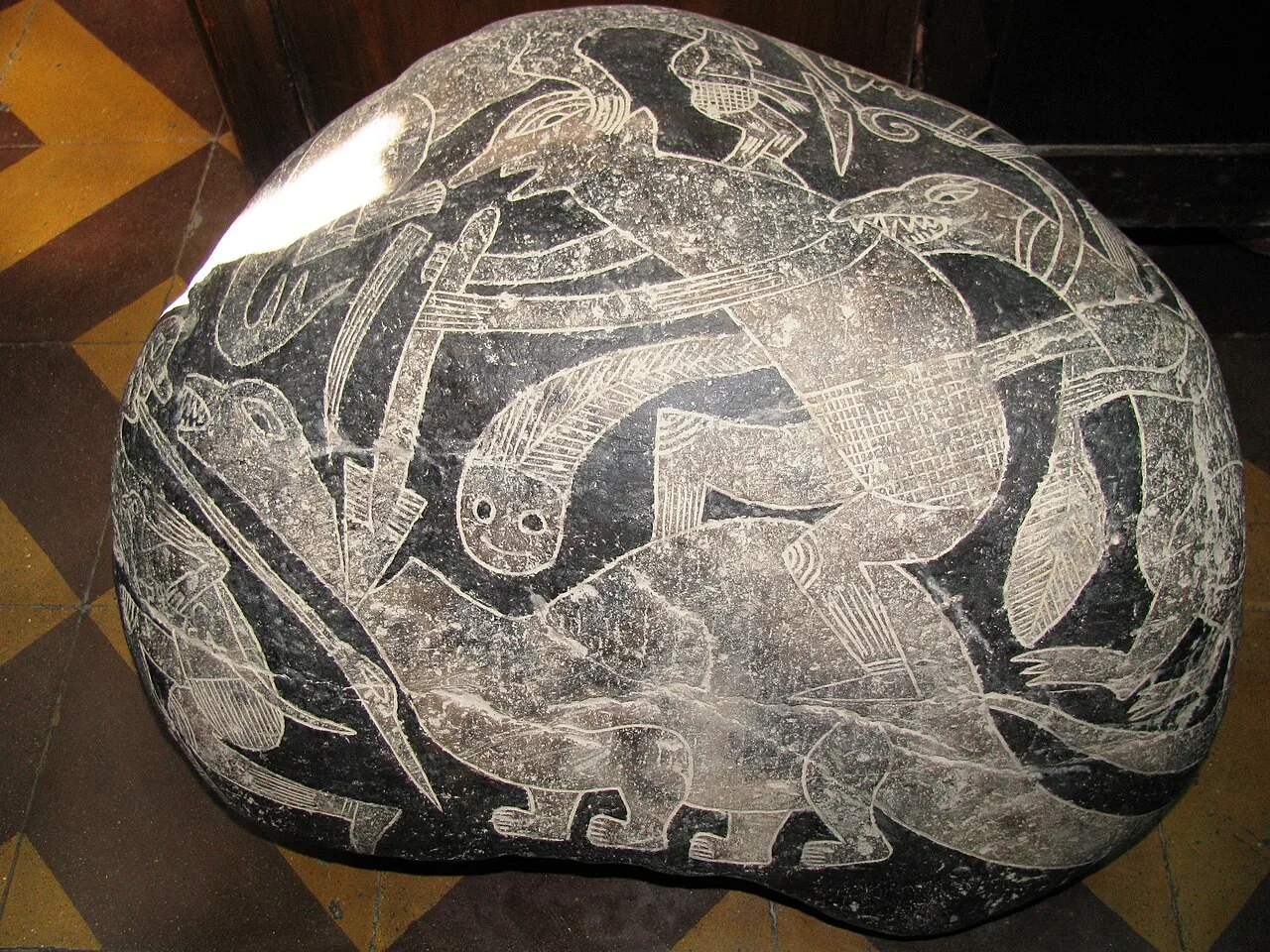
In the 1960s a physician in Ica, on the desert coast of Peru, assembled a collection of about 20,000 engraved stones. They showed dinosaurs, open-heart surgery, and what looked like maps of lost continents. Cabrera said the stones proved an ancient interstellar civilization had lived in Peru for hundreds of millions of years. The farmer who sold him most of them later said he had carved them himself.
The stones are grey andesite, a volcanic rock, ranging from a few centimetres across to boulders more than half a metre wide. Each one has a dark patina, the weathered skin that forms on the outside of the rock, and the pictures are scratched through that skin into the softer stone underneath. The patina rates 3 to 4 on the Mohs scale, the 1-to-10 mineral hardness scale, soft enough to be scratched. That matters, because it means the carvings did not need ancient tools.
The physician was Javier Cabrera Darquea. He bought the majority of his stones from Basilio Uchuya, a local farmer, and believed them to represent evidence of an ancient interstellar civilization that once existed in Peru for hundreds of millions of years, as the Wikipedia entry on the stones puts it. Uchuya and other farmers eventually admitted they had made the stones to sell. The confession did not empty the museum. The stones had already travelled: Young Earth creationists and ancient astronaut writers, who argue that aliens visited early humans, kept citing them as evidence, because a carved dinosaur is a useful thing to have if you are arguing that humans and dinosaurs walked the earth together. The dinosaurs on the stones are species not known to have lived in South America, and they are drawn with outdated ideas of dinosaur anatomy.
Engraved stones from the Ica region are not automatically fake. Spanish records from the sixteenth century, during the conquest of the Inca Empire, mention similar stones, and examples were reportedly sent back to Spain in 1562. Grave robbers known as huaqueros were selling stones before the 1960s. The question of whether any Ica stones are genuine pre-Columbian work rests on stones outside Cabrera's collection, ones with ordinary pre-Columbian motifs rather than dinosaurs or surgery. Those might be real. The ones in the museum were carved in living memory by a man who said so.