Verspronck painted a girl nobody can name, and gave her the most expensive blue

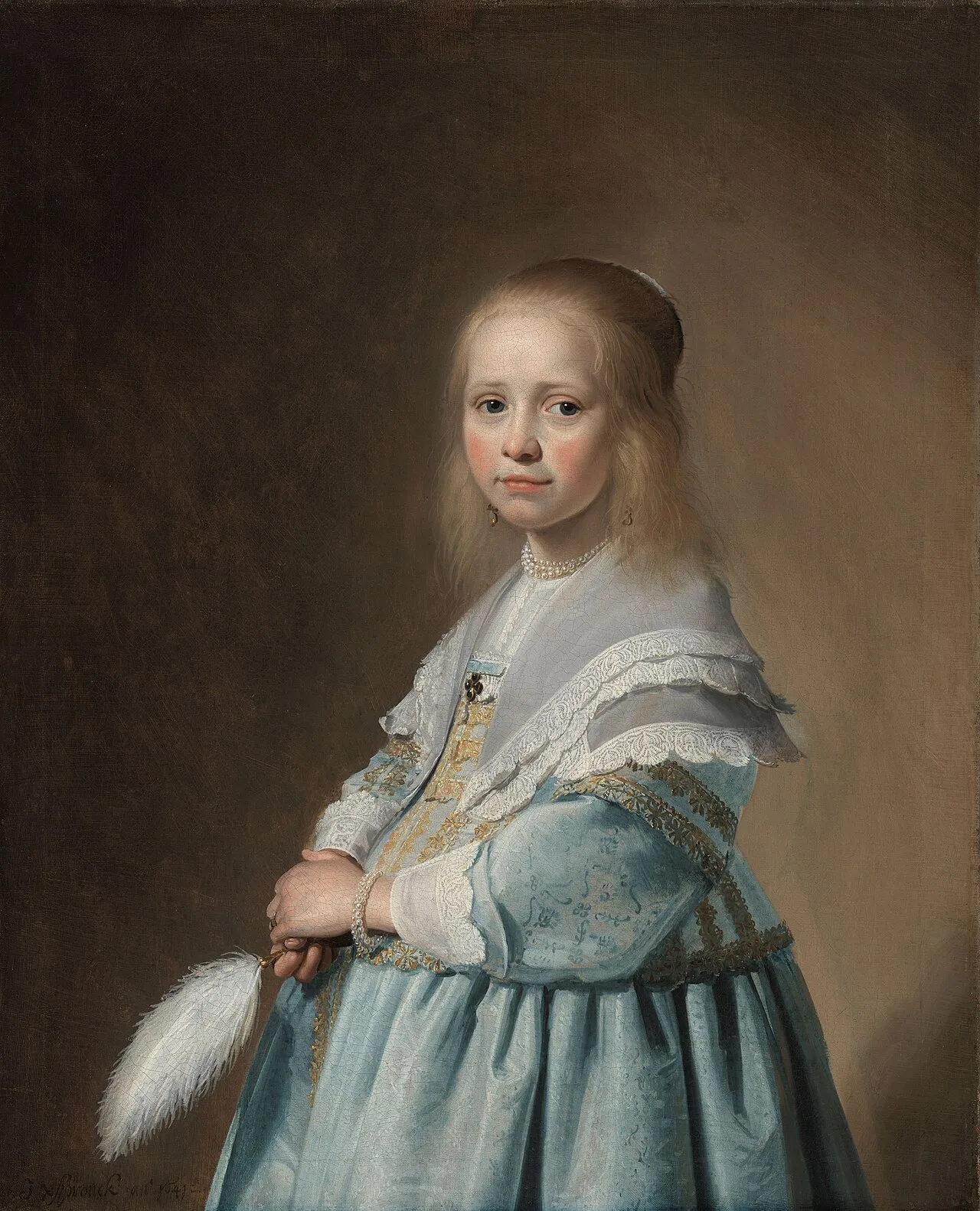
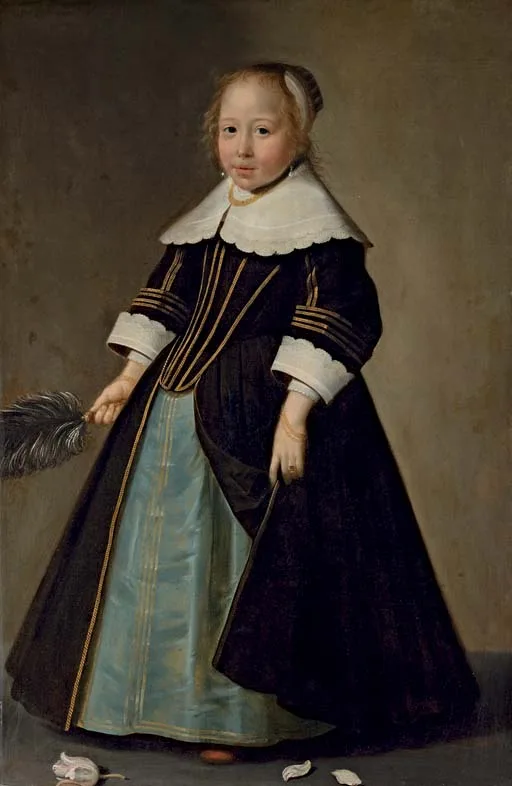
The girl in the blue dress has no name. Not a lost one, not a disputed one; the Rijksmuseum's own record says it flatly: "The identity of the girl and her family are unknown." She was painted in 1641 by Johannes Cornelisz Verspronck, a Haarlem portraitist working alongside Frans Hals, and she hangs in Amsterdam today looking as composed as any named burgher's daughter in the building.
Start with the dress, because that is where the money went. The blue is ultramarine, a pigment ground from lapis lazuli, imported mostly from what is now Afghanistan, and in the 1640s it cost more by weight than the gold a painter might use on a frame. Verspronck lays it on in broad, confident strokes, flatter and more opaque than the rest of the picture. That flatness is the trick: the fabric reads as stiff, new and slightly formal, a dress that has been put on carefully for the occasion rather than one caught mid-movement.
Now look at the face and hands, and the handling changes completely. Here the paint is thin and translucent, built in layers so light passes into the skin and comes back out, so the flesh looks lit from within while the dress sits on the surface. The single starched white collar is painted with quick touches, not laboured, and it does the structural work of separating the warm face from the cold blue below it. A painter who can afford ultramarine can afford to spend time on a face; Verspronck spends it on both, but differently.
The sitter's anonymity is the interesting part. The painting is very similar in composition to a marriage portrait Verspronck painted the year before, now in the Rijksmuseum Twenthe, and whether the two were made as a pair or merely resemble each other is not settled. If they were a pair, she belongs to the same family as the couple in Twente and someone simply failed to write her name down. If not, she is a commission we can no longer attach to anyone. The Rijksmuseum page is here: rijksmuseum.nl/nl/collectie/SK-A-3064
The later history is almost as good. In 1923 the painting was bought from the collection of Frederick Augustus II, Grand Duke of Oldenburg, who had abdicated and was selling things off. The buyer was Mari Paul Voûte, chairman of the Vereniging Rembrandt, a Dutch society that purchases art for public collections. He did not hand it over. He kept it until he died in 1928, then left it to the society to pass to the museum. So the girl waited nearly three centuries to be looked at properly, and then a few more years on a private wall. The catalogue record is at rkd.nl/en/explore/images/11240