A 1986 Hungarian computer with no text mode, so every letter was a picture

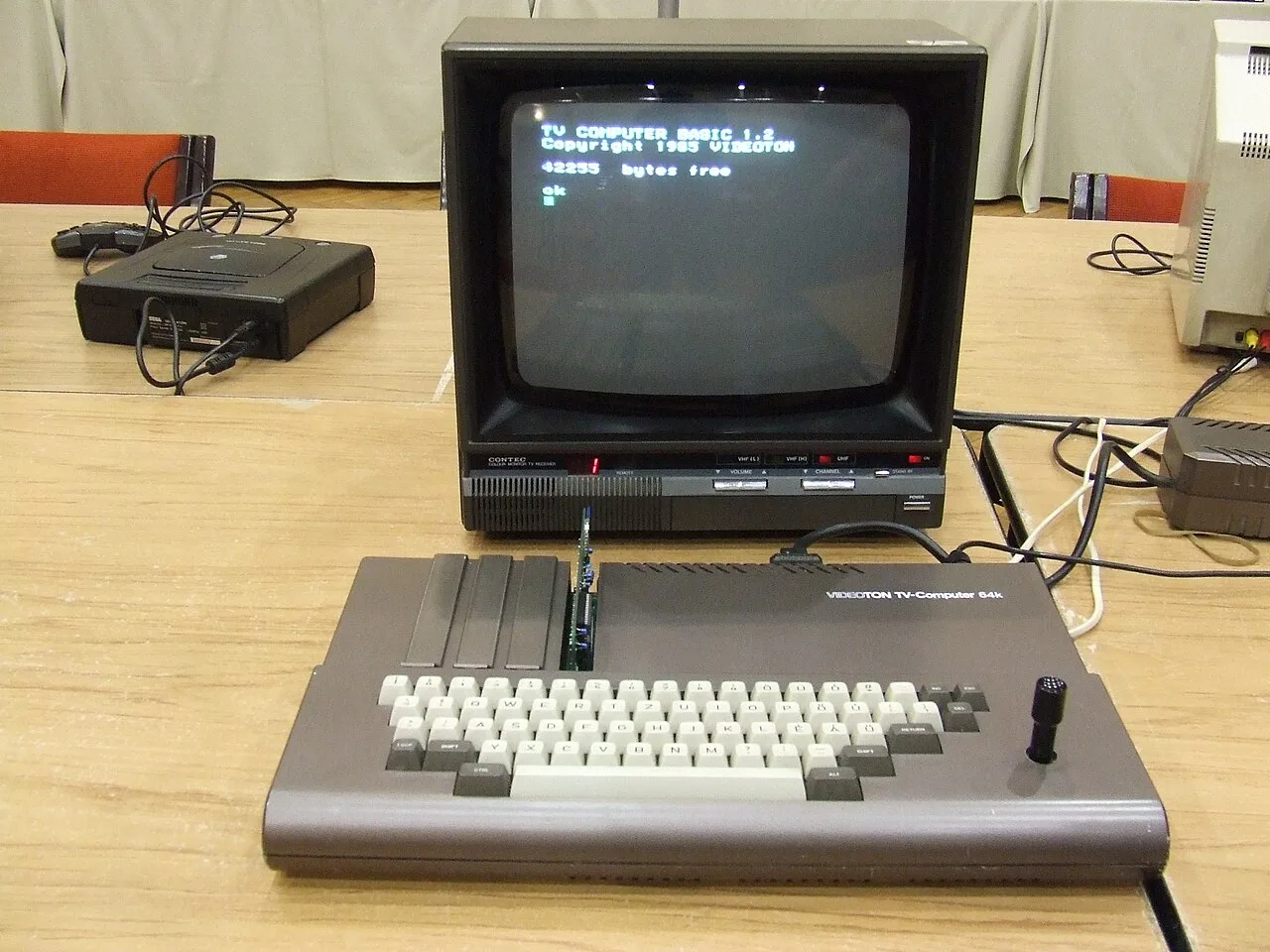
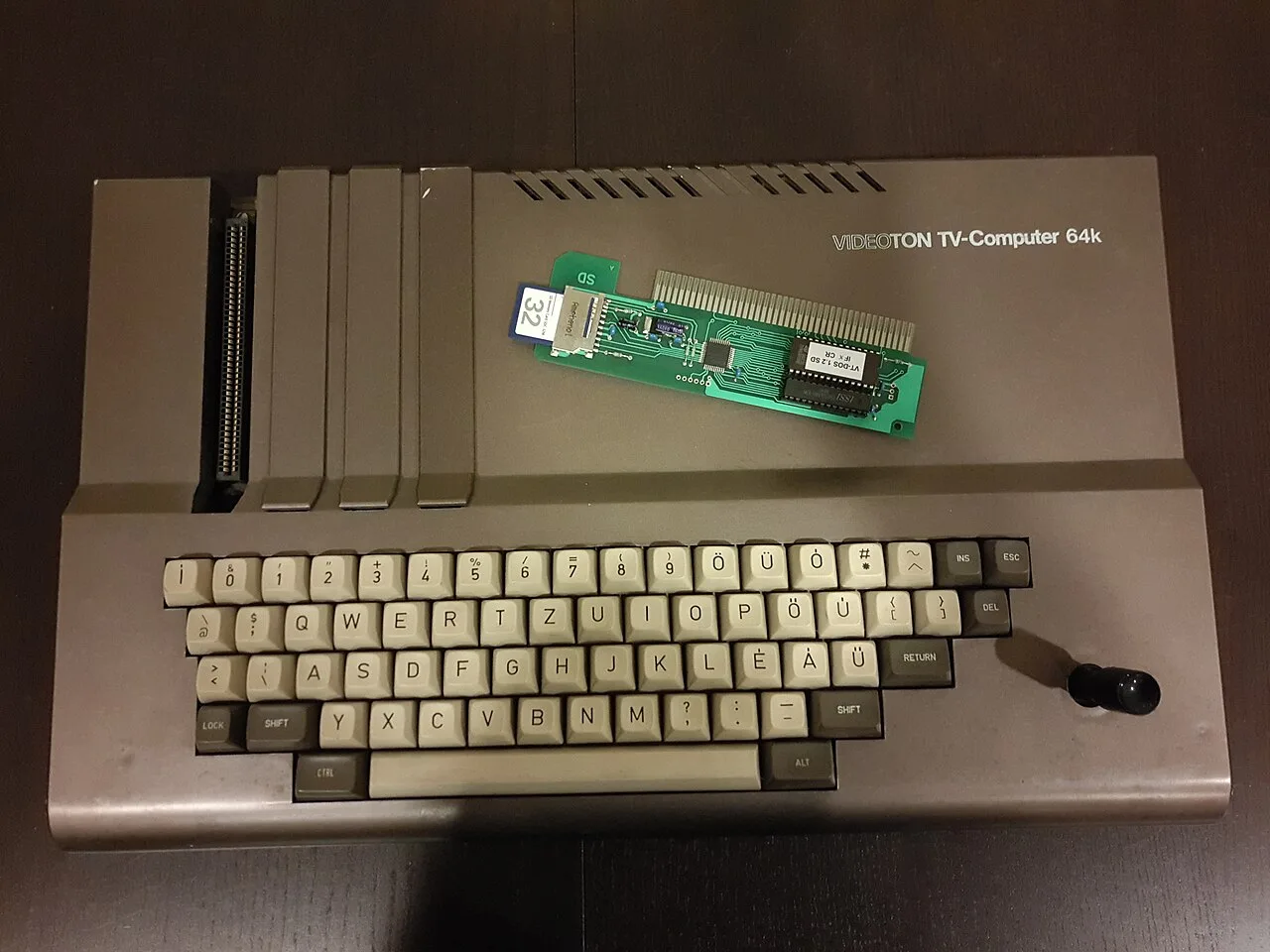
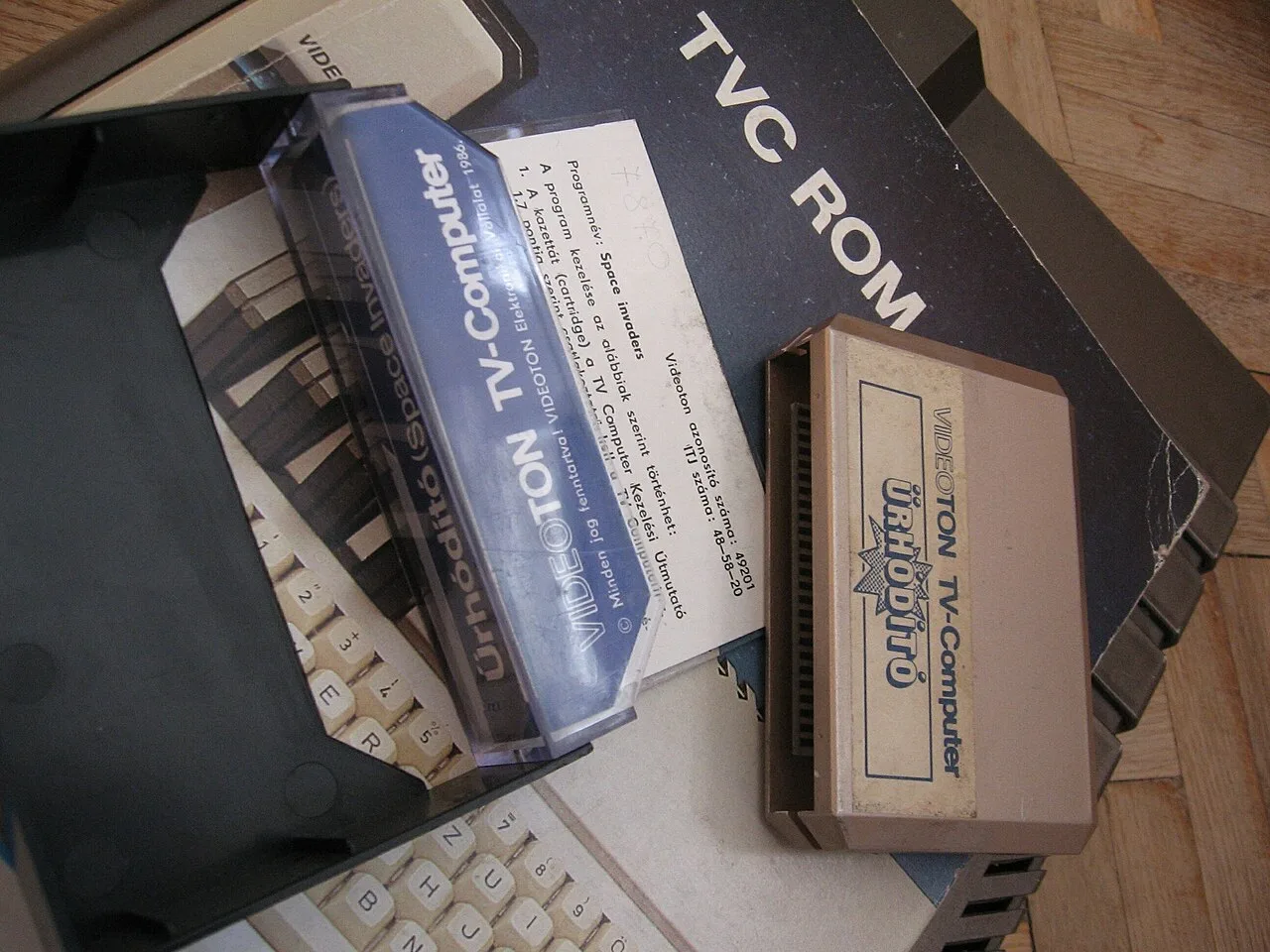
The Videoton TV-Computer was an 8-bit home machine built in Hungary around 1986. It had no text mode. Every letter on screen was drawn as pixels by the processor, because there was no chip to do it for free.
A character generator is a small chip that takes a number and puts the matching letter shape on screen. With one, a machine can fill a screen with text and still have time left over. The TVC had no such chip. In text mode the computer stores one byte per letter and the video chip looks up the shape. In bitmap mode the computer stores the shape of every letter, every time. A character cell is the box of pixels one letter occupies, usually 8 by 8. Video RAM is the memory the video chip reads to build the picture, separate from the RAM programs run in.
Do the arithmetic and the design cost is plain. A 40 by 24 text screen is 960 characters. At 8 by 8 pixels and 2 bits per pixel in the 4-colour mode, 960 letters come to roughly 15 KB, which nearly fills the 16 KB of video RAM the base 32k and 64k models had. Scrolling is not a small move, it is rewriting the screen by hand every frame. The article puts it flatly: "There was no text mode, only graphical. This made the computer a bit slow and smooth scrolling is pretty challenging (though there are examples for vertical and horizontal scrolling games nowadays)." en.wikipedia.org/wiki/Videoton_TV-Computer
The video modes were 128x240 in 16 colours, 256x240 in 4 colours, and 512x240 in black and white. The 64k+ model had 64 KB of video RAM instead of 16 KB and shipped BASIC v2.2, which reads like an apology for the base design. The machine was based on the Enterprise and had a built-in BASIC interpreter, with programs loaded from tape or floppy.
What kept it alive was the back. Four upper expansion ports, with the internals almost exposed, took the official floppy drive, an RS-232 card and a classroom network card. Someone made a SID card, using Commodore's sound chip to improve the audio. Today people are still plugging SD card readers, sound cards with three different chips, and HDMI output running FPGA cores into the same ports. There were about 100 games from commercial publishers, and many programs were written by amateurs and distributed by mail. web.archive.org/web/20170314001001/http://w…
A missing character generator is a cost that never appears on a spec sheet and appears in every program written afterwards. The TVC was not clever. It was awkward, and the owners worked around it anyway.