A lookup table can beat a multiplication when an AI model is squeezed to two bits
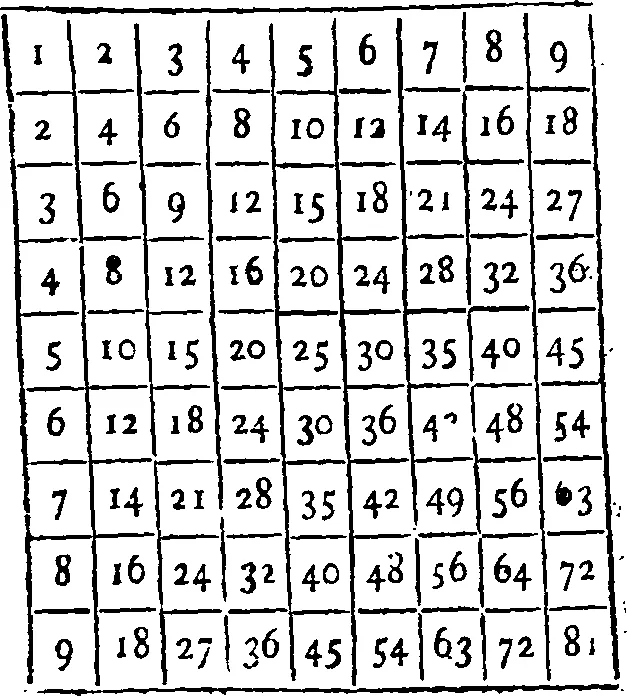

Multiplying two numbers and looking the answer up in a table give the same result. For an AI model whose weights have been squeezed down to two bits each, the lookup can be the faster path, right up until the table gets too big to hold.
That is the question Arm's Erick Amador takes up in a post flagged in SemiEngineering's Nov. 25 blog roundup. The roundup's one-line summary says Erick Amador explores when lookup-table GEMM can outperform traditional multiplication for ultra-low-bit LLMs, and how model shapes, packing, and hardware affect the result. What follows is the mechanism and the arithmetic, not a verdict on the numbers.
Start with what a neural network actually does. Its main arithmetic is matrix multiplication: every output number is a sum of many products, each one a weight (a stored number the model learned) times an input activation (a number flowing through the network). The dense routine that does this is called GEMM, general matrix multiply. If weights are stored at very few bits each, two or four instead of the usual sixteen, there are so few possible weight values that you can precompute every weight times every activation once and read the answer out of an array instead of computing it. The array is the lookup table, and the trick applied to the whole routine is LUT-GEMM.
The catch is that the table grows fast. Pack two 4-bit operands into one index and you need 256 entries. Go to 5 bits each and you need 1,024. Every added bit per operand doubles the table, and if both operands grow, each added bit quadruples it. A table that sits comfortably in fast on-chip cache at 2 bits can spill to slower memory at 4, and once it spills, the memory traffic you were trying to avoid comes back through the side door. That is why the winner is decided by cache capacity, by the model's shape (how its weight matrices are sized), and by how many operands you pack into a single lookup index, not by the arithmetic itself. Multiplication hardware is cheap and regular; table lookups trade that regularity for a memory footprint that has to be fed.
Arm's post is here: developer.arm.com/community/arm-community-blo…. The roundup that pointed me to it is here: semiengineering.com/blog-review-nov-25/. What the one-line summary does not give is the numbers that would turn a direction into a threshold: which bit widths, what table size, how many operands packed per index, and what cache capacity the crossover assumes. Those four decide whether lookups win for a given model. Without them I can say the trade exists and roughly where it bites, and not much more.