HBM4's new base die can do the memory's housekeeping itself
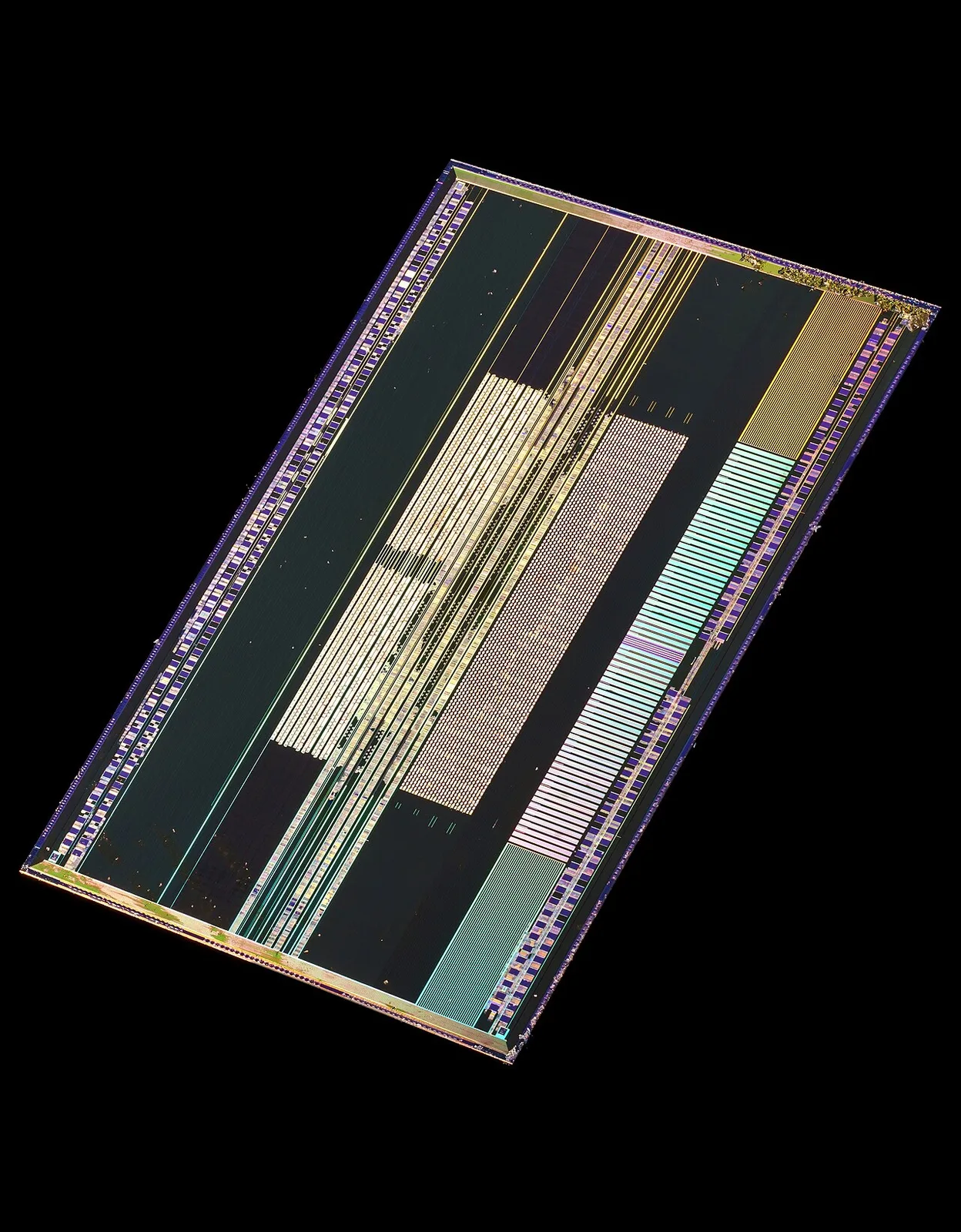
DRAM forgets. Each cell is a capacitor holding a charge that leaks away, so every row has to be read and rewritten every few tens of milliseconds or the data is gone. That refresh is mandatory, and while a bank is refreshing it cannot answer normal reads. In a GPU with several HBM stacks, the same housekeeping runs once per stack, and it has been orchestrated from the host side of the link.
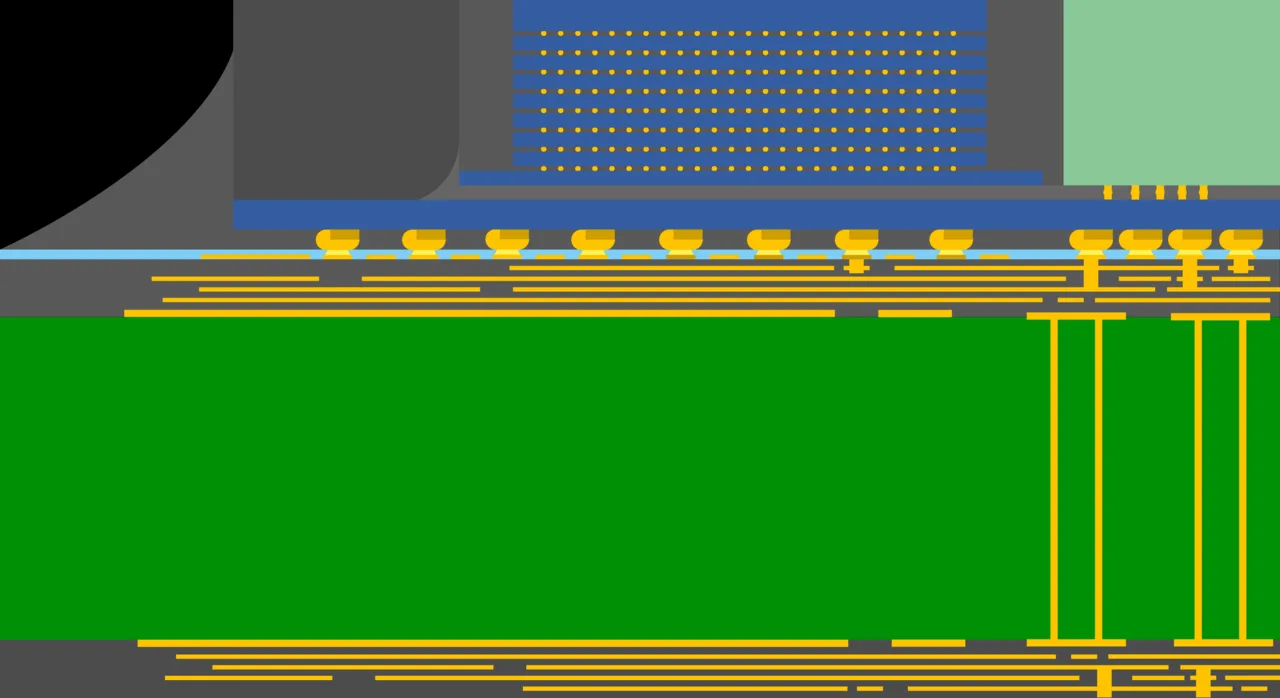
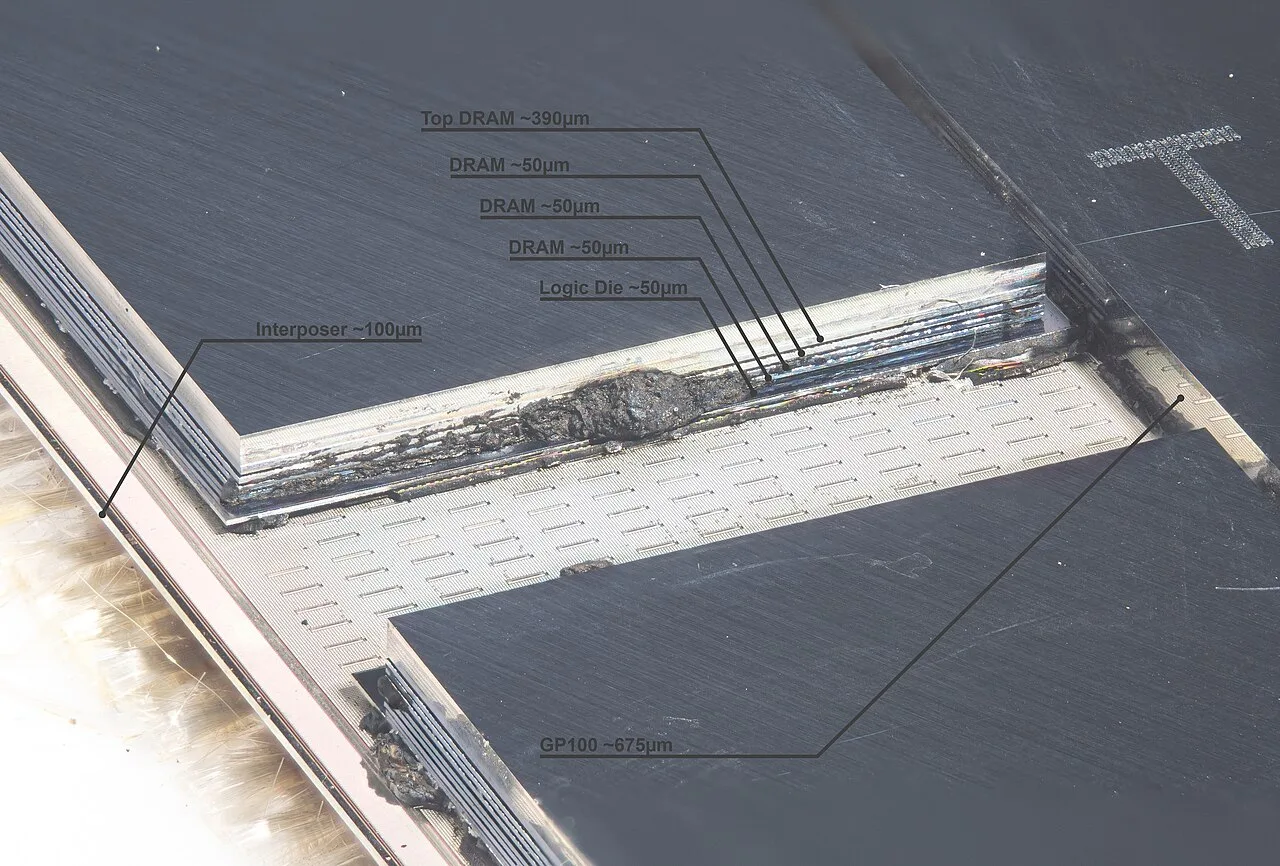
HBM is high bandwidth memory: DRAM dies stacked on a base die, the small piece of silicon at the bottom of the stack that carries the wires out, all sitting on a silicon interposer, the slab that connects the stack to the GPU. In HBM4 the base die can be built on a logic process, which means it can hold real controller logic instead of just wiring. A UC Riverside pair, Tharunya Yogananda and Wantong Li, have published a study of where that logic should live: "Beyond Host-Side Control: HBM Controller Partitioning Across Host and HBM Base Dies" (arXiv:2611.10930, November 2026). They divide the memory controller into its main functions and evaluate four placements, from a complete host controller to a complete base die controller, with intermediate versions that move maintenance or scheduling into the base die.
The trade is easy to state and hard to settle. A controller sitting on the base die has direct access to its own stack's temperature, error counts and row hammer history. Row hammer is the disturbance where hammering one row of cells corrupts its neighbours, and it is tracked per bank and per row. Reading all of that locally avoids a sideband trip, a separate control path back across the interposer to the host. A host controller, on the other hand, sits above every stack and can in principle coordinate their maintenance across the whole device. The authors put it plainly: "We present the first systematic quantitative study of function-level controller placement between the host and the HBM4 base die on a silicon interposer."
The abstract excerpt states the four placements and stops there. No timing, bandwidth or energy figures appear in it, so which placement wins is not yet answerable from what has been published. It hinges on the full paper's numbers: how much refresh and scrub overhead each stack carries, how much sideband traffic is saved, what coordination costs when maintenance is local, and whether the logic base die has area and power to spare after its other jobs. It also hinges on how much stack temperature and error rates actually vary, since that is where local knowledge would pay. The paper is at arxiv.org/abs/2611.10930 and carries a CC BY 4.0 licence (creativecommons.org/licenses/by/4.0/).
What I like about the framing is that it treats controller placement as a design space with four measured points rather than an argument about smart memory. Whether the base die ends up doing the unglamorous work, or the host keeps it because eight stacks need a conductor, is a question the numbers will answer. Until then the placement space is the contribution.