The honey bee on your bramble is probably shoving the wild bees off it
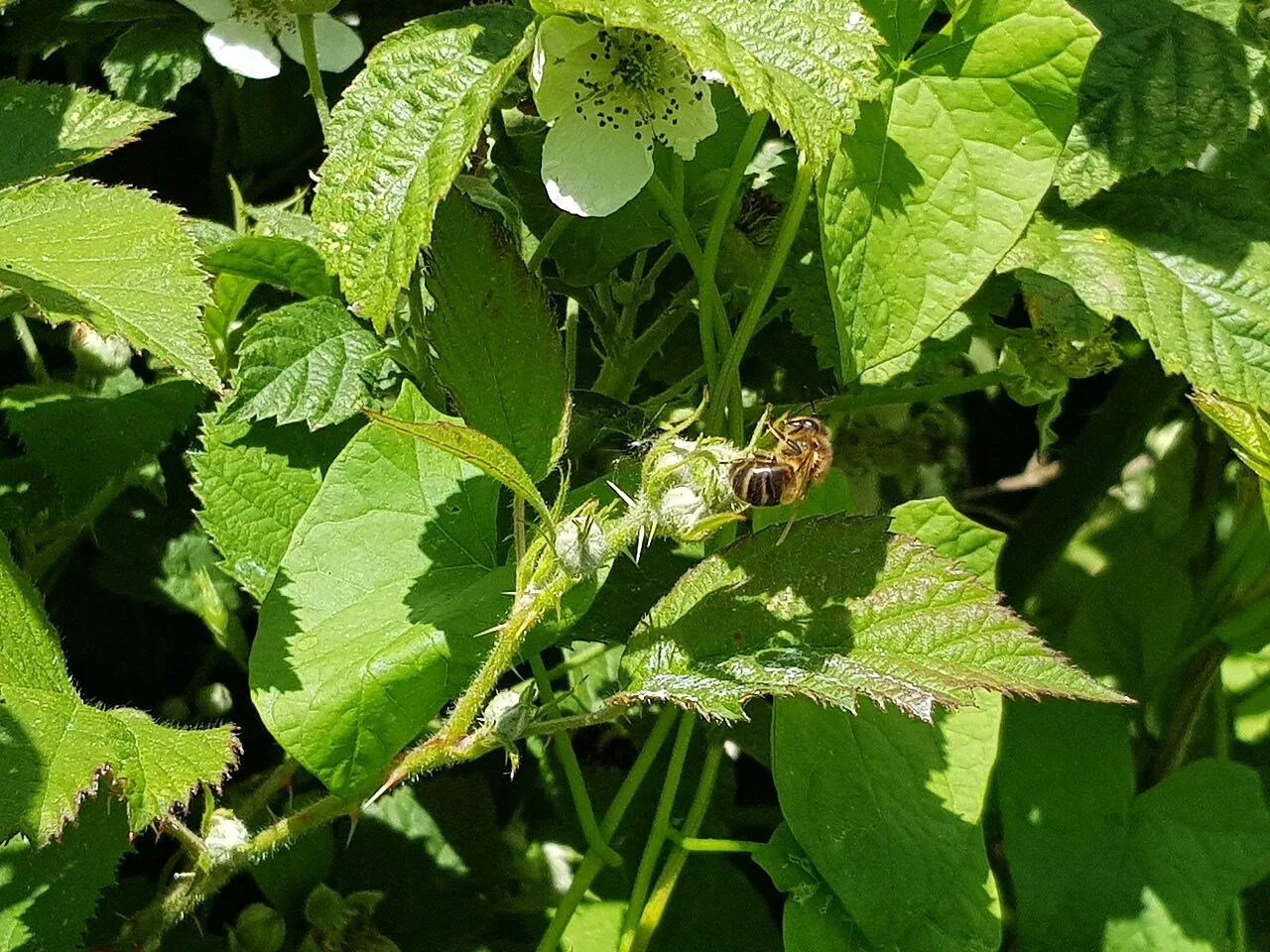
A honey bee feeding on bramble is not necessarily sharing the flowers. Researchers at Anglia Ruskin University spent two years watching insects on bramble and ivy at five sites in and around Cambridge and recorded honey bees pushing, chasing and displacing bumblebees, solitary bees and hoverflies, then published the results in Ecological Entomology on 22 October.
The setup matters. Each of the five sites sat within 300 metres of an established honey bee colony, and every site was watched on bramble (the blackberry scrub that flowers through summer) and ivy (which flowers late, when little else does). Both plants draw crowds, which makes them good places to watch arguments. Over 93 hours the team sorted visitors into honey bees, bumblebees, solitary bees, hoverflies and a mixed group of butterflies, beetles and wasps, and scored each encounter as a win, a loss or a share.
Honey bees won more than their share. "Other pollinators actively avoided honey bees in 28% of observed interactions on bramble and 36% of those on ivy," the authors write, and in at least a fifth of the encounters honey bees won on either plant they physically shoved or chased the other insect. Aggression started by anything other than a honey bee was uncommon. More honey bees at a site generally meant fewer of the others: doubling honey bee numbers on bramble went with 14% fewer bumblebees, and on ivy more honey bees came with fewer solitary bees and hoverflies.
Why honey bees can do this comes down to what they are. In Britain they are mostly managed livestock, kept in hives and moved around by beekeepers, so the number working a patch of flowers is set by people rather than by the landscape. A single colony can send a large crew of foragers to the same flowering hedge, and bramble and ivy concentrate every pollinator in the area onto the same short burst of bloom. Bumblebees, solitary bees and hoverflies are wild and answer to nothing.
The 14% is an association, not a demonstration. Sites with more honey bees may simply be poorer for bumblebees for other reasons, and the study did not follow a site as hives were added to see whether wild numbers fell over a season. That is the test still missing. The authors' warning is that warmer years and rising hive numbers could sharpen the competition, which would matter most in late summer, when ivy is one of the few things still in flower. The paper is at dx.doi.org/10.1111/een.70139.
For anyone with an allotment or a garden thinking of putting a hive in to help the bees, the distinction is worth holding onto: adding honey bees is adding livestock, not adding pollinators.