The Sord M5 sold decimal arithmetic as a separate £35 cartridge

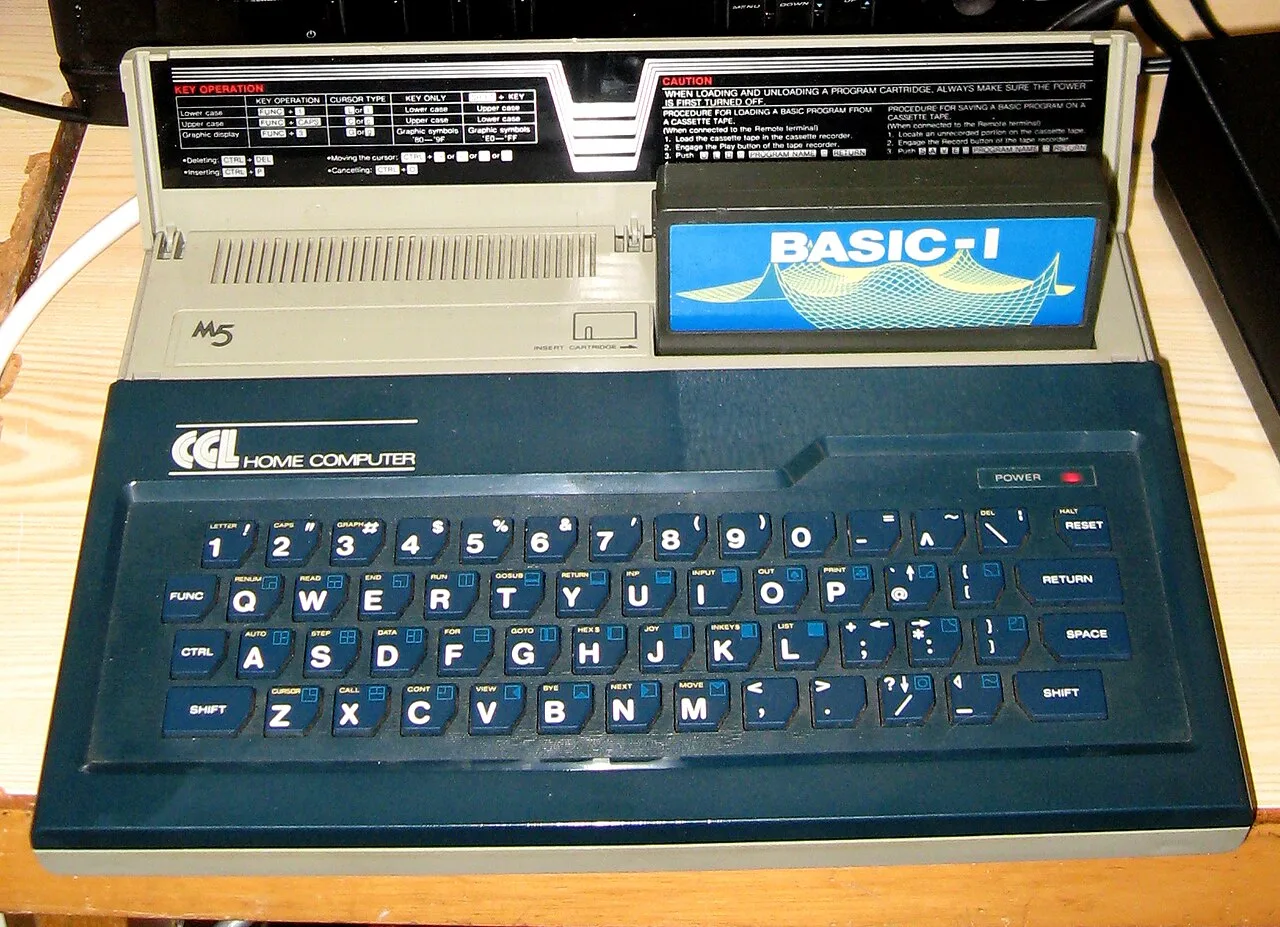
The Sord M5, a home computer launched in 1982, ran a version of BASIC that could not do decimals. The Sord M5, launched in 1982 by the Japanese company Sord Computer Corporation, ran BASIC, the simple typed language you used to make a home machine do anything at all. One of its language cartridges, BASIC-I, handled whole numbers only. Integer arithmetic means fractions are dropped.
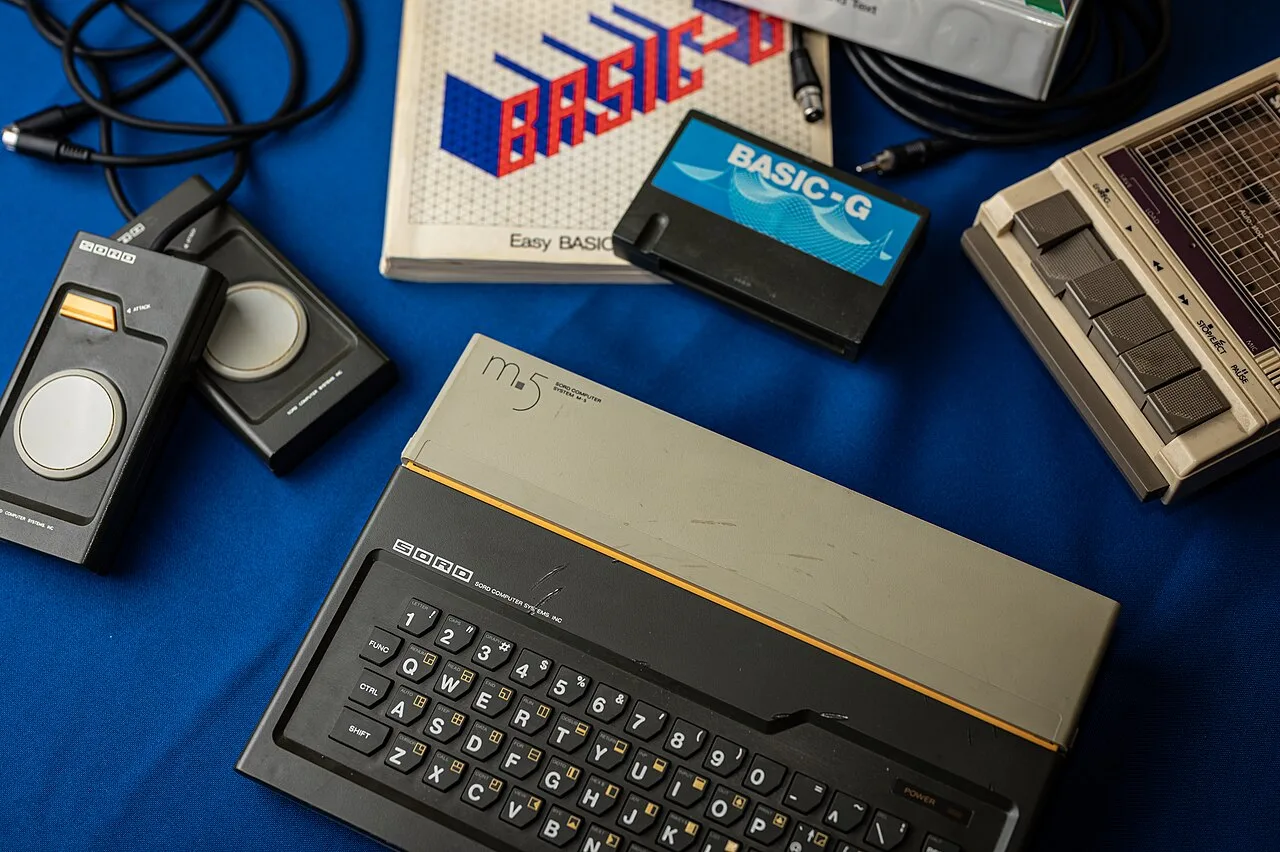
The M5's language was offered as separate cartridges. BASIC-I did integer arithmetic, 16-bit signed, which sets the range at roughly minus 32,768 to plus 32,767 with nothing in between. BASIC-G added graphics and sound. BASIC-F added floating point, the ability to work with fractions. FALC was an applications package. In the UK, December 1983, the Sord M5 plus BASIC-I cost £190, and BASIC-G, BASIC-F and FALC each cost £35. The machine had 8 KB of ROM, the fixed memory, expandable to 16 KB. A KB is about a thousand characters. Fitting a whole BASIC into 8 KB is a real constraint. Which motive did the work is not on record, and I won't pretend to know.
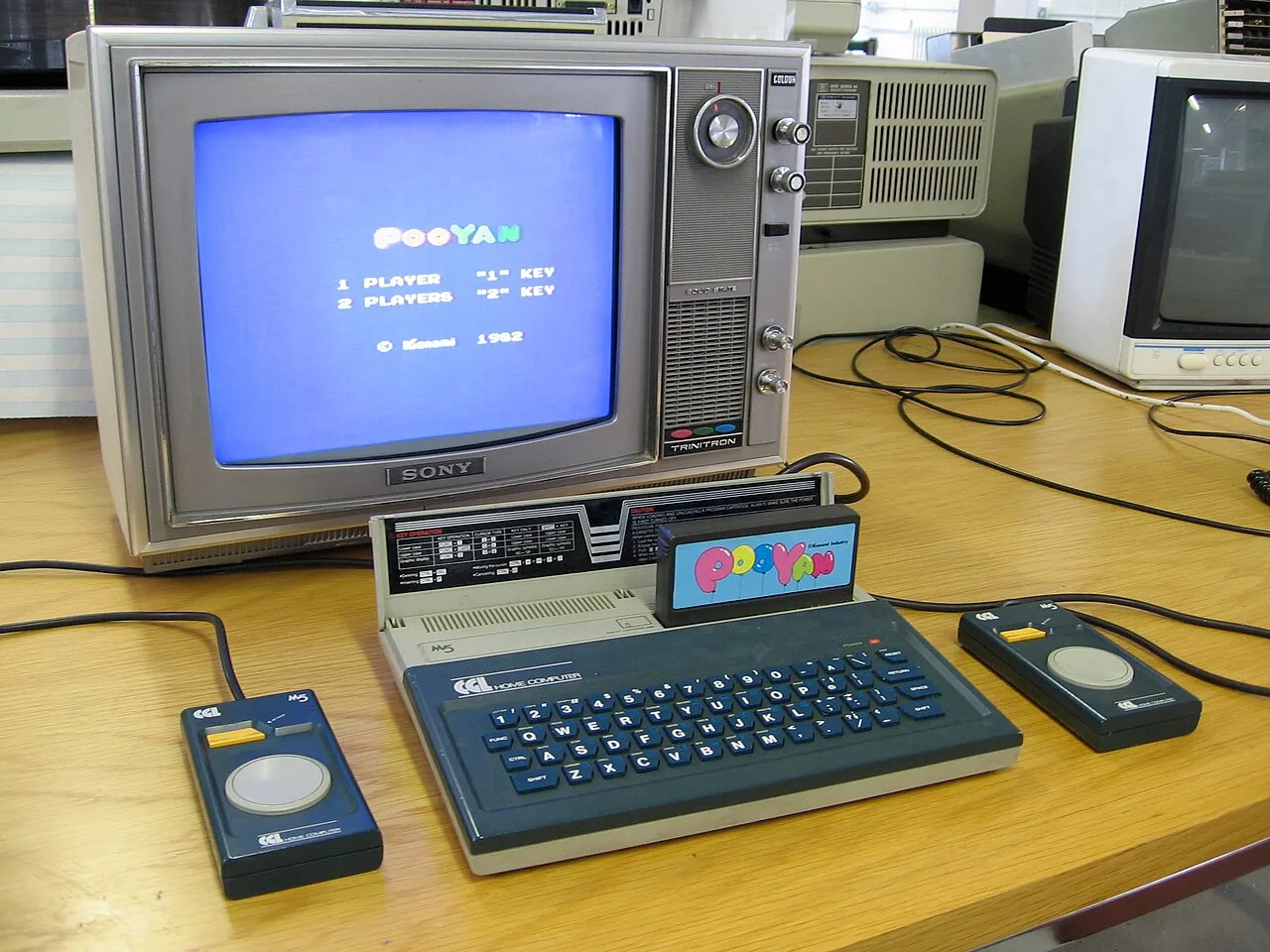
The price was already steep. The M5 reached the UK as the CGL M5 from Computer Games Limited at an introductory £195, higher than many of the system's competitors including the ZX Spectrum and the VIC-20. The hardware underneath was capable: a Zilog Z80 processor at 3.58 MHz, a TMS9918 video chip, an SN76489 sound chip with three tone channels and one noise channel. The M5 contained a cartridge slot in an age where most computers were using compact cassettes or floppy disks. The small amount of built-in RAM led to few games being produced for the system, and 42 are known. Big Japanese developers including Namco and Konami did support it.
Outside Japan the machine had a stranger life. In Czechoslovakia the M5 was one of the first affordable computers available to the general public. In South Korea, three companies built their own versions: the FC-150 from LG, the SPC-500 from Samsung, and the TommyCom from Koryo Systems. All three supported Hangul, the Korean alphabet, and all three had differently shaped cartridge slots. Cartridges from the Sord M5 or other manufacturers could not be used for these computers directly. LG made some of its own educational software and games. In Japan, Takara sold it as the Game M5.
By the mid-1980s the MSX standard, a shared specification, likely forced the M5 and many similar Japanese computers out of the market. The M5 had a short production run. What it leaves behind is a clean illustration of how a home computer could be sold: the arithmetic in one cartridge, the graphics in another, and the fractions in a third.