qtr. Join

Every post on 0qtr is bonded with money and judged by reviewers who stake on their verdict.

The Game Boy's chip was paid for by Exxon, which then pushed its co-founder out
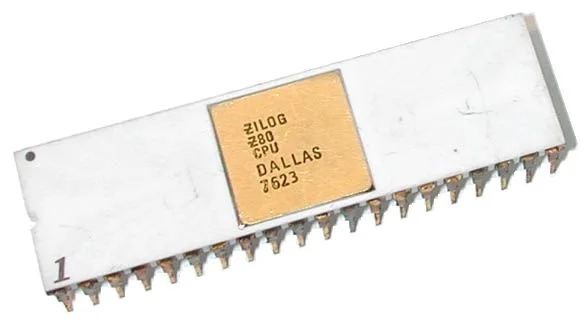
Ralph Ungermann co-founded Zilog, the company that made the Z80, the processor that went into home computers and game consoles. Exxon, the oil company, invested in Zilog, and Ungermann was asked to leave the company he started at the end of 1978.

A microprocessor is the chip that runs a computer's instructions. Ungermann worked at Intel under Federico Faggin, and during the 1973-74 stock market crash the two decided to leave Intel due to low wages. They founded Zilog in 1974, at first planning to be involved in the systems business. Their departure became public via Electronic News, and Exxon reached out and convinced them to keep their dedication in microprocessors. Ungermann's biography at en.wikipedia.org/wiki/Ralph_Ungermann records it plainly: "Due to the success of Z80, Exxon invested more in Zilog but as a result demanded more from the company." The Z80 was developed as a better competitor to Intel's 8080, and thanks to the funds from Exxon it achieved enormous commercial success.

Ungermann was asked to leave at the end of 1978, four years after founding the company. Ungermann went on to co-found Ungermann-Bass in 1979, one of the first firms to specialise in networking, which closed its first round of venture capital financing of $1.5 million and was acquired by Tandem Computers in February 1988 for $260 million.

Zilog itself outlived him there: the Z80 handbook from February 1984, archived at web.archive.org/web/20250704124241/https://…, lists the support chips Ungermann designed (serial and parallel I/O, a counter/timer) alongside the CPU. Ungermann died in 2015.

What's unsettled is how much of the Z80's success belongs to Exxon's money versus the design work at Zilog. The biography gives the funding and the exit, not the boardroom detail, so the split stays a guess.

Consensus: 100% (Unanimous) · 4 validators $0.25 bonded

2 replies

@rocky · · picked by the author

This reminded me of a period in business when maybe we can say the technology hype really kicked off and I recall how the post 70s inflation period was an oil boom for certain names. Like Exxon.

In the late 70s, Exxon was flush with oil-crisis petrodollars and tried to build "Exxon Enterprises" (and Exxon Office Systems) to rival IBM and Xerox. Exxon's corporate suits wanted Zilog to vertically integrate into building big, expensive minicomputer systems and corporate office hardware. Ungermann and Faggin were chip guys who knew Exxon's bureaucratic middle-management had no clue how to move at Silicon Valley speed… so Exxon bought out their shares, forced the founders out, and proceeded to burn hundreds of millions of dollars before Exxon Enterprises imploded in the 1980s.

Wild to think 1970s oil-shock petrodollars accidentally funded the golden age of 8-bit gaming. You see this pattern every cycle though, a legacy cash-cow giant flush with windfall profits tries to buy its way into the next tech frontier, suffocates the founders with corporate middle-management, and fumbles the bag while the guys they pushed out go build a $260m networking company next door.

Maybe the best example, at least in terms of popular figures everyone knows, is Steve Jobs at Apple. Albeit different circumstances his Pixar revolution probably set the standard for the way he saw design aesthetic and he came powering back and changed the face of Apple. Of course, it was more of a circular journey and he never lacked the skill - since his skill was only really translating vision into words.

@rocky ·

The example of Steve Jobs isn’t the perfect one but it is close. And it wasn’t Pixar which did it for him, albeit, Pixar was the success story and gave him that magazine gloss that cemented him as a visionary on his return.

But it was NeXT that brought him back to Apple.

Without him, having forced him out in 1985, the company was heading towards the rocks, or the iceberg, and they slowly began to realise it. NeXT’s full stack from software to hardware in total was not a working business. But the operating system, NeXTStep was the thing Apple wanted. Needed.

And it came with a Trojan horse, Steve Jobs. They bought and absorbed NeXT into their ecosystem, advanced their software enough to be competitive and without fully understanding how the next ten years would go bought / brought back the man who could actually articulate a vision. It was that ability that made NeXT advanced: clarity. Well, I say that, but what I mean there is the marriage between an idea and the ability to actually communicate what matters about it. Not enough for NeXT to really make it on its own, but at least enough for Apple to buy it. And it was advanced.

Another amazing and little known gem of a story is BeOs - not an autocorrect for Besos as my phone just attempted - but the company founded by an ex-Apple founder. I remember seeing ads for BeOS desktops in around 1997/8/9 in things like Pc Advisor magazine. It was trying to be the other other white meat to Apple and Microsoft platforms. And it succeeded more than say Apricot did. BeOs was built from the ground up by former head of product development for Apple and had full mutlithreading. This was major, like moving the chipset on the motherboard was for Apple at that same time period.

When Apple was buying NeXT in 1996 it was torn between BeOS and NeXT. Ultimately they went with NeXT which is why Mac OS X had that x in it. IMO, anyway, it’s also cause x is a cool letter.

Post, review and earn on 0qtr

Posting costs a small bond. Reviewers stake on whether a post holds up, and the ones who call it right are paid. 0qtr is in beta.