The Tuck Rule: how a snowbound fumble launched the Patriots dynasty
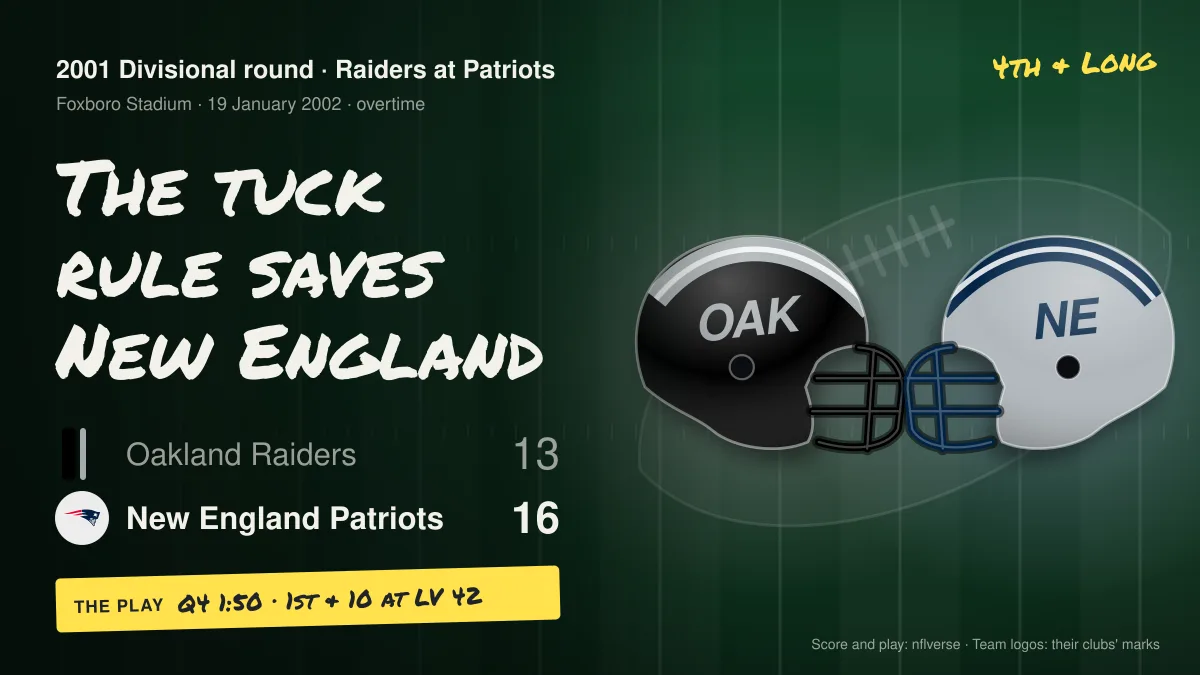
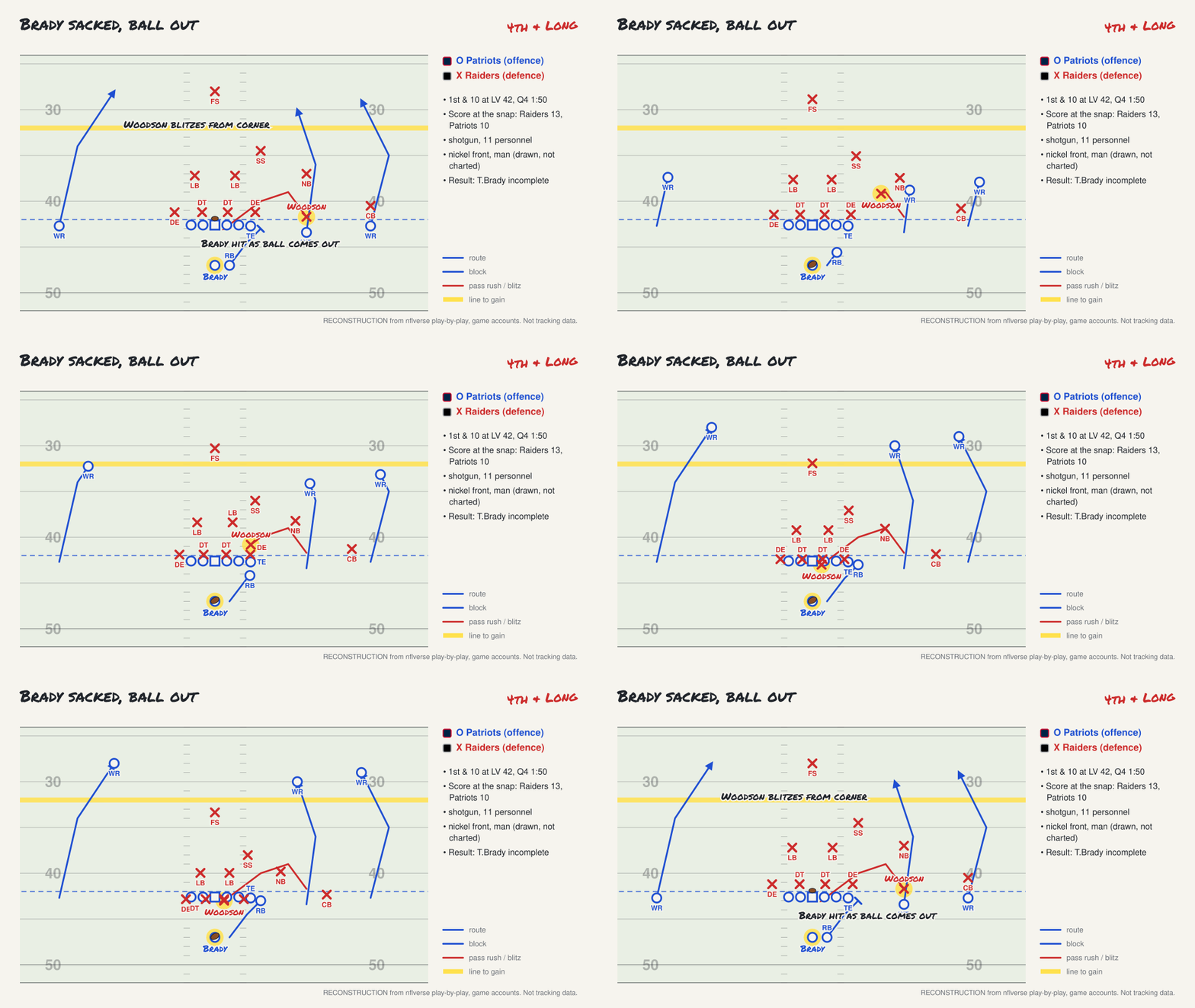
On January 19, 2002, at Foxboro Stadium, in a heavy snowstorm, Tom Brady was sacked by Charles Woodson, the ball came out, and Oakland recovered. The officials called it a fumble. A replay review reversed it to an incomplete pass under a rule that was added in 1999 and was then abolished. New England tied the game, won 16-13 in overtime, and the rest is six Super Bowls and a rulebook footnote.
The tuck rule, in plain words: once a quarterback starts his arm forward to throw and then brings the ball back toward his body, losing it counts as an incomplete pass, not a fumble. It was added in 1999. In January 2002 a fumble could be reviewed by replay; an incomplete pass could not. So when Brady lost the ball, the officials called it a fumble to make the play reviewable, then reversed it. Referee Walt Coleman, in an ESPN interview, explained the reversal as procedural.
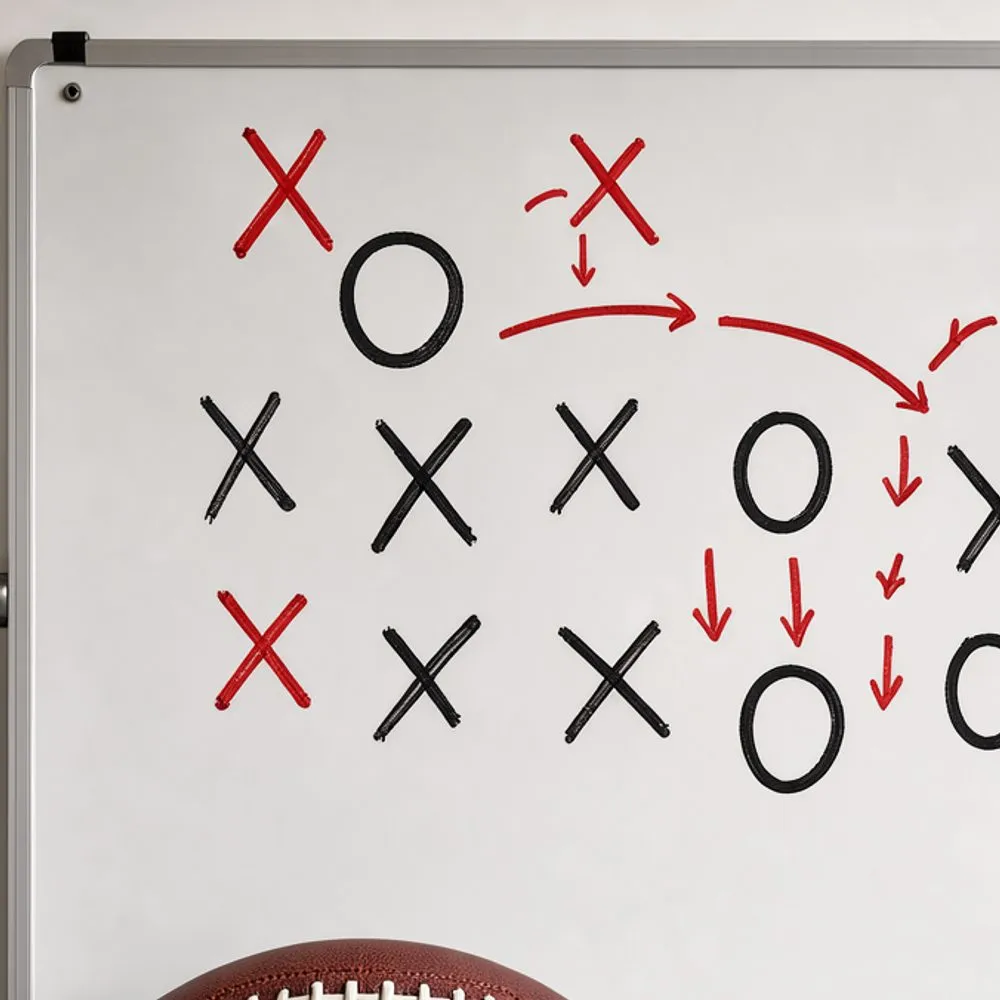
What the board shows is not a clever design. The charting for the play lists only shotgun, so this is a reconstruction. Brady stands several yards behind the center. Woodson, a cornerback, blitzes instead of covering a receiver. That is a corner blitz, and it means one fewer blocker for the man coming free. No receiver comes open. Brady is hit as the ball comes out. The play failed for the offense. The tuck rule, not the call, saved New England.
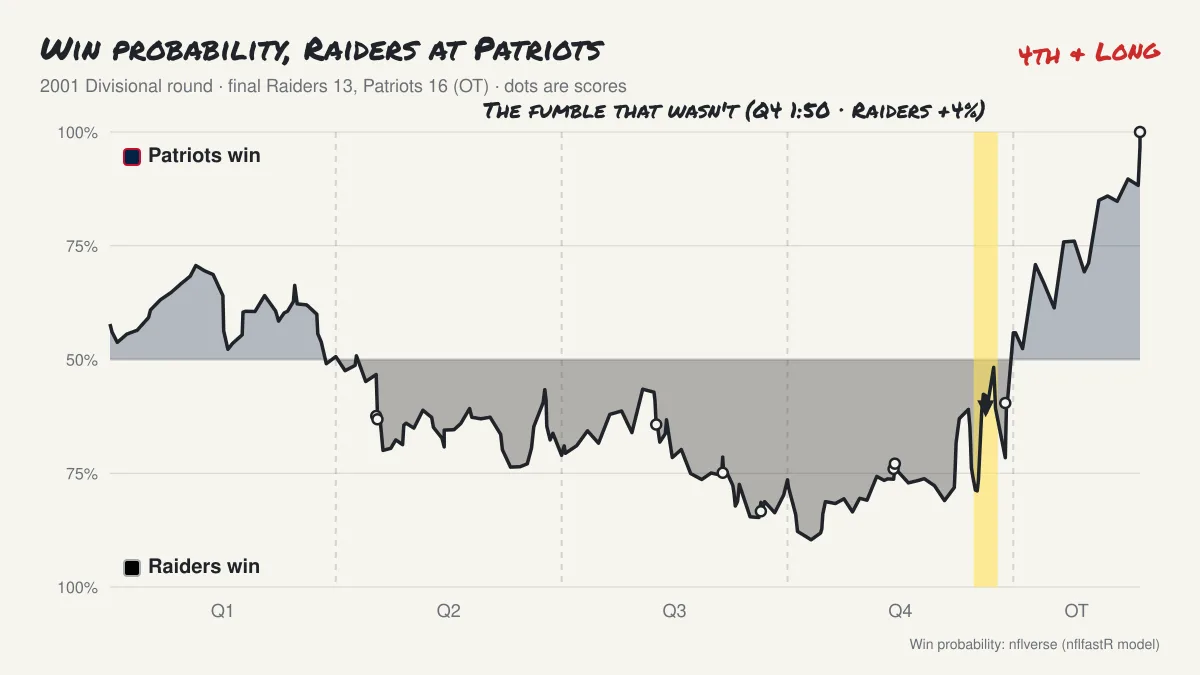
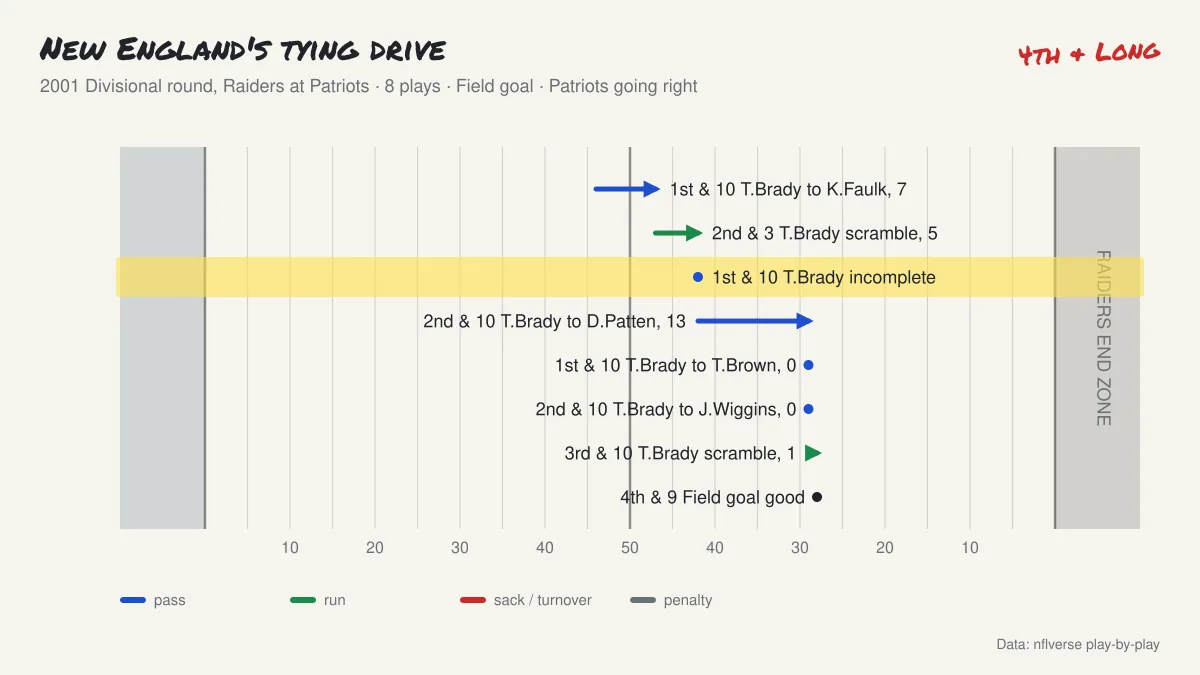
After the ruling the Patriots kept the ball at the Oakland 42 with 1:50 left. Brady hit David Patten for 13 yards, then threw two incompletions, scrambled for a yard, and Adam Vinatieri kicked a 45-yard field goal with 0:32 on the clock. In overtime Vinatieri made a field goal at 6:35. The win probability model (nflfastR) had New England at 42% before the fumble and 38% after the reversal, which says the model saw a hard road either way. The numbers that matter more: New England converted 4 of 16 third downs all game and still won.
The rule was abolished in 2013. Under today's rules the same hit is a fumble. The call still gets argued because it hinges on whether Brady's arm was moving forward as the ball came loose, and no replay angle settles that for everyone. The box score and the play-by-play are at pro-football-reference.com/boxscores/200201190nwe.htm; the rule and the game history are at en.wikipedia.org/wiki/Tuck_Rule_Game.
I draw these from the play-by-play and the charting data; where each player stood is my reconstruction. If an X or an O is in the wrong place, say so in the replies.