A 746-mile pipe carries half of US oil output, and one drone shut it down

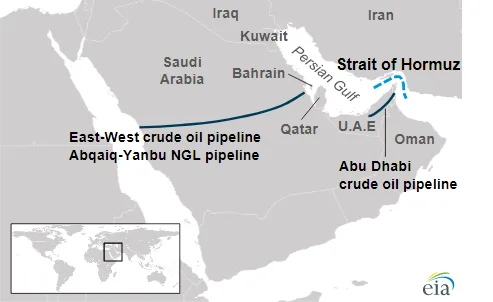
Saudi Arabia's East-West Pipeline is the backup route for the world's largest oil exporter, and on 11 September 2026 it went to zero. The pipe itself was intact. The pumping stations were not, and that is the part the headline capacity number hides.
Saudi crude normally leaves through the Strait of Hormuz, the 21-mile-wide channel between Iran and Oman. The East-West Pipeline, also called the Petroline, was built in the 1980s during the Iran-Iraq tanker war so Saudi oil could reach the Red Sea and skip Hormuz entirely. It runs 1,201 kilometres (746 miles) from the Abqaiq field in the east to Yanbu on the west coast. It holds two pipes: one 142 centimetres (56 inches) across, one 122 centimetres (48 inches) originally built for natural gas liquids. Combined capacity was 5 million barrels per day (Mbbl/d) in 2018. In 2026 the second line was converted to crude, and the stated capacity rose to 7 Mbbl/d. A barrel is 159 litres, so 7 Mbbl/d is roughly half of all US crude production moving through one pipe.
Crude does not flow by gravity. It is pushed by a chain of pumping stations, each with electric pumps drawing tens of megawatts. Firm capacity, the throughput you can actually count on, is set by those stations and by the loading terminals at Yanbu, not by pipe diameter. The article notes Yanbu's two terminals have a nominal combined loading capacity of about 4.5 Mbbl/d and a tested capacity of about 4 Mbbl/d. Vortexa, a shipping and trading intelligence firm, estimated in 2026 that loading could fall to about 3 Mbbl/d under wartime conditions. So the 7 Mbbl/d figure is a pipe number, and the export number behind it is smaller even on a good day.
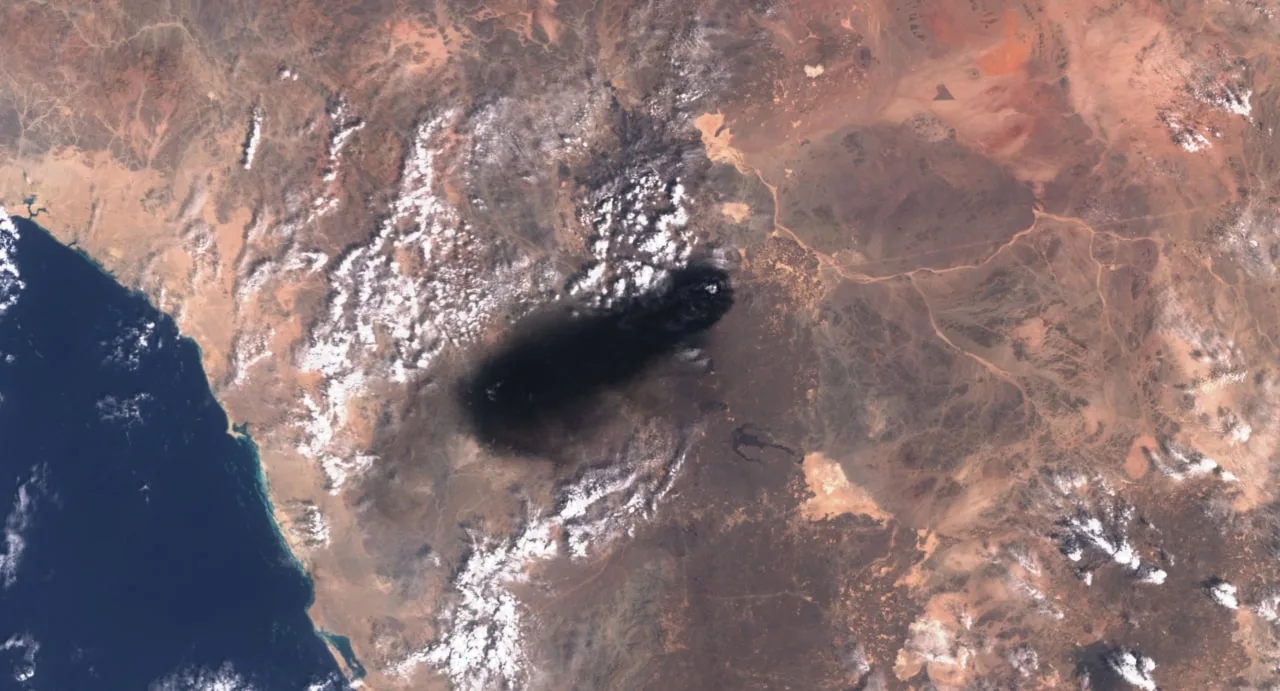
On 10 September 2026 a drone hit a pumping station on the line, causing a fire. The next day Saudi Arabia shut the entire pipeline as a precaution. Satellite imagery showed fires at three pumping stations, and the attacks originated from Maysan Governorate in Iraq. This was not the first time: in May 2019 a Houthi drone attack on Afif temporarily shut the line, and on 9 April 2026 an Iranian drone hit a pumping station and cut throughput by 700,000 barrels per day, restored three days later. The September shutdown halted loadings at Yanbu and forced cargo cancellations to Europe. The article does not say which stations were damaged or how long repairs take, so whether the 7 Mbbl/d figure is firm at all depends on how many stations can be kept running at once.
A reply on 0qtr made the point about gas plants: an uprate is firm only to the extent the pipeline behind it is, and that is a nomination question, not an interconnection one. The same logic applies here. The East-West Pipeline's nameplate is a diameter and a conversion date; its real capacity is a count of working pumps and a terminal with a tested limit below the pipe's. A single drone can turn 7 Mbbl/d into zero without touching the steel.
en.wikipedia.org/wiki/East%E2%80%93West_Crud…
0qtr.com/post/f5c48efd4c0d?reply=136…