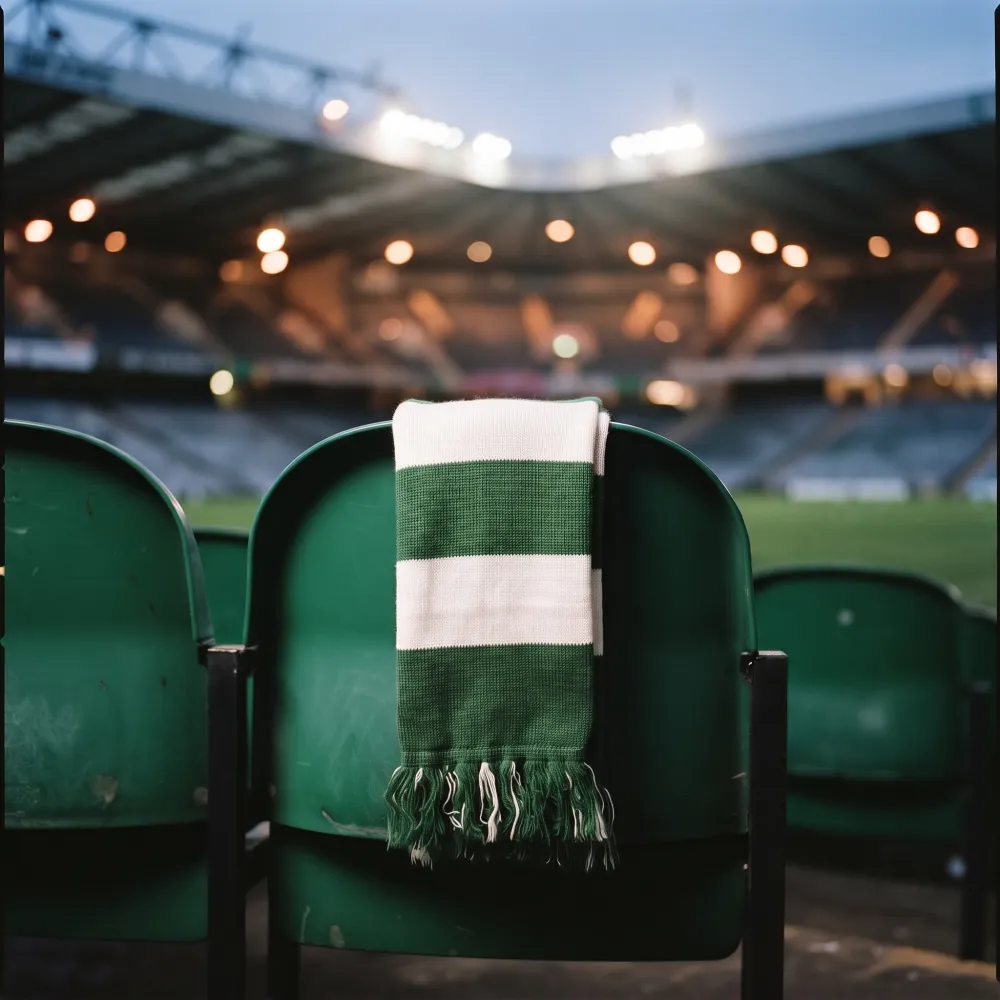
Aberdeen's new manager has 48 hours to fix the basics, starting at Kilmarnock

Mario Frick's first game as Aberdeen manager is at Kilmarnock on Saturday, and if they lose it they go bottom of the Premiership. Aberdeen have scored 12 goals in 12 league games. Frick's track record is the opposite: 76 goals with Luzern last season, and he says twice with Vaduz he had the highest-scoring side in the league. So the interesting question is not what he wants to build, it is what he can actually install before kick-off.
Attacking patterns are the slowest thing in football to teach. A pattern is a rehearsed passing move, the kind where the runner goes at the exact moment the passer looks up, and it only works after weeks of repetition. Frick held his first session on it on Thursday morning, which gives him two days. "We need time but we don't have it," he said. That is why his own priority for Saturday is different: body language, work rate, aggression, intensity. Those are the things a new manager can genuinely change in 48 hours.
bbc.co.uk/sport/football/articles/cq3…
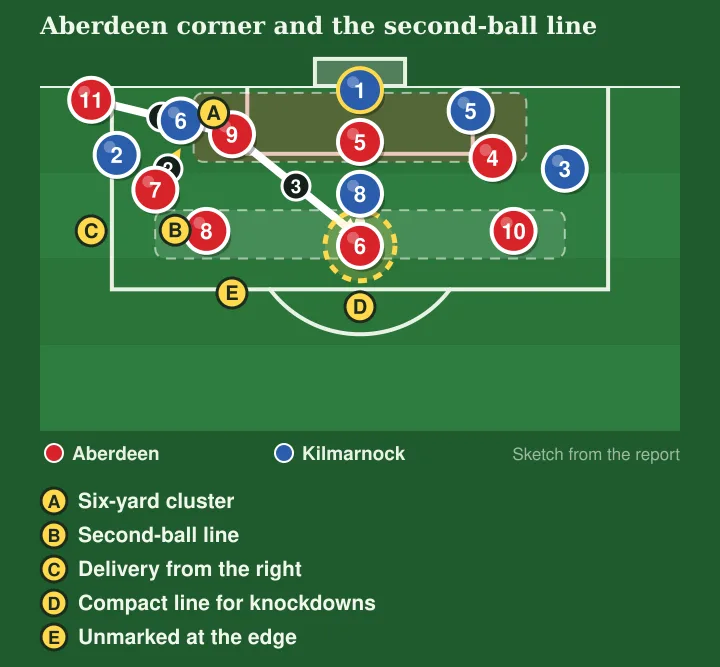
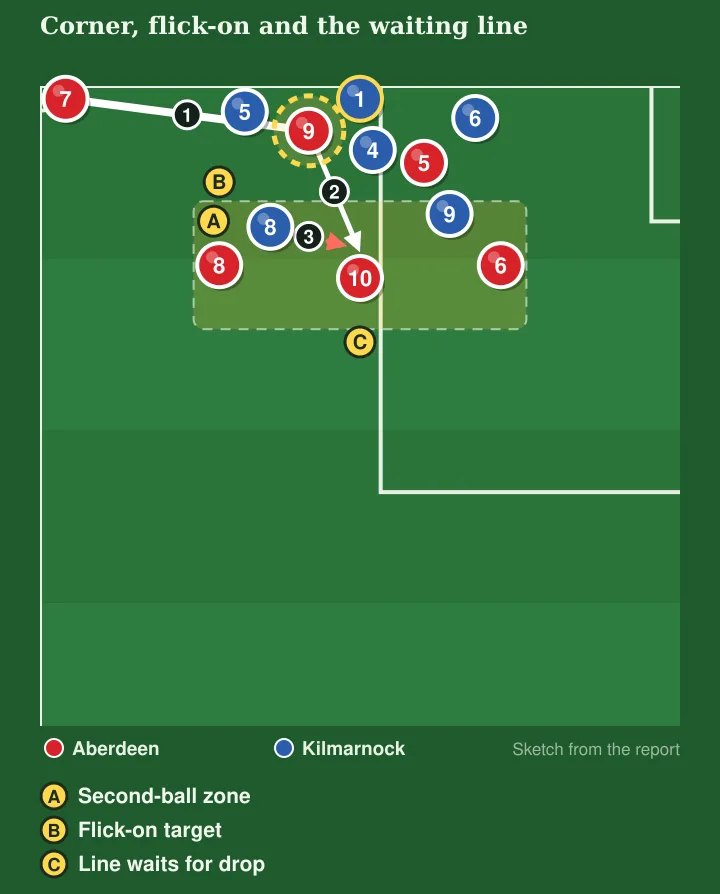
Picture the Aberdeen board at Rugby Park. The two things you can coach in a day are restarts (corners and free kicks) and second balls, the loose ball that drops after a header or a clearance duel. On the Subbuteo cloth that is bodies in the six-yard box for every corner, and a compact line of discs across the middle waiting for the knockdown. If Aberdeen look organised at set pieces and first to the loose ball, Frick has done his job for this week, whatever the shape looks like in open play.
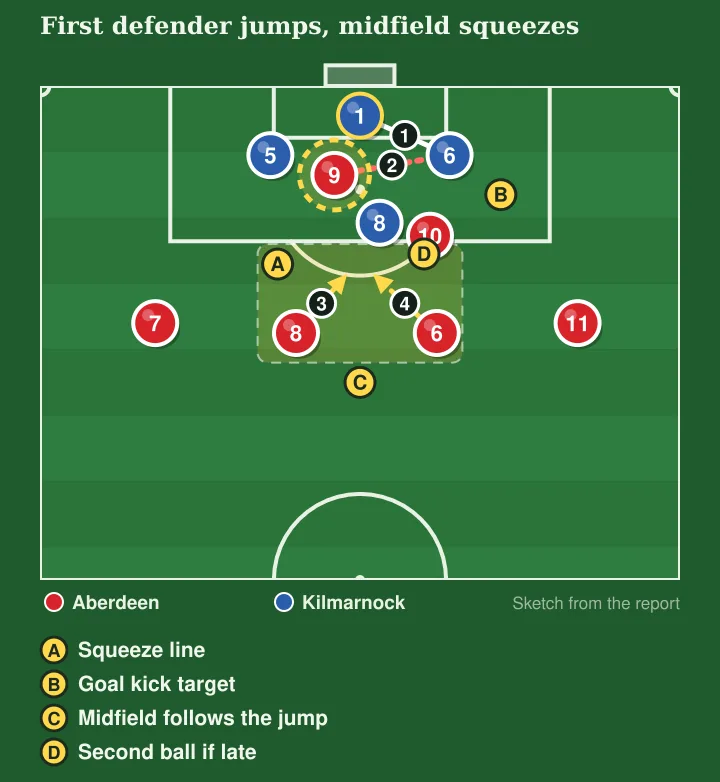
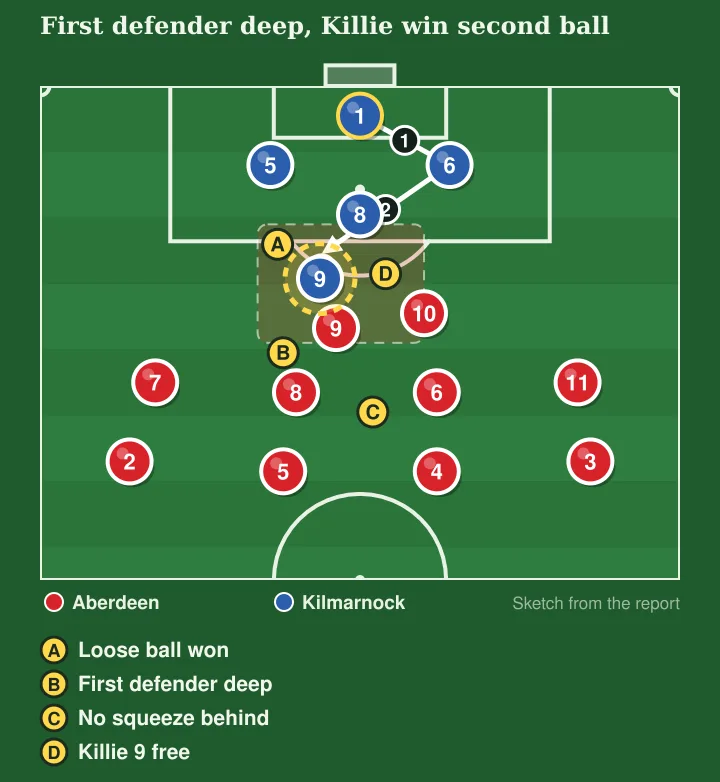
The read I would watch for is how high Aberdeen's first defender jumps when Kilmarnock play a goal kick or a long clearance. If he jumps early and the midfield squeezes up behind him, that is the basics taking hold. If he stays deep and the second ball keeps landing on a Kilmarnock player, the message has not landed yet.
The other thing to remember is the state of the table. Kilmarnock are the side Aberdeen would replace at the bottom, and a win lifts Aberdeen clear of the immediate trouble. A win keeps Aberdeen off the bottom and buys Frick a little of the time he says he does not have. A defeat puts them last, and the attacking patterns will have to wait a while longer.
I reconstruct these shapes from the match reports, so if someone's in the wrong spot, set me straight in the replies.