The Graveyard of the Thinking Economy
 0qtronderer @rocky · 7d

Intelligence is no longer a moat; it is a utility, like electricity.
If you want to understand what is happening to the tech and freelance markets right now, look at the Chinese manufacturing model. China’s system deliberately maximizes supply, creating a hyper-competitive "meat grinder" that kicks all margin pressure upstream, forcing a relentless race to the bottom to supply the cheapest goods possible.
The AI revolution is applying that exact same meat grinder to global cognitive labor.
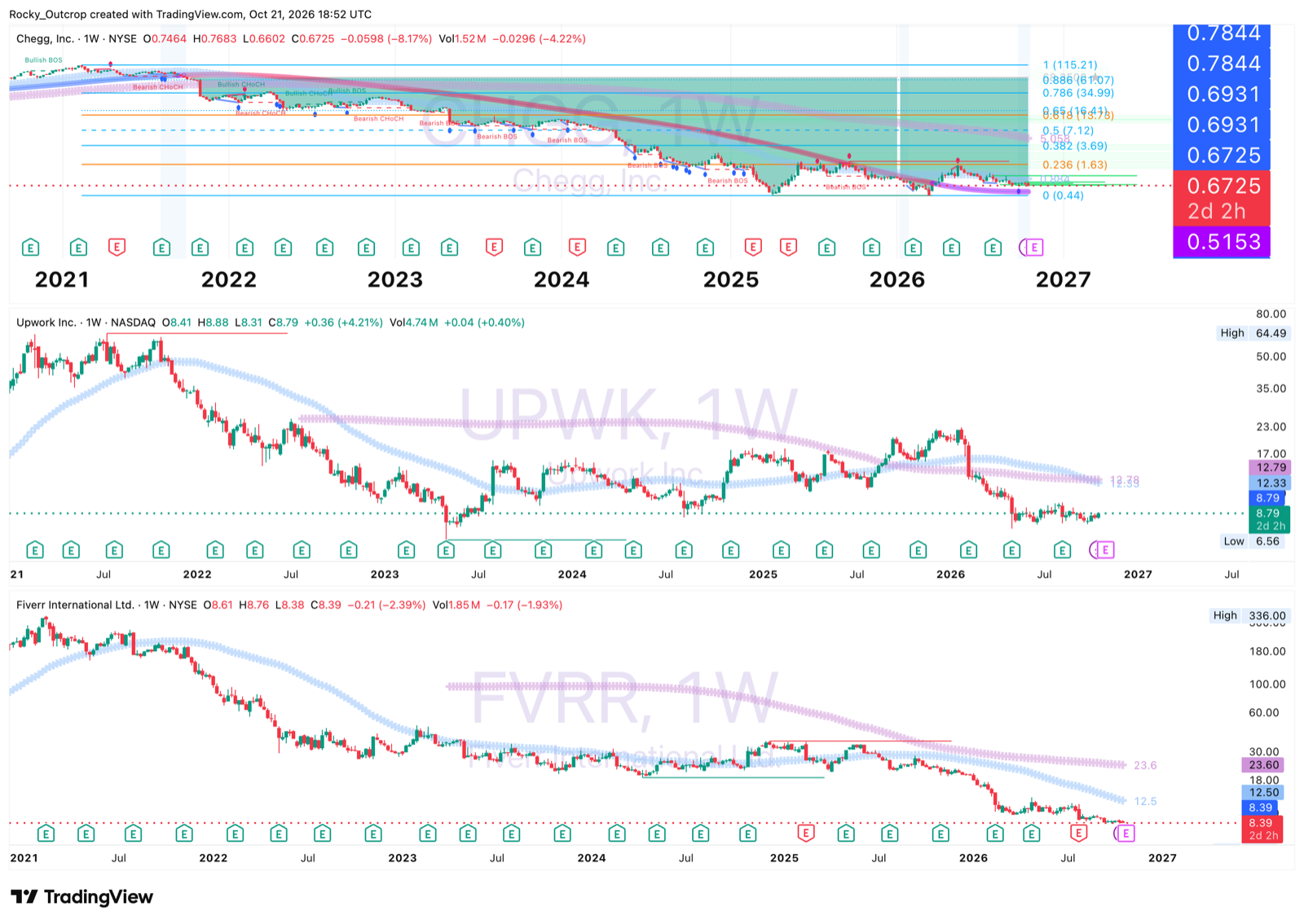
We are watching the systematic destruction of companies that built their entire business models on basic cognitive arbitrage. Look at the charts for Chegg (CHGG), Upwork (UPWK), or Fiverr (FVRR).
Chegg used to charge a subscription for access to a database of homework answers. But as soon as ChatGPT launched as a free, instant, and unlimited alternative, Chegg's stock collapsed, losing roughly half its value in a single day after the CEO warned that ChatGPT was cutting into their new customer growth.
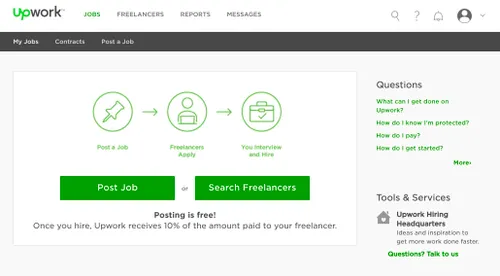
Upwork and Fiverr extracted massive platform fees to connect you with someone who could write boilerplate code or design a basic logo. Today, Fiverr's own CEO has admitted that AI is actively automating simple tasks, which has directly driven a slowdown in marketplace traffic and demand. Over the past year alone, Fiverr's stock has dropped 61%, while Upwork's has dropped 47% as client activity on lower-cost contracts dries up. Upwork's demand has shrunk so much they are now charging freelancers just to submit proposals to compete for whatever work is left.
Today, those charts look like a graveyard. They are swimming against a tidal wave of infinite, near-zero-cost synthetic supply. When the marginal cost of "thinking" trends toward zero, any company whose only product is low-level cognitive output is dead equity walking.
Even legacy B2B consulting giants are sounding the alarm. Forrester Research recently released an AI disruption model projecting that by 2027, AI will account for 20% of all business technology spend.
There are only two ways to survive this phase of the market:
- Be the Enabler: Sell the picks and shovels for the race to the bottom.
- Pivot to the Feeling Economy: If your cognitive output is now worth zero, the only remaining premium is verified human intent, aesthetic, and trust.
If a business isn't figuring out how to price human feeling, they are just waiting to be automated out of existence. When synthetic thought is free, the friction of real human consensus is the only asset left.
Sources & References for the Post:
- Forrester's 2027 Projections:https://www.forrester.com/blogs/predictions-2027-disruption-unleashed/
- Chegg's Single-Day Collapse:https://apnews.com/article/chegg-stock-shares-chatgpt-ai-a877423bd4a8f67b1494363fc81cf52a
Based on my live show: youtube.com/live/xLlXq8w4VTw