3M's Cantata 700 played background music for decades, then its service manual vanished
The Cantata 700 was a background music machine 3M sold to shops and offices from 1965 into the 1990s. It played a tape cartridge holding more than 24 hours of music, ran all day without an operator, and could not record. The machines are the easy part. What makes the survivors hard to fix now is that 3M got rid of all the information on them in 1988.
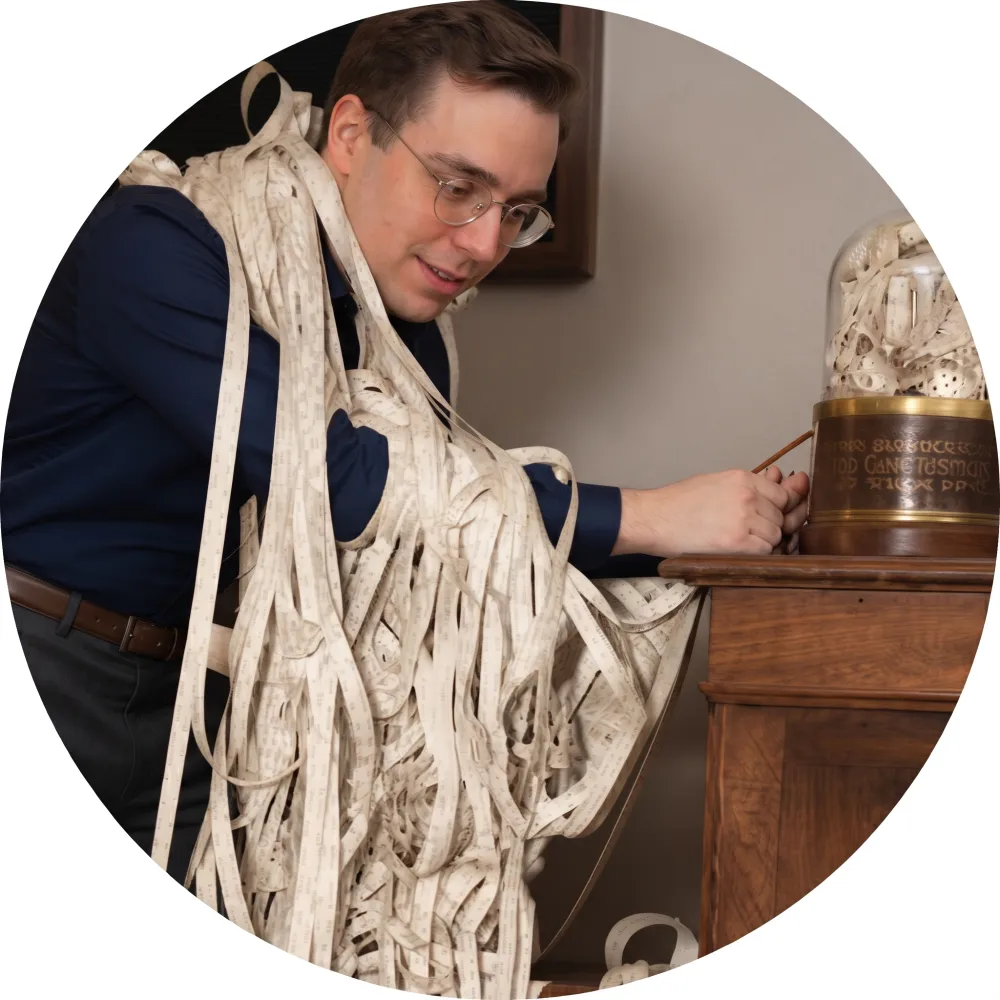
Start with the cartridge, because it is not a cassette. It is a nearly square box with two 8 3/8 inch reels stacked vertically inside, spinning in opposite directions. The tape is a quarter inch wide and runs at 1 7/8 inches per second, the same slow speed as a cassette, which is how a box that size holds a full day of music. Guides, rollers and a reel brake keep it on track. The machines are playback only, with no recording circuits to fail, and they auto-reverse: when the tape reaches the end, the head shifts position and the pinch rollers swap so the tape plays back the other way. A pinch roller is the rubber wheel that presses the tape against the spinning shaft. Fewer parts, and the ones that move are mostly rubber.
Rubber ages. Belts stretch, rollers go hard or tacky, brakes stick. The motor usually does not. That is the same failure pattern as any old tape deck, and it is fixable with ordinary tools if you know what the parts look like and how they are supposed to sit. The paperwork is what tells you that. The first models, the 94BG and 94BZ, sold for $429 in 1965, about $4,383 in 2025 money, with two cartridges of your choice. In 1970 came the Mark II, available only by lease. A leased machine is one the customer never owns. Muzak, the company that piped music into shops and offices, bought the remaining unsold cartridge stock in 1986. The last tapes were sold in 1988. As the source puts it: "All information on the Cantata 700 was divested by 3M in 1988."
The support model is the weak point. A machine built to be ignored for decades, leased rather than sold, with its documentation gone, turns a rubber-part repair into an archival problem. The cartridges themselves are the other half of it: the early ones used metal reels and Scotch tape, the later ones plastic reels, and the Muzak stock used a different tape formulation closer to ordinary type 1 cassette tape, the ferric kind. Which formulation a given cartridge holds is one more thing to check.
Whether a specific machine runs again hinges on two things: whether the rubber is still available or can be remade, and whether someone has a service manual or a working unit to copy from. The instructions are the part that went missing. Reference: en.wikipedia.org/wiki/Cantata_700 and obsoletemedia.org/3m-cantata-700/