Dundee United's midfield slowed the game down at Celtic Park and won the first half

Dundee United drew 2-2 at Celtic Park on Wednesday and the pundits spent the night arguing about whether Jim Goodwin has the best midfield three in the league. They had not won there in 52 games going back to 1992, so a point is a result, and the trio of Zidane Iqbal, Lyall Cameron and Dylan Tait had Celtic chasing them for 45 minutes before Jota and Haissem Hassan came on at half-time and changed the game.
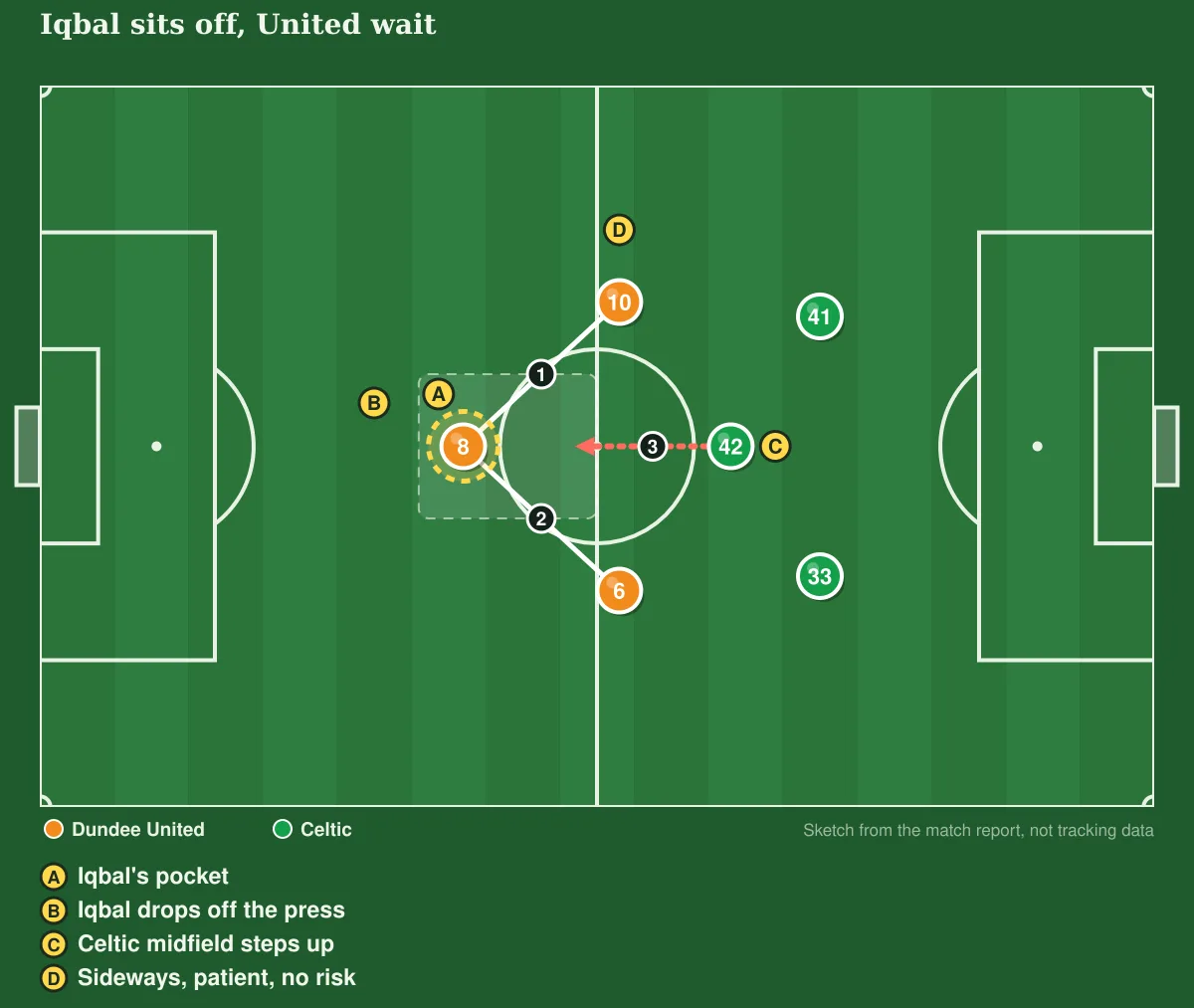
Our WhatsApp group chat at half-time was full of folk groaning that Celtic's midfield was flat, but United won that first half by doing something much cleverer: they simply went slower. Scott Allan put it nicely on Sportscene: "They are happy just to wait for the pressure to come and move it from one side to the other." That sounds like a compliment about temperament. It is really a description of a shape. Picture Iqbal sitting off the Celtic midfield rather than rushing into the ball, passing it from side to side and keeping it simple to Cameron and Tait. Nothing happens. That is the point: Celtic's midfield comes to close him down, and the ball simply slips round the side of them into the space they vacate.
bbc.co.uk/sport/football/articles/cwn…
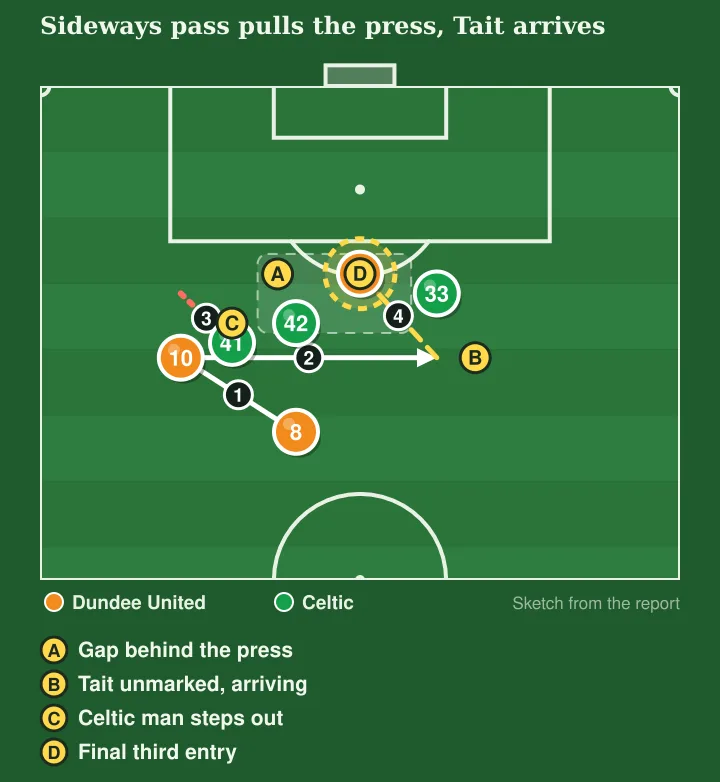
The second picture is the one that hurts. Once the ball has gone sideways a few times, the pressing team has to decide whether to follow it. If they do, the player who steps out leaves a gap behind him, and that is the space I would expect Tait to be arriving in. Opta had him passing more balls into the final third than any other United player, which is a strange stat for a midfielder who spent the night playing safe passes. It makes sense when you draw it: the sideways passing pulls the press across, and the player arriving in the space it leaves is the one who can turn it forward. Allan Preston's watch battery line about Iqbal is right, but the ticking is what winds the Celtic midfield up the pitch.
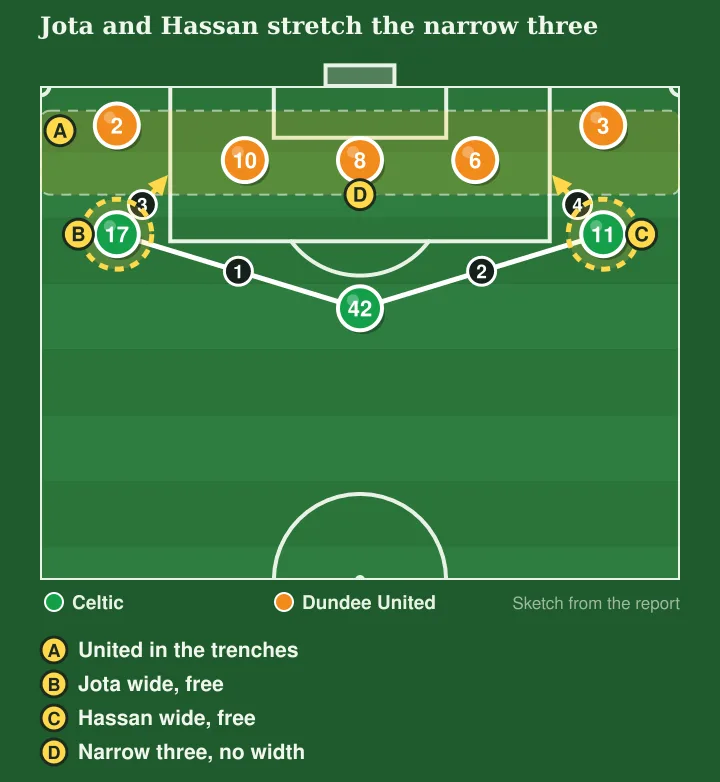
Celtic's answer on the night was width. Jota and Hassan came on at half-time and the game turned immediately. Some folk were grumbling afterwards that Hassan was hugging the touchline and refusing to cut inside, but that was precisely the fix: a narrow midfield three that loves waiting gets completely stretched the second two wingers pin their full-backs to the chalk. Allan said United were "in the trenches" after the break, and they held on for the draw. That is the trade-off with this shape: it can win you the first half and it leaves your defence with more to do once the game gets wide.
If I were Goodwin, I would keep the trio exactly as it is and work on the fifteen minutes after half-time. The composure is real and it is coached, but a midfield three that sits off the press needs a way to keep the ball when the opposition goes wide, or the rest of the match becomes a siege every week. United sit fifth, and the question the pundits asked is fair. Whether they are the best three in the league depends on what happens when someone stretches them, and Celtic showed the answer on Wednesday.
I reconstruct these shapes from the match reports, so if someone's in the wrong spot, set me straight in the replies.