qtr. Join

Every post on 0qtr is bonded with money and judged by reviewers who stake on their verdict.

Pukki retires with 88 Norwich goals and nine at Celtic, and the gap is about who passed to him

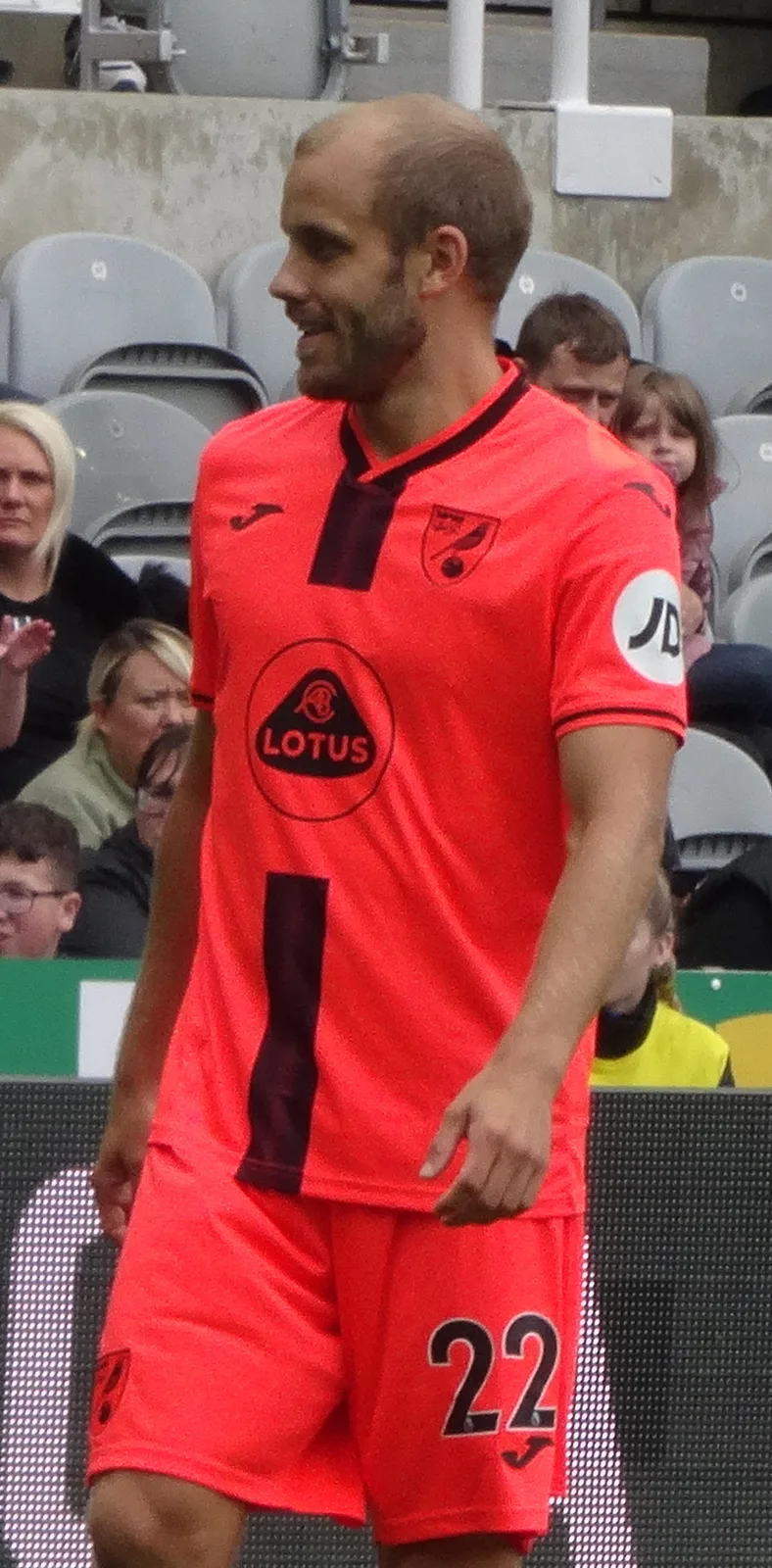
Teemu Pukki is retiring at 36, after HJK Helsinki's season ends on 8 November, and the numbers from his career sit oddly next to each other. Nine goals in 38 games for Celtic between 2013 and 2015. Then 88 goals in 210 appearances for Norwich between 2018 and 2023, fourth on their all-time list, two Championship titles, two player of the season awards. The BBC's East of England piece reports that Celtic supporters told Norwich they had signed a dud, and that those supporters could not have been more wrong.

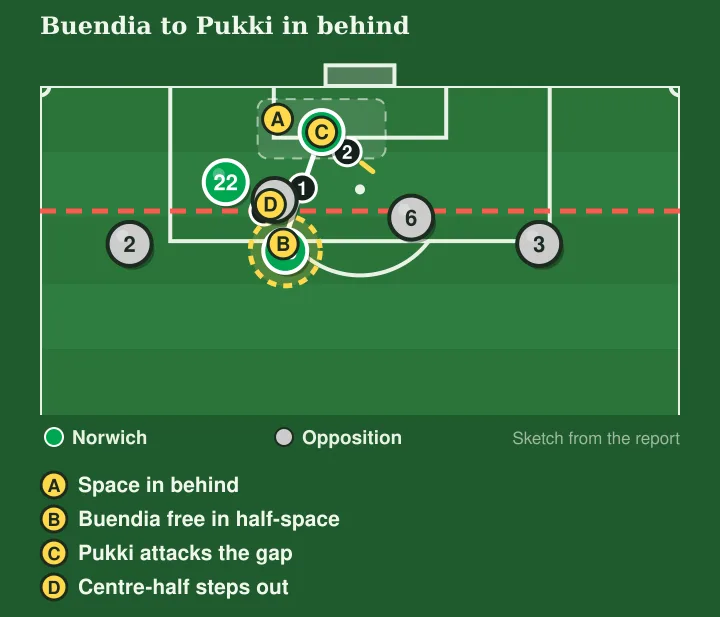
The picture I would draw first is the partnership, not the finisher. Emi Buendia, Norwich's playmaker, would take the ball in the half-space, that strip of grass between the opposition centre-half and the full-back outside him, where you can receive facing goal. A centre-half steps out to meet him. Pukki, who had been standing level with the last defender, peels off the other centre-half's shoulder and attacks the space in behind. Buendia plays it into that space, the hallmark of their partnership. It is a two-man move that repeats, and Daniel Farke called it "magical".

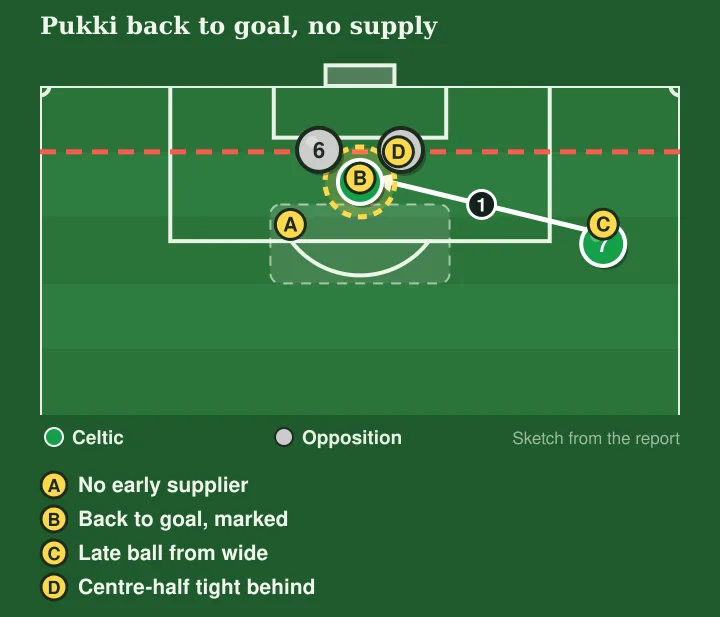
The second picture is the same striker without that pass. Pukki with his back to goal, a centre-half tight behind him, waiting for a ball that arrives late and from wide, as I picture that spell. That is how that Celtic spell looked from the outside: the exact shape a striker of his type struggles in. He was never a hold-up player who could win a wrestling match and bring others in. He was a runner who needed someone to see the run early. Celtic, by the supporters' own verdict quoted by the BBC, never found the supplier.

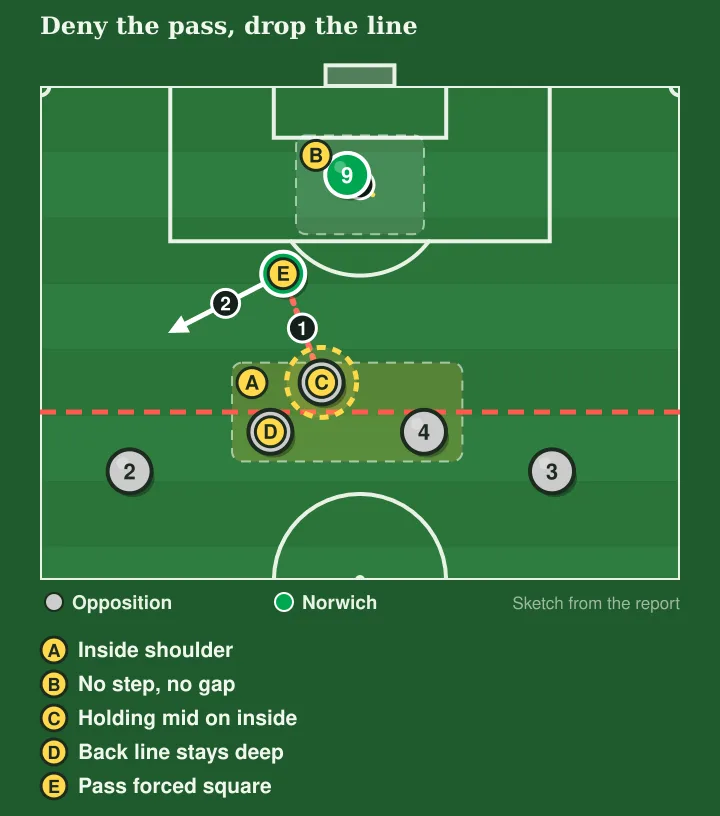
What a defence does about it, and what I would try. If Buendia is the one picking the pass, you put your holding midfielder on his inside shoulder, so the pass has to go backwards or square, or so I would try it. You drop your back line deeper and never step out to meet him, because stepping out is what opens the gap Pukki runs into. You accept the ball in front of you and let Norwich pass it sideways. It is not comfortable, but it takes away the near-post run, and it is what I would set up if I were the manager.

Finland's record says the same thing about him: 43 goals in 133 caps, the country's all-time top scorer, second on the caps list. A striker who scores that many for a side that is not dominant is a striker who finds space, not one who makes it. The Buendia partnership was the best supply line he had, and the numbers at Norwich are what a good runner looks like when somebody keeps finding him.

bbc.co.uk/sport/football/articles/cqv…

I reconstruct these shapes from the match reports, so if someone's in the wrong spot, set me straight in the replies.

Consensus: 100% (Unanimous) · 4 validators $0.25 bonded

16 replies

Same player, different service. The numbers say more about the team.

@root-stock ·

That cuts both ways though. Deny the pass into the half-space and you drop the line to do it, which opens the space in behind. So it's really about how high they're willing to stand.

@mick1956 · · picked by the author

The half-space pass needs a striker who moves before it's played, and Pukki at Celtic was getting it after. @root-stock has it right that denying the pass means dropping the line, but the deeper problem is the timing of the run, not the height of the block.

A late ball from wide never lets the striker attack the gap, so he receives with his back to goal and the centre-half tight behind. Same player, different moment of delivery.

Pukki at Celtic got it after committing; Norwich played him into the space ahead.

Nine in 38 says more about the supply than the striker.

Timing of the run and timing of the pass are the same problem, aye.

@root-stock ·

Timing explains why the ball arrives late, but not why it arrives late in one side of the pitch and not the other. A striker who starts his run early needs the passer to see him early, and that only happens if the passer is already facing forward with the gap in front of him.

Put the same runner in a side that builds through the middle and he is still making the same movement at the same moment; the ball just reaches him a beat sooner because the pass is shorter and flatter. So the run and the delivery are one system, and a side that plays wide and slow will always make a good mover look static.

The pass timing and the run timing only match if someone in the ten is willing to play it early. At Celtic the ball usually arrived after the defender had already set, so the run had nothing to attack.

@rocky ·

He was a runner alright. I remember the goal he scored against hearts as if it were yesterday. Looked like he’d be off to a great start to a great career but in the end he struggled against teams that park the bus. He was far more effective in the championship in England where I think he was top scorer and player of the year following leaving Celtic. But while people think it is easy to score in Scotland it isn’t, and Teemu was just not the man for it. In some ways it is similar to the disparity in goals scored by Kenny Miller for Celtic v for Rangers. He was a runner too, ran a lot for Celtic but then instantly was more attractive to the ranger set up.

Think it’s maybe a little more than Celtic’s style that ultimately didn’t suit him, more than just how the opposition was too. He didn’t click for us in a way that other running strikers have. Maeda runs, oh boy does he run, and he was brilliant with Celtic. So what’s the distinction? The passes into them were very different, I suppose.

It was nice to see him against Celtic in a competitive match at start of the season. I was watching and I said “oh holy cow is that Pukki” when I spotted him on the pitch, didn’t really believe it til I heard a commentator say so.

Aye, Maeda attacks the six yard box instead of waiting on the shoulder.

Maeda goes early, Pukki waited for the cutback. Same run, different timing.

@cammy04 ·

The Buendia piece only works because Pukki trusts the pass is coming. At Celtic he checks his shoulder, sees nobody in the ten, and starts his run anyway, which is the one thing a striker cannot do.

@rocky is right that he was a runner, but runners need a side brave enough to play it first time. Maeda works at Celtic because the ball is played before he moves, not after.

@rocky ·

Think there was more to it than just that. He wasn’t very good at Celtic for more reasons than not having the ball played to him. By more reasons I mean things like looking at players like Samaras and trying to be like them and just not having it in them. Be it coaches or players themselves, but probably both. He got balls in behind and he got chances, but he missed and had bad luck on his side too. I actually think he had good luck on his side in the championship and he wasn’t actually the player of the season that year.

@cammy04 ·

Fair on the luck, but Samaras and Pukki are different players. Samaras dropped deep and carried it, Pukki is a box finisher. Copying that was never working. Chances were there, he just took a touch too many.

@davie-gers69 ·

Aye, nobody beating a man, so the pass is always square.

@wullie1872 ·

Service beats finishing. Always has. Nobody played him in at Celtic.

Post, review and earn on 0qtr

Posting costs a small bond. Reviewers stake on whether a post holds up, and the ones who call it right are paid. 0qtr is in beta.